57,702 Students Across 52 Universities
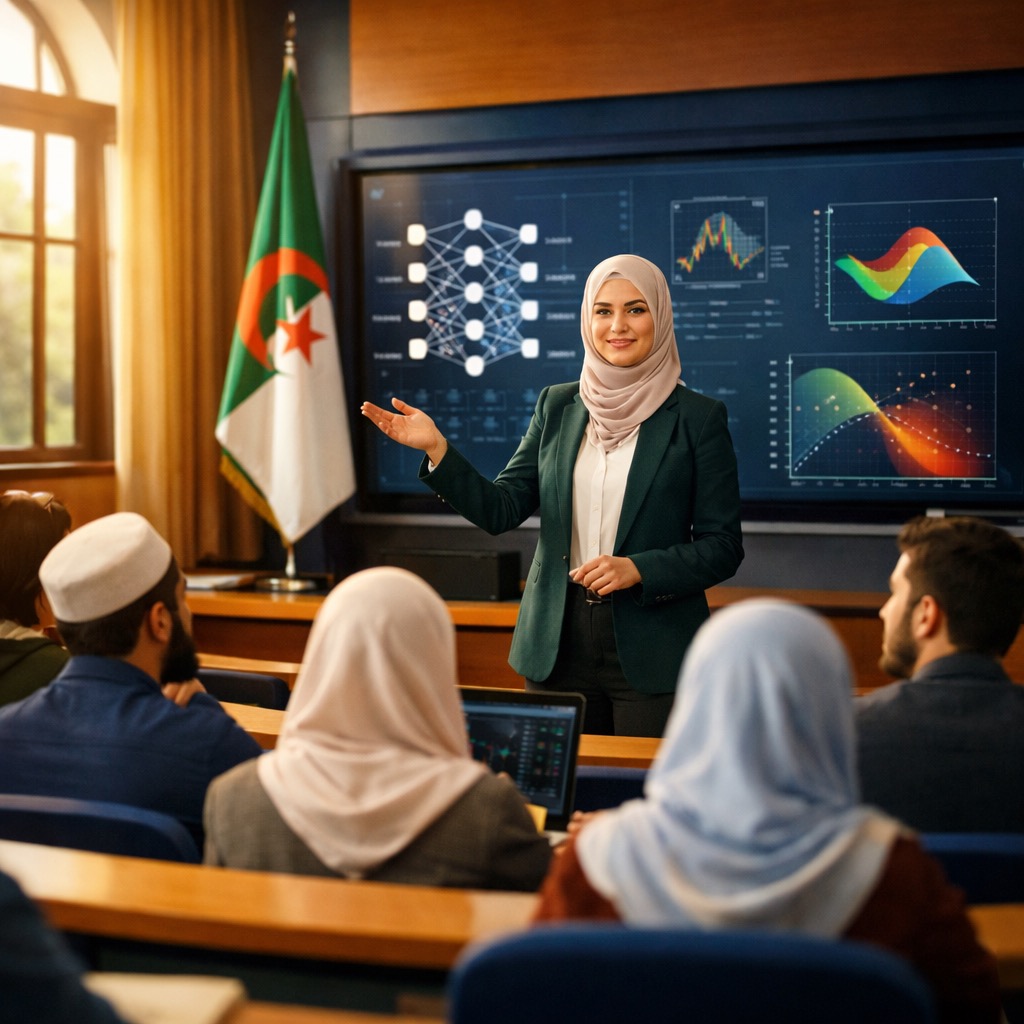
Algeria’s higher education system has quietly assembled one of the continent’s most extensive AI training pipelines. According to the New Lines Institute, the country now hosts 74 AI-focused master’s programs spread across 52 universities — enrolling 57,702 students in fields spanning machine learning, computer vision, natural language processing, and intelligent systems.
The numbers position Algeria as a serious player in AI workforce development. The country ranks among the top five African nations for recognized scientific publications and maintains researchers among the top 2% of scientists globally, according to the same analysis.
Major academic centers driving this expansion include Algiers, Constantine, Oran, Annaba, and Setif. The Ministry of Higher Education and Scientific Research (MESRS) lists several distinct AI master’s tracks through its Study in Algeria portal, including pure Artificial Intelligence, Applied Artificial Intelligence, and Artificial Intelligence and Data Science — each with a different balance of research and industry orientation.
ENSIA Anchors the Ecosystem
At the center of Algeria’s AI education push sits the National School of Artificial Intelligence (ENSIA), the country’s dedicated AI grande école in Algiers. ENSIA offers a five-year engineering degree in Artificial Intelligence and Data Science, with courses delivered in both English and French.
The school has moved beyond classroom instruction. ENSIA recently inaugurated a high-performance computing center equipped with NVIDIA H100, L40S, and A40 AI processors — giving students direct access to production-grade hardware for training models and running experiments.
ENSIA also participates in the Huawei ICT Academy program, connecting students to global certification tracks in cloud computing, networking, and AI. The Huawei ICT Competition 2025-2026, launched across Algeria, focuses on three strategic domains — Cloud, Network, and Computing — alongside specialized tracks in Teaching and Innovation.
The Six-Pillar National AI Strategy
These educational investments operate within a broader policy framework. In December 2024, Algeria’s National AI Council officially adopted the National Artificial Intelligence Strategy — a six-pillar roadmap covering scientific research and innovation, skills development through education, sector-specific applications in healthcare, agriculture, and energy, investment promotion, data protection and governance, and building an AI ecosystem.
The strategy sets ambitious economic targets. Algeria’s AI market is projected to grow from $498.9 million in 2025 to $1.69 billion by 2030, representing a 27.67% compound annual growth rate. To fuel that growth, the government has committed to training 500,000 ICT specialists by 2030 — a dramatic scaling of current capacity.
The human capital investment is substantial. Development costs for AI education infrastructure, professional training programs, and brain drain mitigation initiatives are estimated between $550 million and $850 million, according to the New Lines Institute’s assessment.
Advertisement
Vocational Training Fills the Pipeline Gap
University programs alone cannot meet the workforce target. Algeria has turned to international partnerships to broaden the training funnel, particularly at the vocational level.
A strategic partnership with Huawei will provide vocational trainees with training in cloud computing, cybersecurity, and AI through three specialized institutions: the National Specialized Institute for ICT in Rahmania, the National Institute for Vocational Training (INSFP) in Bousmail, and the African Institute for Vocational Training in Boumerdes. Graduates will receive a diploma jointly issued by the Ministry and Huawei.
The vocational system is also expanding internally. The MESRS has introduced nearly 30 new digital technology specialties across the vocational training network, targeting students who follow the professional track rather than the university route. With 285,000 vocational training places available nationally, the digital specialties represent a significant new pathway into the technology workforce.
The Brain Drain Challenge Remains
Algeria’s educational capacity is impressive on paper, but the country faces a persistent challenge: retaining the talent it produces. The brain drain crisis has weakened the economy for decades, with France in particular absorbing a significant share of Algeria’s AI-trained graduates — many of whom contribute to Europe’s AI workforce rather than Algeria’s domestic ecosystem.
The six-pillar strategy explicitly includes brain drain mitigation, but the mechanisms remain largely financial — better salaries, startup incentives, and research funding. Whether these measures can compete with the pull of European and Gulf employers offering salaries several multiples higher remains an open question.
The 74 master’s programs represent supply-side capacity. The harder challenge is building demand-side absorption — enough AI-driven companies, government digitization projects, and startup opportunities to give graduates a reason to stay. Algeria’s projected $1.69 billion AI market by 2030 would need to translate into thousands of actual positions across multiple sectors for the workforce strategy to succeed.
What Comes After the Master’s Degree
Algeria’s 74 AI programs and 57,702 enrolled students represent a genuine asset. Few countries in Africa — and few in the broader MENA region — can match that educational infrastructure.
But programs alone do not build an AI economy. The critical variables over the next four years are whether Algeria can convert academic output into industry capability, whether the $550-850 million human capital investment materializes on schedule, and whether the 500,000 ICT specialist target proves realistic or aspirational.
The infrastructure is in place. ENSIA provides a world-class anchor. The six-pillar strategy provides direction. The Huawei partnership extends training beyond universities. Now the question is execution — and whether Algeria’s AI graduates will build their careers at home or abroad.
Frequently Asked Questions
How does Algeria’s AI education infrastructure compare to other African countries?
Algeria ranks among the top five African nations for recognized scientific publications and maintains researchers in the global top 2%. With 74 AI-focused masters programs across 52 universities and 57,702 students enrolled, Algeria’s computer science educational foundation is one of the most extensive on the continent. Few countries in Africa or the broader MENA region can match that institutional density, though countries like South Africa and Egypt also maintain significant AI research output.
What is ENSIA and why does it matter for Algeria’s AI ambitions?
ENSIA (National School of Artificial Intelligence) is Algeria’s dedicated AI grande ecole in Algiers, offering a five-year engineering degree in Artificial Intelligence and Data Science. It has moved beyond classroom instruction by inaugurating a high-performance computing center equipped with NVIDIA H100, L40S, and A40 processors. ENSIA also participates in the Huawei ICT Academy program, connecting students to global certification tracks. It serves as the anchor institution for Algeria’s AI talent pipeline.
Is brain drain undermining Algeria’s investment in AI education?
Brain drain remains a persistent challenge. France in particular absorbs a significant share of Algeria’s AI-trained graduates, many of whom contribute to European AI ecosystems rather than Algeria’s domestic market. The national AI strategy includes brain drain mitigation through better salaries, startup incentives, and research funding, but whether these measures can compete with European and Gulf employers offering salaries several multiples higher remains an open question. The critical variable is demand-side absorption — enough domestic AI jobs to give graduates a reason to stay.
Sources & Further Reading
- Why Algeria Is Positioned To Become North Africa’s AI Leader — New Lines Institute
- Artificial Intelligence Programs — Study in Algeria (MESRS)
- Algeria Unveils AI Strategy to Boost Digital Transformation — Ecofin Agency
- Algeria and Huawei Forge Strategic Partnership to Modernize Vocational Training — SAMENA Council
- Huawei ICT Competition 2025-2026 in Algeria — MEA Tech Watch
- Algeria Inaugurates National AI School Data Centre — Middle East AI News
- ENSIA — National School of Artificial Intelligence
🔗 Related Intelligence
Algeria’s National AI Strategy: What the 2025–2030 Roadmap Really Means for Tech Companies

AfDB’s $10B AI Initiative: New Opportunities for Algerian Startups and Researchers

AI in Government: The Practical Starting Point for Algeria’s Digital Transformation

Algeria’s Emerging AI Regulation: Balancing Innovation with Accountability