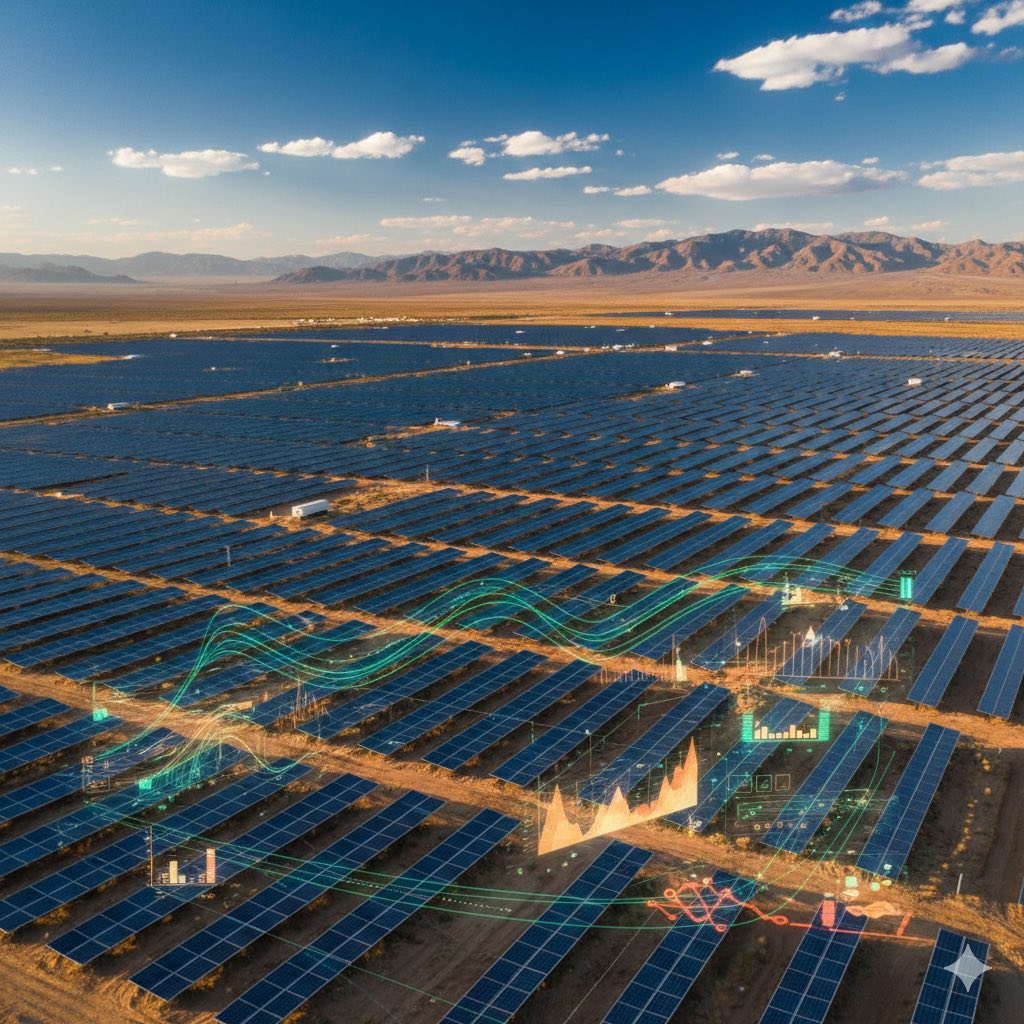
The Planet’s Most Complex Optimization Problem
Climate change is, at its core, an optimization problem of staggering complexity: billions of interacting variables across atmospheric, oceanic, terrestrial, and human systems, operating on timescales from minutes to centuries. Traditional computational models — the physics-based simulations that have powered climate science for decades — are reaching the limits of what brute-force numerical simulation can achieve.
Machine learning offers a different approach: instead of simulating every physical interaction from first principles, ML models learn patterns from observational data — satellite imagery, weather station readings, ocean buoy measurements, industrial emissions reports — and generate predictions that can be orders of magnitude faster and, in some cases, more accurate than physics-based models.
In 2026, AI is no longer a speculative technology for climate applications. It is deployed at scale for weather prediction, wildfire detection, energy grid optimization, carbon accounting, and climate risk assessment. The question has shifted from “Can AI help?” to “Can it help fast enough?”
Weather Prediction: AI Beats the Supercomputers
The most dramatic AI climate breakthrough of 2024-2025 was in weather forecasting. For 70 years, weather prediction has relied on Numerical Weather Prediction (NWP) models — physics-based simulations that divide the atmosphere into grid cells and solve equations of motion, thermodynamics, and moisture transport. These models require massive supercomputers and hours of computation to generate a 10-day forecast.
In November 2023, Google DeepMind’s GraphCast model demonstrated that a machine learning system trained on 40 years of weather data could produce 10-day global forecasts in under 60 seconds on a single TPU — and outperform the European Centre for Medium-Range Weather Forecasts’ (ECMWF) gold-standard HRES model on 90% of 1,380 verification targets (combinations of variables and forecast lead times). GraphCast predicts 227 key variables across 37 pressure levels and the Earth’s surface, published in Science (November 2023).
By 2026, the landscape has expanded dramatically:
Google DeepMind’s GenCast (2024) goes beyond deterministic forecasting to generate probabilistic ensemble forecasts — predicting not just what will happen, but the range of possible outcomes and their probabilities. Published in Nature in December 2024, GenCast produces 15-day ensemble forecasts in 8 minutes on a single TPU, versus the 2-3 hours on a supercomputer cluster that ECMWF’s ensemble system requires. GenCast outperforms ECMWF’s ENS on 97% of forecast targets — rising to 99.8% for forecasts beyond 36 hours.
Huawei’s Pangu-Weather and NVIDIA’s FourCastNet have demonstrated similar capabilities, creating a competitive ecosystem of AI weather models. The WMO formally endorsed AI weather models as complementary tools alongside traditional NWP systems in its 2025 action plan, while noting ongoing challenges in local high-impact weather forecasting.
Extreme weather prediction is where AI weather models show the most consequential improvement. Fine-tuned Aurora AI models reduced average 5-day tropical cyclone track error by approximately 20-25% compared to operational forecast centers. Precipitation forecasts for extreme rainfall events — the kind that cause flash flooding — are significantly improved because AI models learn from historical event patterns rather than relying on physics that struggles with convective-scale processes.
The impact is measured in lives and dollars. More accurate severe weather warnings give communities additional hours of preparation time. The economic benefit of improved weather forecasting is estimated at $30 billion annually globally, according to the WMO.
Wildfire Prediction and Detection
Wildfires are intensifying globally due to climate change, with 2025 seeing devastating fire seasons in the western United States, southern Europe, Canada, Australia, and — increasingly — regions not historically associated with wildfires, including Siberia and the Amazon.
AI is deployed at multiple stages of the wildfire lifecycle:
Early detection. Google’s FireSat program, announced in 2024, is a constellation of satellites using AI-powered infrared sensors designed to detect wildfires as small as a classroom (5m x 5m) within 20 minutes of ignition — anywhere on Earth. The first FireSat satellite launched in April 2025, but the full 20-minute global revisit capability requires the complete constellation of 50+ satellites, expected by 2030. As of early 2026, only initial satellites are operational, providing more limited coverage. Even so, the improvement over traditional satellite detection systems (MODIS, VIIRS), which detect fires of 1,000+ square meters with delays of hours, is transformative: detecting a fire at 25 square meters versus 1,000+ square meters means the fire can be attacked when it is still manageable rather than when it has already become a conflagration.
Spread prediction. ML models trained on terrain data, vegetation maps, historical weather patterns, and real-time wind data predict how a detected fire will spread over the next 6-72 hours. These predictions guide evacuation decisions and firefighting resource deployment. NVIDIA’s Earth-2 digital twin platform combines AI weather prediction with fire behavior models to generate real-time wildfire spread forecasts.
Risk assessment. Long-term fire risk models use satellite-derived vegetation moisture data, historical fire patterns, and climate projections to identify areas at highest future risk — guiding land management decisions, building codes, and insurance pricing. Pacific Gas & Electric (PG&E) uses AI fire risk models to preemptively de-energize power lines in high-risk areas, a practice (Public Safety Power Shutoffs) that has prevented hundreds of ignition events.
Advertisement
Energy Grid Optimization: AI as Grid Conductor
The transition to renewable energy introduces a fundamental operational challenge: solar and wind generation are intermittent and variable, but electricity demand must be met at every moment. Managing a grid with 30-50% renewable penetration requires balancing supply and demand in real time with far more complexity than the fossil-fuel-dominated grids of the past.
AI is becoming the essential orchestration layer:
Demand forecasting uses ML to predict electricity consumption at 15-minute intervals, days to weeks in advance, incorporating weather forecasts, calendar events (holidays, major sporting events), industrial schedules, and historical usage patterns. Better demand forecasts reduce the need for expensive peaking power plants that sit idle most of the time.
Renewable generation forecasting predicts solar and wind output based on weather data, enabling grid operators to anticipate production shortfalls and schedule backup generation in advance rather than reacting in real time.
Battery storage optimization uses reinforcement learning to determine when to charge and discharge grid-scale battery systems. The optimal strategy depends on current and predicted electricity prices, renewable generation forecasts, grid congestion, and battery degradation curves — a multi-variable optimization that AI handles better than rule-based systems. Tesla’s Autobidder software manages over 1.2 GWh of energy storage assets and uses machine learning for real-time market bidding and dispatch control. Tesla deployed a record 46.7 GWh of battery storage in 2025, with its energy division achieving 30.3% gross margins — underscoring the commercial viability of AI-optimized energy storage.
Virtual power plants (VPPs) aggregate thousands of distributed energy resources — rooftop solar, home batteries, electric vehicles, smart thermostats — and coordinate their behavior as a single flexible resource. AI is essential for VPP operation because coordinating thousands of independent assets in real time is beyond manual management capability.
Google’s DeepMind has applied AI to reduce the energy consumption of its own data center cooling systems by 40%, demonstrating that even within the AI industry itself, machine learning can reduce energy waste.
Carbon Accounting and Emissions Monitoring
You cannot manage what you cannot measure. One of the largest obstacles to effective climate action is the difficulty of accurately measuring greenhouse gas emissions at organizational, national, and global scales.
Satellite-based emissions monitoring uses AI to analyze satellite imagery and detect methane plumes, CO2 concentrations, and other greenhouse gas emissions from individual facilities. Climate TRACE, a coalition of AI researchers, NGOs, and technology companies, now provides near-real-time monitoring of greenhouse gas emissions from over 660 million individual sources worldwide — power plants, oil and gas facilities, ships, steel mills, rice paddies — using satellite data and AI analysis. This creates an independent verification layer for national emissions inventories, which are historically self-reported and often inaccurate.
Corporate carbon accounting tools use AI to calculate Scope 1 (direct emissions), Scope 2 (purchased energy), and Scope 3 (supply chain) emissions from financial and operational data. Scope 3 emissions — the most difficult to measure because they span a company’s entire value chain — are where AI adds the most value, using industry-specific emission factor models and supplier data analysis to estimate emissions that would otherwise require months of manual calculation.
Methane detection has been particularly transformed. Methane is 80x more potent than CO2 over a 20-year timeframe, and the oil and gas industry is the largest industrial source. MethaneSAT, launched in March 2024 by an affiliate of the Environmental Defense Fund, demonstrated what satellite-based methane monitoring could achieve: orbiting Earth 15 times daily, it monitored 50 major regions covering over 80% of global oil and gas production areas. Its spectrometer detected methane concentrations as low as 2 parts per billion, and early findings revealed methane leak rates in some areas up to 45 times higher than industry limits. Contact with MethaneSAT was lost in June 2025 after approximately 15 months of operation, but its mission validated the concept and the data it collected continues to inform emissions reduction efforts. Other AI-powered satellite methane detection systems, including those from Kairos Aerospace and GHGSat, continue to expand coverage.
Climate Risk and Financial Modeling
The financial sector is increasingly using AI to assess climate-related financial risk, driven by regulatory requirements (TCFD, EU CSRD) and investor demand.
Physical risk modeling uses climate projections + AI to estimate the probability and financial impact of climate-related events (flooding, heat waves, wildfires, sea-level rise) on specific assets — individual buildings, infrastructure, supply chain nodes. Jupiter Intelligence and First Street Foundation are leading providers, with their risk scores now embedded in mortgage underwriting, insurance pricing, and real estate investment decisions.
Transition risk modeling assesses the financial impact of the shift to a low-carbon economy on companies and sectors — stranded fossil fuel assets, carbon pricing impacts, regulatory compliance costs. AI models process vast datasets of corporate disclosures, policy announcements, technology trends, and commodity markets to generate forward-looking risk assessments.
The Paradox: AI’s Own Carbon Footprint
Any honest assessment of AI and climate must confront the paradox: AI systems consume enormous amounts of energy. Training GPT-4 consumed an estimated 50 GWh of electricity. Running inference across the world’s AI data centers consumed an estimated 60-93 TWh in 2025, according to IEA estimates — roughly comparable to the annual electricity consumption of a mid-sized European country. By 2030, AI’s energy demand is projected to reach 300-500 TWh annually.
If the AI applications described in this article — grid optimization, emissions monitoring, wildfire detection — prevent more emissions than the AI infrastructure itself produces, the net impact is positive. Current projections suggest this is likely: AI applications across energy, industry, and transport could potentially reduce emissions by 1.4-5.4 gigatons of CO2 annually by 2030-2035 according to IEA and cross-sector studies — though current realized savings are a fraction of this potential. If even a portion of these projected reductions materialize, they would far exceed the roughly 100 megatons associated with AI computation.
But the margin is not infinite, and the AI industry’s rapid growth means its energy consumption is increasing faster than its efficiency gains. The industry must simultaneously deliver climate benefits and reduce its own carbon intensity — a challenge that requires renewable energy procurement, hardware efficiency improvements, and thoughtful deployment decisions.
Advertisement
Decision Radar (Algeria Lens)
| Dimension | Assessment |
|---|---|
| Relevance for Algeria | Very High — Algeria faces climate-related risks (desertification, water scarcity, extreme heat events) and is a major hydrocarbon producer where methane monitoring and energy transition planning are directly relevant |
| Infrastructure Ready? | Partial — Satellite data is globally available; AI analysis tools are cloud-based and accessible. Local deployment of grid optimization AI would require modernization of Algeria’s electricity infrastructure (Sonelgaz) |
| Skills Available? | Limited but growing — Algeria has strong engineering talent in energy (Sonatrach, Sonelgaz) and emerging AI capabilities; bridging climate science and AI expertise is the gap |
| Action Timeline | 6-18 months — Satellite emissions monitoring can be adopted immediately; grid optimization and renewable integration AI requires infrastructure investment |
| Key Stakeholders | Sonatrach (oil and gas), Sonelgaz (electricity), Ministry of Environment, Ministry of Energy Transition, Algerian Space Agency (ASAL), university climate research centers |
| Decision Type | Strategic — Climate tech AI fits Algeria’s national priorities of energy transition, environmental protection, and economic diversification |
Quick Take: Algeria — as both a major hydrocarbon producer and a country vulnerable to climate impacts — has dual motivation to engage with AI climate technology. Immediate applications include satellite-based methane leak detection for Sonatrach’s oil and gas operations (which could reduce emissions while improving revenue from captured gas) and AI-powered solar irradiance forecasting for the Sahara’s enormous solar potential. Sonelgaz should evaluate AI grid optimization tools as Algeria expands renewable energy capacity toward its 15 GW by 2035 target. Algeria’s Space Agency (ASAL) could partner with Climate TRACE for independent national emissions monitoring — a capability that strengthens Algeria’s position in international climate negotiations.
Sources
- Google DeepMind — GraphCast Weather Prediction (Science, 2023)
- Google DeepMind — GenCast Probabilistic Forecasting (Nature, 2024)
- WMO — Congress Endorses Actions to Promote AI Forecasts and Warnings
- Earth.Org — How AI Is Improving Tropical Cyclone Forecasting
- Google Research — FireSat Wildfire Detection
- Climate TRACE — Global Emissions Monitoring
- MethaneSAT — Satellite Mission
- IEA — Energy Demand from AI
- Tesla — Autobidder Battery Optimization
- Google DeepMind — Data Center Cooling Optimization
- Jupiter Intelligence — Climate Risk Analytics






Advertisement