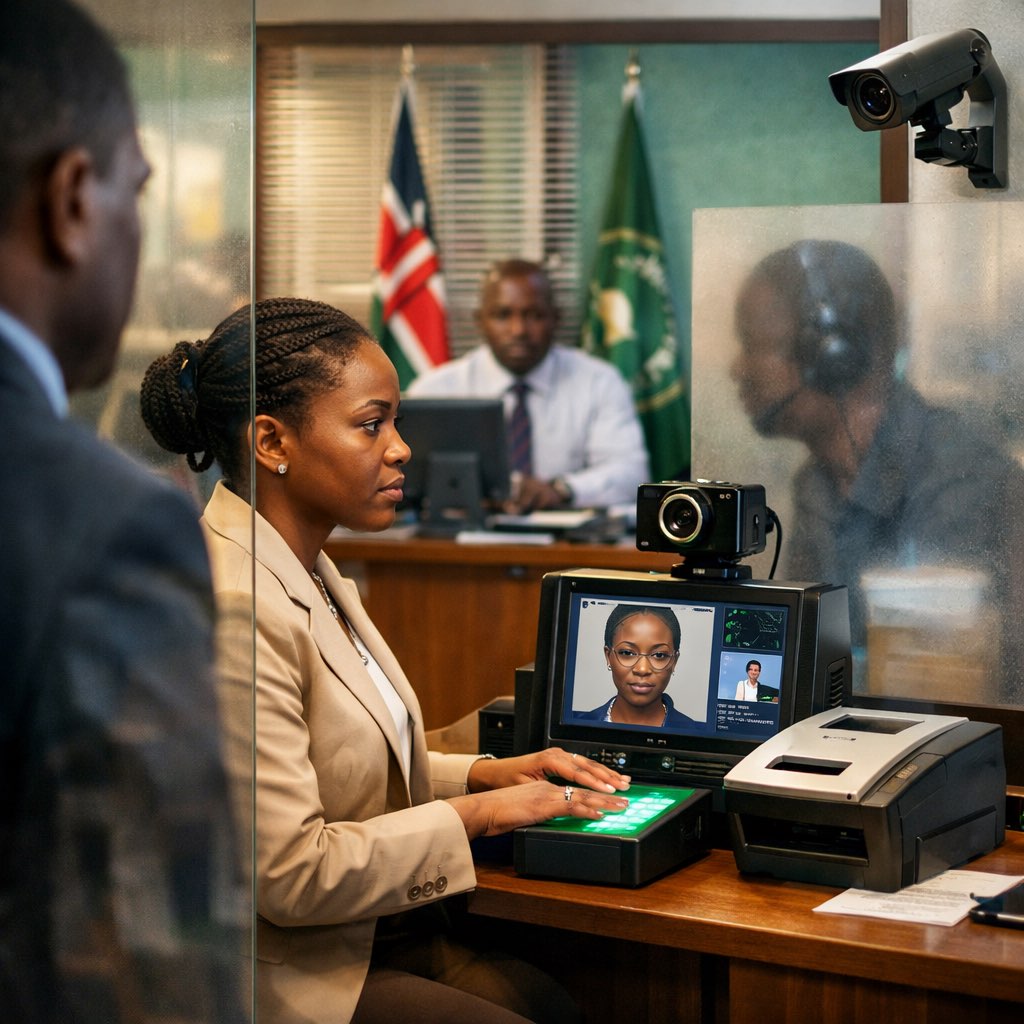
Key Takeaway
A landmark study reveals that 49 African nations have deployed biometric identification systems while only 29 have operationalized data protection oversight, creating continent-wide risks of surveillance, exclusion, and conditional access to fundamental rights.
Africa is conducting the world’s largest experiment in biometric digital identity, and the results are deeply concerning. A comprehensive study published by the Atlantic Council’s Digital Forensic Research Lab in late 2025, with follow-up reporting in March 2026, reveals that biometric identification systems have been rapidly adopted across 49 African nations, often outpacing the regulatory frameworks needed to protect citizens.
The gap between technological deployment and governance capacity is not an oversight. It is a systemic failure that threatens to transform tools of inclusion into instruments of exclusion and surveillance.
The Scale of Adoption
The numbers are striking. Forty-nine of the African Union’s 55 member states have implemented at least one form of biometric technology for citizen identification. These systems range from simple fingerprint databases to sophisticated multi-modal platforms combining facial recognition, iris scanning, and voice identification.
The adoption has been driven by a combination of factors: international development funding that ties biometric ID to service delivery, commercial interest from global technology vendors, and genuine government desire to modernize citizen registration and reduce fraud.
But as researchers from TechXplore and The Conversation documented in March 2026, the rush to deploy has consistently outrun the establishment of adequate safeguards. Biometric IDs are being rolled out across Africa with insufficient attention to the risks and pitfalls that accompany such powerful technology.
The Data Protection Gap
The most alarming finding is the protection gap. While 49 nations deploy biometric systems, only 29 have operationalized data protection oversight authorities. This means 20 countries are collecting some of the most sensitive personal data imaginable, biometric information that cannot be changed if compromised, without functional independent oversight.
Even among the 29 with established authorities, capacity varies dramatically. Many data protection agencies operate with insufficient budgets, limited technical expertise, and unclear enforcement powers. The gap between having a data protection law and effectively implementing it remains wide across the continent.
According to the Digital Policy Alert’s 2025 roundup, only a handful of African data protection authorities, notably those in South Africa, Kenya, and Mauritius, have the capacity to conduct meaningful audits of biometric systems.
Conditional Rights: The Enrollment Trap
Perhaps the most fundamental concern is what researchers term the “enrollment trap.” Universal human rights that should be unconditional, including access to education, healthcare, social security, and voting, increasingly become conditional on enrollment in biometric digital ID schemes.
This conditionality creates a two-tier society. Citizens who successfully enroll gain access to government services, financial systems, and social protections. Those who cannot or do not enroll, whether due to physical disabilities affecting biometric capture, geographic remoteness, technical failures, or deliberate exclusion, risk becoming invisible to the state.
The populations most affected are typically those most in need of government services: rural communities, elderly citizens, people with disabilities, nomadic populations, and political minorities. The technology that promises universal inclusion thus risks deepening existing inequalities.
Advertisement
Surveillance and Political Control
The surveillance potential of biometric databases has not gone unexploited. In several African countries, facial recognition technology linked to national ID systems has reportedly been used to monitor political opponents, journalists, and civil society activists.
In West Africa specifically, there is a growing tension between security applications of biometric technology and human rights protections. Noah News reported in 2026 on West Africa’s digital borders, highlighting the difficult balance between security measures and fundamental freedoms.
The risk extends beyond authoritarian abuse. Even in democratic contexts, the existence of comprehensive biometric databases creates temptations for surveillance that may prove irresistible during political crises, public health emergencies, or security threats.
Vendor Dynamics and Data Sovereignty
A critical but often overlooked dimension is the role of international technology vendors. Many African biometric systems are built, deployed, and sometimes maintained by foreign companies, raising questions about data sovereignty.
When biometric data passes through systems designed, hosted, or managed outside the country of collection, citizens lose meaningful control over their most personal information. Vendor lock-in further compounds the problem, making it difficult for governments to switch providers or audit systems they do not fully understand.
The concentration of global biometric identity market share among a handful of companies, primarily from Europe, the US, and East Asia, means that African nations often have limited negotiating power and technical capacity to impose meaningful data sovereignty requirements.
Governance Recommendations
Researchers and policy advocates have converged on several key recommendations:
Independent oversight first. Countries should establish and fund independent data protection authorities before scaling biometric enrollment, not after. The principle of “no database without oversight” should become continental standard.
Transparency requirements. Biometric system deployments should be accompanied by public data protection impact assessments, clear data retention policies, and published audit results.
Alternative access pathways. No essential service should be exclusively accessible through biometric enrollment. Fallback mechanisms must exist for citizens who cannot or choose not to participate.
Regional harmonization. The African Union’s Malabo Convention on cybersecurity and personal data, ratified by a growing number of states, provides a framework that should be accelerated and strengthened.
Vendor accountability. Contracts with biometric technology vendors should include data sovereignty clauses, source code escrow, and local capacity building requirements.
Civil society participation. Rushed projects have often squeezed the time civil society and other actors have to raise problems. Mandatory public consultation periods should precede any biometric deployment.
The Path Forward
The biometric digital ID wave in Africa is not inherently harmful. When properly governed, digital identity systems can expand financial inclusion, improve service delivery, and reduce fraud. Singapore’s digital identity framework demonstrates that comprehensive digital ID is compatible with strong privacy protections when governance is treated as a prerequisite rather than an afterthought.
But the current trajectory, where deployment outpaces oversight, where commercial and security interests overshadow citizen rights, and where international development funding creates incentives for rapid adoption without adequate safeguards, risks turning a tool of empowerment into a mechanism of control.
The coming years will determine which direction Africa’s biometric ID revolution takes. The choices made by governments, international donors, technology vendors, and civil society will shape the digital rights landscape for a generation of African citizens.
Frequently Asked Questions
How many African countries have biometric identification systems?
Forty-nine of the African Union’s 55 member states have deployed at least one form of biometric identification technology. These range from fingerprint databases to multi-modal systems combining facial recognition, iris scanning, and voice identification. However, only 29 of these countries have operational data protection oversight authorities.
What rights become conditional when biometric enrollment is required?
When governments require biometric enrollment for service access, fundamental rights including education, healthcare, social security, voting, and financial services become conditional. Citizens who cannot enroll due to physical disabilities, geographic remoteness, or technical failures risk losing access to essential services, creating a two-tier society.
What can be done to protect citizens’ biometric data in Africa?
Key protections include establishing independent data protection authorities before scaling biometric systems, requiring public data protection impact assessments, maintaining alternative service access pathways, harmonizing regulations through the African Union’s Malabo Convention, and ensuring contracts with foreign technology vendors include data sovereignty and audit requirements.
Sources & Further Reading
- 49 African Nations Adopt Digital ID Technology Amid Surveillance Risks — TechAfrica News
- Biometric IDs Are Being Rolled Out in Africa: Study Reveals Risks — TechXplore
- Africa’s Digital ID Ecosystem Needs More Transparency — Biometric Update
- African Digital ID Systems Need Better Governance — Biometric Update
- Data Protection in Africa Roundup 2025 — Digital Policy Alert