

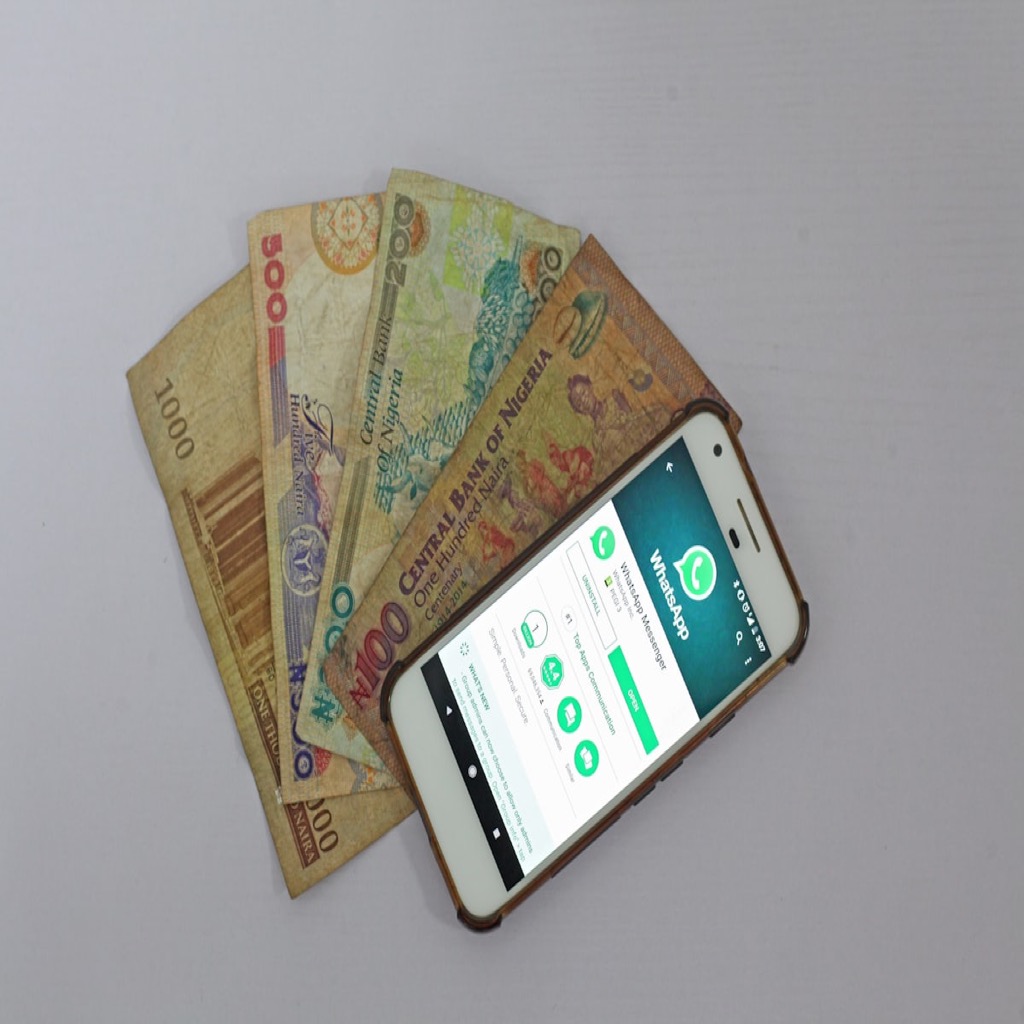
The Continent That Skipped the Bank Branch
Africa did something that confounded development economists for a generation: it built a financial system without bank branches. While developed economies spent centuries constructing physical banking infrastructure — vaults, tellers, ATM networks — much of Africa leaped directly to mobile-based financial services, using the device in nearly every pocket as a bank, payment terminal, and savings account.
The results are now measured in billions. Africa’s combined prepaid card and digital wallet market is projected to reach $36.1 billion in transaction value in 2026, representing a 16.1% year-over-year increase. The trajectory extends to an estimated $59.4 billion by 2030. Mobile money accounts globally have reached approximately 860 million, with roughly 70% concentrated in Sub-Saharan Africa. Financial inclusion in Sub-Saharan Africa has risen from approximately 34% to 58% in the space of a decade, a rate of progress unmatched by any region relying on traditional banking expansion.
Into this booming market, the world’s most recognized digital payments brand is making its move. PayPal has announced plans for a major African expansion under the working title “PayPal World,” targeting the continent’s fastest-growing digital economies. The announcement arrives alongside parallel moves from Airtel (partnering with Mastercard on GlobalPay cards), MTN (expanding MoMo virtual card capabilities), and a wave of African-founded fintech startups building the next generation of financial infrastructure.
This article examines the scale of Africa’s digital wallet explosion, the key players competing for market share, PayPal’s strategic logic, and what this boom means for the 400 million Africans who still lack formal financial access.
The Numbers Behind the Boom
Africa’s digital wallet growth is not a single story but multiple overlapping narratives — mobile money, prepaid cards, digital banking, and merchant payments — each with distinct dynamics and growth drivers.
Mobile money remains the foundation. M-Pesa, launched by Safaricom in Kenya in 2007, proved the model: use the existing mobile network as payment infrastructure, enabling person-to-person transfers, bill payments, and merchant transactions through simple USSD codes on basic feature phones. The model spread across East Africa, West Africa, and increasingly into Southern and North Africa. Today, the largest mobile money platforms — M-Pesa (Vodacom/Safaricom), MTN Mobile Money (MoMo), Airtel Money, and Orange Money — collectively serve hundreds of millions of active users.
Transaction volumes tell the growth story. M-Pesa alone processes a value equivalent to roughly half of Kenya’s GDP annually. MTN MoMo, operational in 16 African markets, reported over 600 million monthly transactions in its most recent disclosure. Airtel Money, active across 14 countries, has been growing mobile money revenue at approximately 25-30% annually. The aggregate mobile money transaction value across Africa is measured in hundreds of billions of dollars — a financial ecosystem that barely existed fifteen years ago.
Prepaid cards and virtual cards represent the growth frontier. While mobile money excels for domestic peer-to-peer transfers and bill payments, it has historically been limited for international transactions, online ecommerce, and subscription services. Prepaid cards — both physical and virtual — bridge this gap, giving mobile money users access to the Visa and Mastercard networks for global online shopping, international remittance receipt, and merchant payments outside the mobile money ecosystem.
The Airtel-Mastercard GlobalPay Card partnership, announced in early 2026, exemplifies this convergence. Airtel Money users across multiple African markets can now obtain virtual Mastercard debit cards linked to their mobile money wallets, enabling purchases on any global ecommerce platform that accepts Mastercard. MTN’s MoMo virtual card offering provides similar capabilities. These partnerships effectively upgrade mobile money from a domestic payment system to a globally connected financial identity.
PayPal’s Continental Bet
PayPal’s planned “PayPal World” launch in Africa represents the company’s most ambitious emerging-market expansion in years. The strategic logic is straightforward: Africa is the world’s fastest-growing digital payments market, with demographics (median age under 20, rapid smartphone penetration, surging ecommerce) that promise decades of compounding growth. PayPal, which has operated in limited capacity in certain African markets (primarily South Africa and Nigeria), is positioning itself for comprehensive continental coverage.
The specifics of the PayPal World initiative remain partially under wraps, but reports indicate a multi-pronged approach: full PayPal wallet availability across major African markets, integration with local mobile money platforms for fund loading and withdrawal, merchant payment acceptance for African ecommerce vendors, and cross-border payment capabilities that connect African consumers and businesses to global commerce.
PayPal’s competitive advantage in Africa is brand recognition and global network effects. For African merchants selling internationally, PayPal acceptance is a credibility signal that local payment brands cannot match. For African consumers purchasing from international ecommerce platforms, PayPal provides buyer protection and dispute resolution that domestic mobile money transfers lack. For African diaspora communities sending remittances home, PayPal offers a familiar interface connected to bank accounts and cards in their host countries.
The challenges are equally clear. PayPal’s fee structure, designed for developed-market transaction economics, may be too expensive for Africa’s price-sensitive consumers and merchants. Local competitors — both mobile money operators and African fintech startups like Flutterwave, Paystack (now part of Stripe), and Chipper Cash — have spent years building relationships, regulatory approvals, and local payment infrastructure that PayPal must now navigate. Regulatory complexity across 54 sovereign nations with different financial licensing requirements, currency controls, and consumer protection frameworks makes pan-African expansion logistically demanding.
The historical precedent is mixed. International fintech companies entering Africa have found that global brand recognition does not automatically translate to local market success. African consumers are loyal to the platforms that first brought them into the digital financial system — M-Pesa in East Africa, MoMo in West Africa. Displacing these incumbents requires not just a superior product but integration with the local financial ecosystem that those incumbents have built over decades.
Advertisement
The Financial Inclusion Dividend
The digital wallet boom in Africa is not merely a market story; it is a development story with measurable human impact. Financial inclusion — defined as having access to a transaction account that can be used to store, send, and receive money — has risen dramatically across Sub-Saharan Africa, from approximately 34% to 58% over the past decade. Mobile money accounts for the vast majority of this increase.
The inclusion gains are particularly significant for demographics historically excluded from formal finance. Women’s financial inclusion has grown substantially, driven by mobile money platforms that do not require the physical branch visits, documentation requirements, or minimum balances that traditional banking demanded. Rural populations, often hundreds of kilometers from the nearest bank branch, access financial services through the same mobile phones they use for communication. Smallholder farmers receive crop payments via mobile money, eliminating the security risks of cash transport and the time costs of traveling to distant bank branches.
The economic multiplier effects are documented. Research by multiple development organizations has found that mobile money access is associated with measurable increases in household consumption, savings rates, and resilience to economic shocks. In Kenya, studies have found that access to M-Pesa lifted approximately 2% of households out of extreme poverty, with particularly strong effects for female-headed households.
But the inclusion story is incomplete. Approximately 400 million Sub-Saharan Africans remain financially excluded. Barriers include lack of mobile phone ownership, limited mobile network coverage in remote areas, low digital literacy, and mistrust of digital financial systems driven by experiences with fraud or platform failures. Reaching the last 40% is significantly harder than reaching the first 60%, requiring infrastructure investment, digital literacy programs, and consumer protection frameworks that sustain trust.
The digital wallet boom also carries risks. Over-indebtedness through mobile lending apps, unauthorized account access, and predatory fee structures for low-value transactions are emerging concerns. Regulators across Africa are working to balance the imperative of inclusion with the necessity of consumer protection, a calibration that will determine whether the next decade’s growth is sustainable or leaves vulnerable consumers worse off.
Competition Landscape: The Fight for 1.4 Billion Customers
Africa’s digital wallet market is increasingly competitive, with multiple categories of players vying for the continent’s 1.4 billion current (and growing) population.
Telecom-led mobile money operators remain dominant. Safaricom/Vodacom (M-Pesa), MTN (MoMo), Airtel (Airtel Money), and Orange (Orange Money) leverage their existing mobile subscriber bases, agent networks (physical cash-in/cash-out locations), and regulatory licenses. Their advantage is distribution: the agent networks that enable cash-to-digital conversion are the on-ramp to the digital financial system, and building comparable networks from scratch is capital-intensive and time-consuming.
African-founded fintech startups are the disruption layer. Flutterwave and Paystack provide payment infrastructure that enables merchants to accept digital payments. Chipper Cash offers fee-free peer-to-peer transfers across borders. Moniepoint focuses on merchant acquiring in Nigeria. These companies typically do not compete directly with mobile money operators for consumer wallets but build the infrastructure and services that sit on top of mobile money rails.
Global fintech companies — PayPal, Stripe (through Paystack), and increasingly Chinese platforms like Alipay — represent the international layer. Their value proposition centers on cross-border connectivity, international ecommerce enablement, and access to global financial networks.
Banks are the incumbents fighting back. Traditional African banks — Equity Bank (Kenya), GTBank (Nigeria), Standard Bank (Pan-African) — are investing heavily in digital banking platforms, mobile apps, and digital wallet capabilities. Their advantage is trust, regulatory capital, and the ability to offer full-spectrum financial services (savings, credit, insurance) that mobile money operators are only beginning to provide.
The market is large enough to accommodate multiple winners, but the competitive dynamics are intensifying. The winners will likely be those that achieve “super-app” status — bundling payments, savings, credit, insurance, and commerce into a single platform that becomes the default financial interface for daily life. The race to build Africa’s super-app is the defining competitive contest in emerging-market fintech.
What the Boom Means for Global Finance
Africa’s digital wallet explosion carries implications that extend well beyond the continent. For global payment networks (Visa, Mastercard, American Express), Africa represents the last major consumer market to be connected to card-based payment infrastructure. The partnership strategies with mobile money operators — converting mobile money balances into card-network-connected instruments — are the mechanism by which hundreds of millions of new consumers enter the global payment ecosystem.
For remittance companies (Western Union, Wise, Remitly), Africa’s digital wallet infrastructure enables lower-cost delivery of international transfers. Rather than requiring recipients to visit physical agent locations to collect cash, remittances can be delivered directly to mobile money wallets, reducing costs for both senders and recipients. The global remittance market to Sub-Saharan Africa exceeds $50 billion annually, and digitization of this flow is accelerating.
For international ecommerce platforms (Amazon, Alibaba, Jumia), the growth of card-connected digital wallets in Africa unlocks a consumer market that was previously unreachable due to the absence of payment mechanisms compatible with standard ecommerce checkout flows. As virtual cards linked to mobile money wallets proliferate, African consumers gain the ability to participate in global online commerce at a scale not previously possible.
The $36.1 billion digital wallet market in 2026 is still modest relative to the populations and economic potential it represents. At $59.4 billion by 2030, it begins to approach significance in global payment volumes. But the trajectory — 16% annual growth in a continent with the world’s youngest and fastest-urbanizing population — suggests that by 2035 or 2040, Africa’s digital payments market could rival that of established economies. The companies and platforms that establish positions today are building for that future.
Advertisement
🧭 Decision Radar (Algeria Lens)
| Dimension | Assessment |
|---|---|
| Relevance for Algeria | High — Algeria’s own mobile payments ecosystem (CIB, Baridimob, e-Dinar) is nascent compared to Sub-Saharan Africa’s M-Pesa-driven revolution, but the country faces the same financial inclusion imperative with ~50% of the population still underbanked |
| Infrastructure Ready? | Partial — Algerie Poste’s Baridimob reaches millions and SATIM enables interbank card payments, but mobile money interoperability, agent networks, and API-based fintech infrastructure lag far behind East/West African standards |
| Skills Available? | Partial — Algeria has a growing fintech developer community and several payment startups (ClickPay, Slickpay), but expertise in mobile money agent network management, cross-border payment rails, and open banking APIs remains limited |
| Action Timeline | 6-12 months — Algeria’s 2023 fintech regulations opened the door for electronic payment institutions; the window to learn from Africa’s wallet boom and build competitive local platforms is now |
| Key Stakeholders | Bank of Algeria (regulator), Algerie Poste, mobile operators (Djezzy, Mobilis, Ooredoo), fintech startups, SATIM, Ministry of Digital Economy |
| Decision Type | Strategic — Algeria can leapfrog traditional banking like the rest of Africa did, but only if regulators accelerate mobile money licensing and telcos are permitted to offer financial services |
Quick Take: Africa’s $36 billion digital wallet boom proves the mobile-first financial inclusion model works at continental scale, and Algeria — with 45+ million mobile subscribers but limited banking penetration outside major cities — is positioned to replicate it. The critical question is whether Algeria’s regulators will open the mobile money market to telecom operators and fintechs fast enough to capture this opportunity before the infrastructure gap with neighboring Morocco and Tunisia widens further.
Sources & Further Reading
- Africa Prepaid Card and Digital Wallet Market Report 2026 — Research and Markets
- State of Mobile Money in Africa 2026 — GSMA
- PayPal World: Africa Expansion Plans — Bloomberg
- Financial Inclusion in Sub-Saharan Africa — World Bank Global Findex
- Airtel-Mastercard GlobalPay Card Partnership — Mastercard Newsroom
🔗 Related Intelligence
Instant Payments Go Mainstream: 74% Adoption and the Global Race

130 Countries, One Goal: The CBDC Race and What Digital Currencies Mean for Tech
11 Mobile Banks, One Winner: Algeria’s Neobank Race Is On

BaridiMob Has Nearly 5M Users — Why Isn’t Everyone Using Mobile Money Yet?







Advertisement