The Invisible Majority
When Silicon Valley discusses the future of work, it almost invariably means the future of desk-based knowledge work. The AI tools that dominate headlines — ChatGPT, Copilot, Notion AI, coding assistants — are designed for people who sit at computers, communicate via email and Slack, and produce digital outputs. This is a market of approximately 1 billion workers globally. It is also the minority.
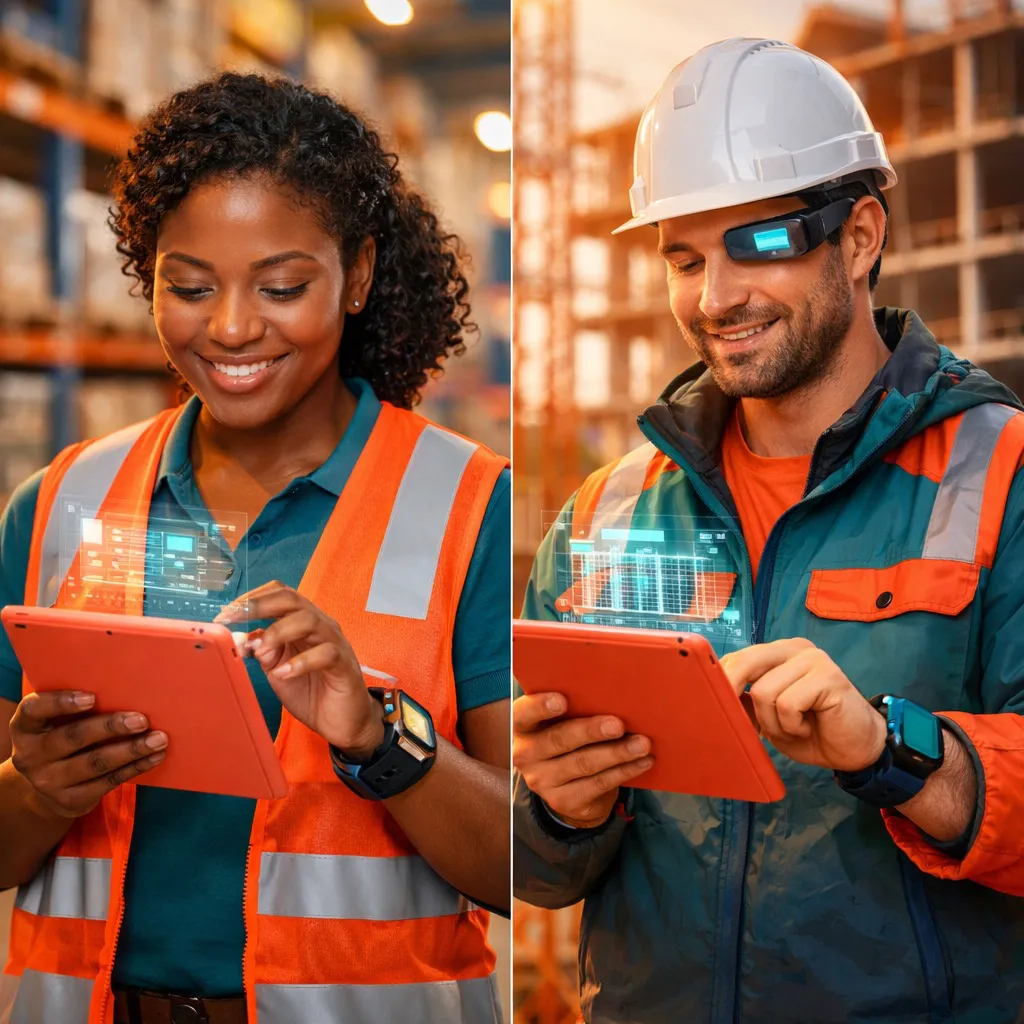
An estimated 2.7 billion workers worldwide are deskless. They work in factories, hospitals, construction sites, warehouses, retail stores, farms, and transportation networks. They do not have corporate email addresses. They rarely use laptops. Their primary computing device is a smartphone, often a personal device rather than one provided by their employer. Enterprise software, designed for desk-based professionals with reliable internet connections and large screens, is largely irrelevant to their daily work.
This gap represents both a massive market failure and a massive opportunity. Deskless workers constitute roughly 80% of the global workforce but receive less than 1% of enterprise software investment. The productivity gains that knowledge workers have experienced from digital tools — first from email and collaboration platforms, then from SaaS applications, and now from AI — have largely bypassed the deskless majority.
Humand’s $66 Million Bet
Humand, a Buenos Aires-founded startup, raised $66 million in a Series A round in February 2026 to build what it calls an “AI operating system for deskless workers.” The raise is notable both for its size — among the largest Series A rounds for a Latin American-founded company — and for the traction it reflects: 1.6 million users across 51 countries, deployed by enterprises in manufacturing, retail, healthcare, and logistics.
Humand’s approach centers on a mobile-first platform that replaces the patchwork of tools — bulletin boards, printed manuals, WhatsApp groups, spreadsheets — that deskless workers currently use to communicate with management, access information, and coordinate tasks. The platform combines several functions: internal communication (replacing email and Slack), task management (replacing paper checklists and spreadsheets), training and knowledge management (replacing printed manuals and classroom sessions), and now AI-powered assistance (replacing the need to call a supervisor for routine questions).
The AI layer is the critical differentiator. Humand’s AI assistant can answer questions about company policies, procedures, and safety protocols in natural language, available in the worker’s preferred language on their smartphone. A factory worker in Indonesia can ask, in Bahasa Indonesia, how to handle a specific quality control issue and receive an immediate answer drawn from the company’s knowledge base — without needing to find a manual, locate a supervisor, or read English documentation.
The voice-first interface is particularly important. Many deskless workers operate in environments where using a touchscreen is impractical — gloved hands in a factory, sterile environments in a hospital, outdoor conditions on a construction site. Humand’s voice interface enables interaction without requiring the worker to stop what they are doing, remove safety equipment, or navigate a visual interface.
The Market Opportunity
The deskless worker technology market is estimated at $350 billion annually when measured by the productivity losses, communication inefficiencies, and safety incidents that better technology could prevent. But the addressable market for software is smaller and harder to capture than these headline numbers suggest.
The fundamental challenge is unit economics. A SaaS company selling to desk-based knowledge workers can charge $20-50 per user per month and expect a 3-5 year customer lifetime. Deskless workers represent lower-value seats — employers are less willing to pay high per-user fees for workers who may be hourly, seasonal, or high-turnover. Humand and its competitors must achieve enterprise-wide deployment at lower per-seat pricing to build viable businesses.
The counterargument is scale. While per-seat revenue may be lower, the total addressable user base is 2-3x larger than the knowledge worker market. A company that captures even 5% of the deskless worker market at $5-10 per user per month would generate $8-16 billion in annual recurring revenue. The math works, but only at scale — which requires the kind of distribution efficiency that has historically been difficult to achieve in enterprise software for non-desk workers.
Several market dynamics favor deskless AI startups in 2026. Labor shortages in manufacturing, healthcare, and logistics are driving employers to invest more in worker retention and productivity — and technology that improves the deskless work experience is a retention tool. Regulatory requirements for training documentation and safety compliance create demand for digital knowledge management platforms. And the COVID-era normalization of digital communication, even among traditionally non-digital workers, has lowered adoption barriers.
Advertisement
The Competitive Landscape
Humand is not alone in targeting deskless workers, though it has the most significant traction to date. The competitive landscape includes both purpose-built deskless worker platforms and established enterprise software companies expanding downmarket.
Beekeeper, a Zurich-based company that has raised over $100 million, offers a mobile communication platform for frontline workers with integrations to HR and operations systems. The company has focused on hospitality and manufacturing, with deployments at large hotel chains and industrial companies. Beekeeper’s approach is communications-first, adding AI capabilities as a layer on top of its messaging platform.
WorkJam, which has raised over $80 million, targets the hourly and shift-based worker market with a platform that combines scheduling, task management, and communication. The company’s strength is in retail and quick-service restaurants, where shift management and task completion are critical operational needs.
Microsoft, the largest player in enterprise software, has made significant investments in reaching deskless workers through its Viva platform and the frontline worker features in Microsoft Teams. Microsoft’s advantage is distribution — any organization already using Microsoft 365 can extend Teams to frontline workers at minimal incremental cost. The disadvantage is that Teams is fundamentally a desktop-first application that has been adapted for mobile, not a mobile-native platform designed for the constraints and needs of deskless work.
The AI dimension introduces a new competitive axis. Humand’s investment in a voice-first, multilingual AI assistant designed for operational questions represents a different product category from communications-focused competitors. The question is whether AI-powered knowledge access — the ability for any worker to get instant, accurate answers to operational questions in their language — becomes the core value proposition that drives adoption and retention.
Why Enterprise AI Must Move Beyond the Desk
The concentration of AI investment in knowledge work is not just a market inefficiency — it is an architectural bias that reflects the backgrounds and assumptions of the people building AI products. Silicon Valley engineers, trained in environments where everyone has a laptop and an email address, naturally build tools that require a laptop and an email address. The result is an AI ecosystem that serves the needs of people who look like the people who built it.
Breaking this pattern requires rethinking fundamental assumptions about AI interface design, deployment architecture, and user interaction patterns.
Interface design for deskless workers must be voice-first and visual rather than text-first and keyboard-driven. The typical ChatGPT interaction — type a detailed prompt, read a long text response — is poorly suited for a worker wearing gloves on a factory floor or a nurse in a busy hospital ward. Effective deskless AI must support voice input, provide concise spoken or visual responses, and integrate with the physical environment through QR codes, NFC tags, or location-aware prompting.
Deployment architecture must accommodate unreliable connectivity. Many deskless work environments — factory floors, construction sites, agricultural operations — have intermittent or no internet connectivity. AI systems designed for always-connected cloud architectures fail in these environments. Effective deskless AI must support offline operation, local inference on the device, and seamless synchronization when connectivity is restored.
User interaction patterns must account for the episodic, task-driven nature of deskless work. Knowledge workers engage with AI tools for extended sessions — brainstorming, drafting, analyzing. Deskless workers need quick, specific answers to immediate questions: What is the torque specification for this bolt? What is the correct dosage for this patient’s medication? Where should I store this chemical? The AI must deliver accurate, concise answers in seconds, not minutes.
The Safety and Compliance Dimension
One of the most compelling use cases for deskless worker AI is safety and compliance. Industries like manufacturing, construction, healthcare, and logistics operate under extensive regulatory requirements for worker training, safety protocols, and compliance documentation. Failures in these areas result not just in regulatory fines but in injuries and deaths.
Traditional compliance approaches rely on periodic training sessions, printed manuals, and supervisor oversight — all of which have well-documented limitations. Workers forget training within weeks. Manuals are not consulted in the moment of need. Supervisors cannot be everywhere at once. The result is a persistent gap between documented procedures and actual practice that contributes to approximately 2.3 million workplace deaths annually worldwide.
AI-powered knowledge access at the point of work addresses this gap directly. A construction worker who can ask their phone about the correct safety procedure for a specific task — and receive an immediate, accurate, context-specific answer — is less likely to improvise or rely on memory. A nurse who can verify medication interactions in real time through a voice query is less likely to make a dosage error.
The liability implications are significant. An employer that deploys an AI system providing safety guidance assumes responsibility for the accuracy of that guidance. If an AI assistant provides incorrect safety information that contributes to an injury, the employer faces potential liability that exceeds any productivity gain. This creates a high bar for accuracy and reliability that distinguishes deskless worker AI from less safety-critical knowledge worker applications.
The Road Ahead
The deskless worker AI market is at an inflection point. The technology is capable — voice-first AI, multilingual models, and edge computing make it possible to deliver useful AI assistance to any worker with a smartphone. The demand is real — labor shortages, safety requirements, and productivity pressures drive enterprise willingness to invest. The market is massive — 2.7 billion potential users represent the largest untapped market in enterprise software.
The challenge is execution. Building for deskless workers requires different skills than building for knowledge workers: deep understanding of operational workflows, expertise in voice interface design, ability to deploy in connectivity-constrained environments, and willingness to serve a market where per-user economics are less attractive than the knowledge worker segment.
Humand’s $66 million raise and 1.6 million user base demonstrate that the market is viable. The question is whether deskless worker AI will follow the path of enterprise SaaS — where a small number of platforms achieved dominance by combining broad functionality with strong distribution — or fragment into vertical solutions optimized for specific industries.
The most likely outcome is both. Horizontal platforms like Humand that provide core communication, task management, and AI assistance will serve as the foundation. Vertical AI capabilities — trained on industry-specific knowledge bases and integrated with industry-specific operational systems — will differentiate providers in healthcare, manufacturing, construction, and logistics.
For the 2.7 billion workers who have been invisible to the technology industry, this evolution cannot come soon enough. The productivity gap between desk-based and deskless workers is not just an economic inefficiency — it is a structural inequality that technology, properly directed, has the potential to address.
Frequently Asked Questions
What does “The Deskless AI Frontier” mean?
The Deskless AI Frontier: Startups Building for 2.7 Billion Forgotten Workers covers the essential aspects of this topic, examining current trends, key players, and practical implications for professionals and organizations in 2026.
Why does the deskless ai frontier matter?
This topic matters because it directly impacts how organizations plan their technology strategy, allocate resources, and position themselves in a rapidly evolving landscape. The article provides actionable analysis to help decision-makers navigate these changes.
How does humand’s $66 million bet work?
The article examines this through the lens of humand’s $66 million bet, providing detailed analysis of the mechanisms, trade-offs, and practical implications for stakeholders.
Sources & Further Reading
- Humand Raises $66M Series A for Deskless Worker AI Platform — TechCrunch
- The 2.7 Billion: Why Technology Forgot Deskless Workers — Harvard Business Review
- Frontline Worker Technology Market Report 2026 — Gartner
- Workplace Safety and AI: Opportunities and Liabilities — MIT Sloan Management Review
- Beekeeper: Mobile Platform for Frontline Teams — Forbes