A Second-Edition Event Sizing Itself to a Continental Ambition
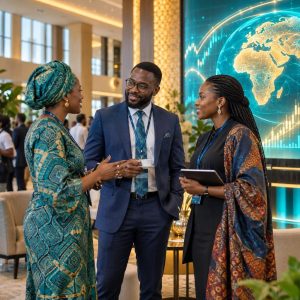
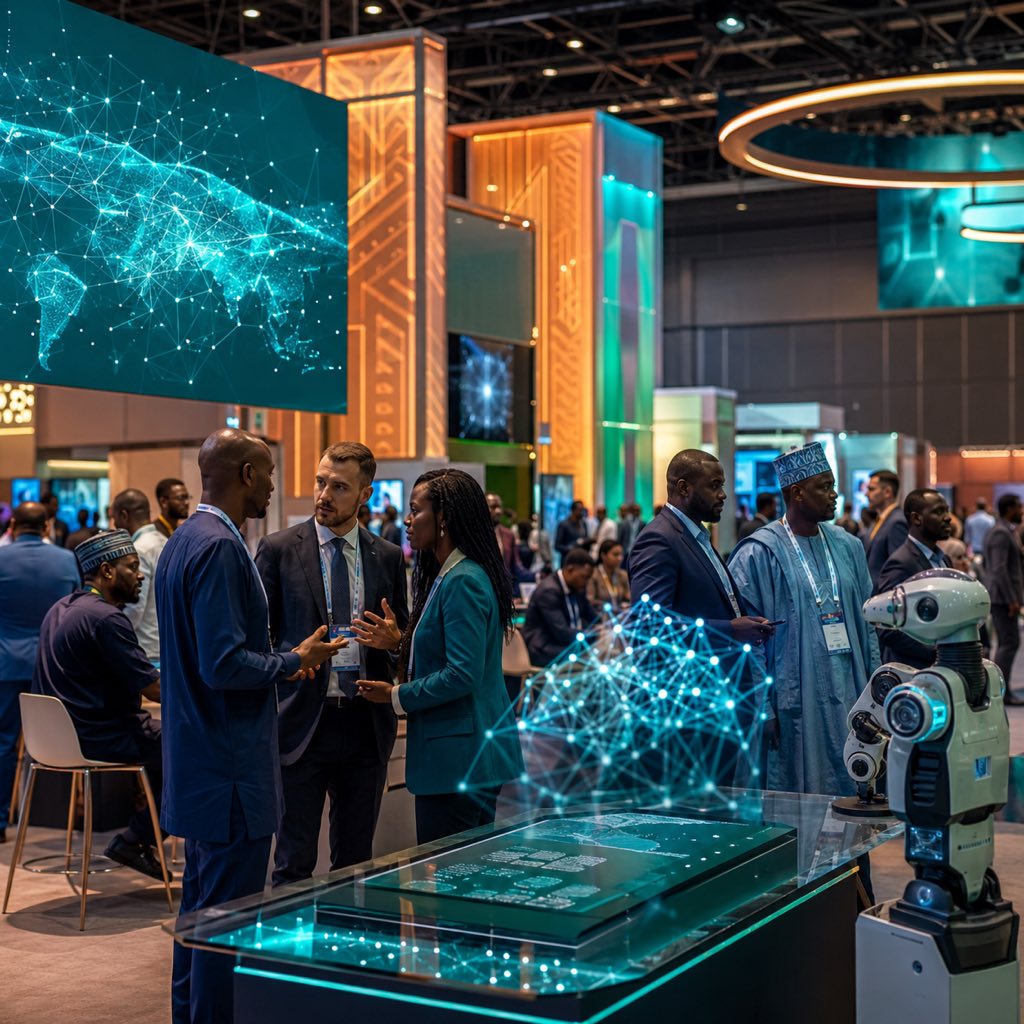
Nigeria is not running a trade show. It is staging a claim. According to The Sun’s report on GITEX Nigeria 2026, the event runs August 31 to September 3, 2026, across Abuja and Lagos, gathering “more than 1,000 startups and participants from multiple countries” and an investor programme of “more than 200 investors, representing over $200 billion in assets under management.” The framing is deliberately large: the event is pitched against a projected $1 trillion AI-driven economic opportunity by 2035 for the continent, under the theme “Beyond Connectivity, The Bridge to Sovereign Innovation.”
Two words in that theme carry the weight: sovereign innovation. This is not a conference about laying more fiber or selling more handsets — “beyond connectivity” is a pointed phrase. It signals a shift in ambition from consuming imported technology to building African models, infrastructure and financial rails. As Morocco World News reported, the event centers on “sovereign AI and digital independence,” exploring how African nations can transition from technology consumers to producers of their own solutions. That is a strategic thesis dressed as an events calendar.
Who Convenes It, and Why the Structure Matters
The event is not a private promoter’s affair. It is supported by the Federal Ministry of Communications, Innovation and Digital Economy in collaboration with the National Information Technology Development Agency (NITDA) — the same agency that in August 2026 signed Nigeria’s National Sovereign Cloud Initiative. That overlap is not coincidental. GITEX Nigeria is the shop window for a policy programme: sovereign cloud, digital public infrastructure and sovereign AI are being marketed to investors and startups in the same room, by the same state actors.
The structure reinforces the message. The program opens in Abuja with a Government Leadership and AI Summit — ministers, governors and regulators debating digital public infrastructure — then moves to Lagos for the Tech Expo and Future Economy Conference and the Startup Festival, with a new addition, FDX Nigeria, debuting as a track focused on digital finance and open banking. Government sets the policy narrative in the capital; capital and founders do the deals in the commercial hub. That division of labor — state legitimacy plus private dealflow, in one week — is precisely what turns an event into an investment magnet.
Advertisement
The $1 Trillion Number Is a Framing Device, Not a Forecast to Bank On
It is worth being honest about the headline figure. The $1 trillion AI opportunity is a projection for 2035, not money on the table today, and continental “potential” numbers are notoriously elastic. Its function here is rhetorical: it gives investors and governments a shared north star large enough to justify sovereign-scale infrastructure spending. Treating it as a settled forecast would be a mistake; treating it as a coordinating signal — the number everyone agrees to organize around — is closer to how it actually operates.
What is concrete and verifiable is the convening power. More than 200 investors with more than $200 billion in assets under management is not a projection; it is a guest list. And a guest list of that scale is the real product GITEX Nigeria sells: proximity to capital, and the implicit endorsement that comes from a government putting its name on the room. For a startup ecosystem, showing up on that map is worth more than any single deal, because it is how cross-border investors decide where to look next.
What This Means for Algeria’s Ecosystem
The blunt value of GITEX Nigeria for Algeria is as a mirror. It is a public, well-sourced benchmark of what a neighbor’s ecosystem looks like when it decides to be visible to continental capital — and the comparison is instructive.
1. Treat presence at continental events as a funding strategy, not a travel expense
A guest list of 200+ investors with $200B+ under management is a concentration of capital Algerian founders rarely stand in front of. Algeria’s startup agencies and funds should treat delegations to GITEX-scale events as a deliberate pipeline-building activity, with prepared founders and follow-up discipline — not as optional networking. Being in the room is the precondition for being on the map.
2. Borrow the “state legitimacy + private dealflow” model
The reason GITEX Nigeria pulls capital is that a government co-signs it. Algeria has the state institutions to do the same, but rarely packages policy narrative and private dealflow into a single, investor-legible event. Building an Algerian equivalent — or anchoring a strong national pavilion inside a pan-African one — would convert scattered activity into a visible proposition investors can price.
3. Adopt the sovereign-AI framing that is unlocking budgets
“Sovereign innovation” is doing real work: it aligns founders, ministries and investors behind domestic capability. Algerian policymakers should note that this framing is what is loosening infrastructure budgets across the region, and position Algeria’s own AI and cloud initiatives in the same language, because that is the vocabulary continental capital now responds to.
4. Send founders to the finance track, not just the main stage
The debut of a digital-finance and open-banking track signals where the near-term African money is: fintech and financial infrastructure. Algerian fintech founders in particular should target these specialized tracks, where the investors most likely to write African checks actually gather, rather than diffusing effort across a general expo floor.
Where This Fits in 2026’s Ecosystem
GITEX Nigeria 2026 is best read as a status report on the continental pecking order. Nigeria — already a leader in equity funding and now the author of a national sovereign-cloud framework — is using the event to compound its lead, converting policy momentum into investor attention in a single, choreographed week. The countries that show up with prepared founders, a government co-sign and a sovereign-AI story will be the ones cross-border capital remembers when it allocates for the second half of the decade. The $1 trillion figure is a framing device, and the 2035 horizon is a long way off, but the 200 investors are real and in the room this September. For Algeria, the event is less a piece of news to report than a benchmark to answer: when the continent’s capital gathers to decide where the next builders will come from, is Algeria a name on the list, or a country that reads about it afterward? That question does not require a trillion-dollar forecast to make it urgent.
Frequently Asked Questions
What is GITEX Nigeria 2026 and when is it?
GITEX Nigeria 2026 is the second edition of a technology and startup event running August 31 to September 3, 2026, across Abuja and Lagos. It gathers more than 1,000 startups and an investor programme of over 200 investors representing more than $200 billion in assets under management, under the theme “Beyond Connectivity, The Bridge to Sovereign Innovation.”
What does “sovereign innovation” mean in this context?
It is the thesis that African nations should shift from consuming imported technology to building their own AI models, infrastructure and financial rails. The event frames this around a projected $1 trillion AI-driven economic opportunity for the continent by 2035, and is co-supported by Nigeria’s Federal Ministry of Communications, Innovation and Digital Economy and NITDA.
Why should Algeria pay attention to a Nigerian event?
Because it is a benchmark for ecosystem visibility. GITEX Nigeria concentrates continental investor attention that Algerian startups rarely access, and it demonstrates a model — government legitimacy plus private dealflow plus a sovereign-AI narrative — that Algeria could adapt to put its own founders on the investment map.
Sources & Further Reading
- GITEX Nigeria 2026 to Drive Africa’s $1trn AI Ambition — The Sun Nigeria
- GITEX Nigeria 2026: Startups, AI, and Africa’s Digital Future in Focus — Morocco World News
- GITEX Nigeria 2026 to Drive AI, Digital Transformation Across West Africa — Morocco World News
- GITEX Nigeria: FG Targets $1trn Digital Economy Boost as Tech Giants Converge in Abuja, Lagos — Businessday NG
🔗 Related Intelligence
Nigeria’s AI Law: Africa’s First Framework for Governing Artificial Intelligence
Africa’s AI Map: 207 Startups, Three Hubs, and the New Builders Behind Them

Consumer or Builder: Africa’s $1 Trillion AI Fork in the Road

Africa’s AI Sandbox Moment: Nigeria’s NDPC Model and the Continental Playbook