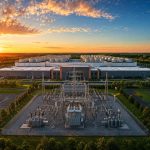
An Australian AI Infrastructure Bet Gets Bigger
Firmus Grid Limited, trading as Firmus Technologies and headquartered in Sydney, builds what it calls “AI Factories” — vertically integrated data center campuses combining proprietary cooling and energy technology with NVIDIA’s compute architecture. On August 7, 2026, the company announced it had fully subscribed a $2 billion strategic equity investment, with new capital from funds managed by Blackstone Tactical Opportunities and other Blackstone vehicles, plus follow-on commitments from NVIDIA and Coatue, and a new investment from trading firm Jane Street.
The scale of the round stands out even in a year when AI infrastructure has attracted enormous capital. Bloomberg reported the raise as one of the largest single infrastructure-focused rounds disclosed in the region this year, and outlets tracking the deal — including TNGlobal — noted that Firmus’s cumulative new equity over the trailing twelve months has now crossed $3 billion, spanning multiple rounds culminating in this $2 billion close.
Firmus builds around NVIDIA’s DSX AI Factory Reference Architecture, a blueprint for standing up GPU compute clusters faster than custom-engineered builds typically allow. On top of that reference architecture, the company runs its own HyperCube platform — a proprietary rack and cooling system it manufactures domestically in Australia — paired with what it describes as grid-aware software designed to manage power draw against local electricity grid constraints.
Where the Money Goes: Project Southgate and Beyond
The capital is earmarked specifically for scaling Project Southgate, Firmus’s flagship AI Factory campus rollout across Australia, and for what Co-CEO Oliver Curtis described as “early steps toward expansion into other Asia-Pacific markets, including Indonesia.” That framing matters: Firmus is positioning itself not as a single-site hyperscaler tenant but as a regional platform builder, competing for the compute capacity that Asia-Pacific AI companies currently have to source from US or Chinese cloud providers.
The investor list signals how differently AI infrastructure financing is being underwritten in 2026 compared to a typical venture round. Blackstone’s John Watson called AI infrastructure “among the firm’s highest conviction investment themes” — a private-equity-style commitment rather than a growth-equity bet on a product roadmap. Coatue’s Robert Yin pointed to Firmus’s “combination of proprietary intellectual property, manufacturing innovation, and a repeatable deployment model” as the differentiator, while Jane Street’s Daniel Pontecorvo framed the participation around a more basic constraint: “access to reliable, high-performance compute is increasingly important as AI models become larger.”
That last point is the real thesis behind rounds like this one. AI labs training and serving ever-larger models are compute-constrained, and the queue for GPU capacity at the major US hyperscalers has pushed capital toward regional builders who can promise faster time-to-power. Firmus’s pitch is that a manufactured, repeatable rack design plus grid-aware software lets it stand up capacity in Australia and Indonesia faster than a from-scratch hyperscaler campus — and investors from Blackstone to Jane Street are underwriting that promise directly, rather than waiting for Firmus’s AI-lab customers to prove out demand first.
Advertisement
What This Means for Regional AI Infrastructure Builders
1. Vertical integration is becoming the differentiator, not just capital access
Firmus didn’t just buy land and lease GPUs — it manufactures its own HyperCube rack and cooling platform domestically, which is what let Blackstone underwrite it as an infrastructure play rather than a real-estate play. Companies building AI data centers in capital-constrained regions should treat proprietary cooling/power engineering as a fundraising asset, not just an operating efficiency: it’s the difference between being valued as a landlord and being valued as an infrastructure manufacturer.
2. Grid-aware software is now a prerequisite, not a feature
Firmus explicitly markets its software as managing compute demand against grid constraints — a direct response to the same power-availability bottleneck that has slowed data center buildouts in the US and Europe. Any AI infrastructure operator entering a market with a constrained grid (which describes most of Asia-Pacific and North Africa alike) needs a credible, quantified answer to “how do you avoid becoming the reason for a local blackout” before institutional capital will commit at scale.
3. Private equity is now underwriting AI infrastructure directly, not through hyperscaler leases
Blackstone’s participation as a lead investor — not merely a landlord financing a hyperscaler-anchored building — reflects a broader shift: large private-capital pools are willing to take AI-factory equity risk directly rather than only financing real estate leased to Microsoft, Google, or Amazon. Founders building regional AI infrastructure should expect this class of investor to demand the same proprietary-technology and repeatable-deployment story Firmus offered, not just a signed hyperscaler lease.
The Bigger Picture: A Regional Compute Race
Firmus’s raise is a data point in a much larger pattern: AI infrastructure capital is increasingly flowing to regional platform builders rather than only to the big five US hyperscalers. For Asia-Pacific specifically, a Sydney-headquartered company with domestic manufacturing capability and a $10.5 billion valuation signals that investors believe the region can support locally built, locally powered AI compute — rather than depending entirely on capacity leased from Seattle, Redmond, or Mountain View.
The open question is whether Firmus’s grid-aware, manufactured-rack model actually delivers the faster time-to-power it promises once Project Southgate scales past its current Australian footprint into Indonesia and other Asia-Pacific markets with less mature grid infrastructure. If it does, the model is a template other capital-constrained regions — including North Africa — could study directly: proprietary hardware plus grid-constraint software as the wedge that turns private equity into an AI-infrastructure investor rather than a real-estate financier.
Frequently Asked Questions
What does Firmus Grid actually build?
Firmus Grid, trading as Firmus Technologies, builds “AI Factories” — data center campuses combining NVIDIA’s DSX AI Factory Reference Architecture with its own proprietary HyperCube rack and cooling platform, manufactured domestically in Australia, plus grid-aware software to manage power demand.
How much has Firmus raised and at what valuation?
Firmus closed a fully subscribed $2 billion strategic equity round on August 7, 2026, pushing its post-money valuation above $10.5 billion. The company’s total new equity raised over the trailing twelve months exceeds $3 billion.
Who invested and where will the money go?
The round was led by Blackstone Tactical Opportunities, with follow-on participation from NVIDIA and Coatue, and a new commitment from Jane Street. The capital funds the expansion of Project Southgate across Australia and early steps into other Asia-Pacific markets, including Indonesia.
Sources & Further Reading
- Firmus Announces Fully Subscribed $2 Billion Strategic Equity Investment — Firmus Newsroom
- AI Data Center Group Firmus Draws $2 Billion From Coatue, Nvidia — Bloomberg
- Australia’s Firmus raises $2B from Blackstone, Coatue, NVIDIA, to expand AI factories in APAC — TNGlobal
- Firmus Secures $2B Investment Led by Nvidia (NVDA), Blackstone for AI Data Center Growth — Blockonomi
🔗 Related Intelligence

Neysa’s $1.2 Billion Moment: Blackstone Bets on India’s AI Infrastructure Boom
Emerald AI’s $150M Series A: Betting That the Grid, Not the Chip, Is the Real AI Bottleneck

Baseten’s $1.5B Series F: Inside AI Inference’s Infrastructure Gold Rush

Horizon3.ai’s $250M Round: Betting Big on AI-vs-AI Cybersecurity