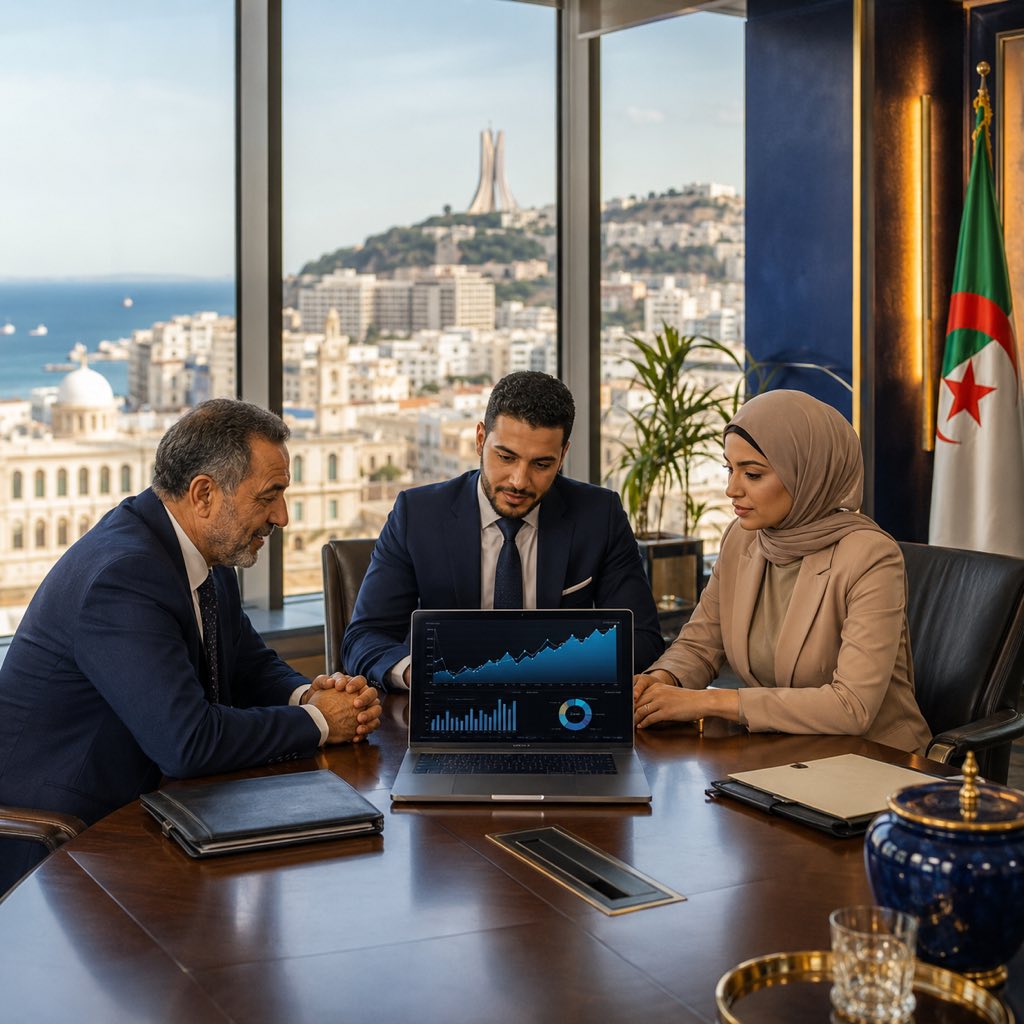
The Volz Exit Anatomy: Who Bought What from ASF
In December 2025, at the African Startup Conference in Algiers, Volz — the Algiers-based online travel agency founded in 2022 by Mohamed Abdelhadi Mezi and Hacene Seghier — closed a 600 million DZD (approximately $5 million) Series A round. According to Launch Base Africa’s deal coverage, the round was led by Tell Group, a regional investment firm, with participation from GIBA, the Biskra-based industrial conglomerate behind the Guedila mineral water brand. The same transaction delivered the Algerian Startup Fund (ASF) its first reported exit, with a 3.35x return on its initial seed ticket.
The structure of the deal matters more than the headline number. ASF general manager Anys Rahabi framed the moment in terms of capital recycling: as Arab Founders reported, the exit “signals that state-backed capital can be recycled” into the next cohort of seed investments. That word — recycled — is the entire LP thesis in one sentence. ASF wrote a public dinar-denominated check at seed; Tell Group and GIBA wrote private dinar-denominated checks at Series A; ASF booked a 3.35x multiple and returned the original principal plus a gain to the public balance sheet, with capacity to redeploy into the next 100 portfolio companies.
For the broader ecosystem, this is the first time the seed-to-Series-A handoff has worked entirely inside Algerian capital markets without a foreign anchor investor. According to the Startup Researcher deal note, the round was priced and closed in Algerian dinars — bypassing the capital controls that have historically forced Algerian rounds to route through Paris, London, or Dubai. That has two consequences. First, the legal complexity that comes with offshore SPVs disappears. Second, the LP base is structurally local — family offices and industrial groups whose capital was already onshore.
How the LP Syndication Actually Works
ASF was created in October 2020 at the initiative of President Abdelmadjid Tebboune, with operations starting in 2021. According to ASF’s own portfolio disclosure, the fund operates in partnership with six public banks — BEA, CPA, CNEP, BNA, Badr Bank, and BDL — and has received 963 applications, processed 445 funding requests, and covered 41 of Algeria’s 58 wilayas across 20+ business sectors. Regional ticket sizes go up to 150 million DZD per project. The capital base is public, but the partnership architecture was designed from day one to syndicate alongside private co-investors.
What was missing until Volz was the demand side. Algerian family offices and industrial groups had the capacity to write Series A checks — Tell Group and GIBA both demonstrated that — but they had no template for how to enter at a stage where the company was already de-risked by an institutional seed investor and a labeled-startup compliance trail. The Volz deal answered that question concretely. ASF held the early position and ran the founder-support cycle; the company hit traction milestones (Turkish Airlines commercial partnership, cash-on-delivery scale across the unbanked segment, dinar-denominated unit economics that proved out); Tell Group and GIBA underwrote a Series A priced to give ASF a 3.35x exit on its position.
The mechanics here are closer to a co-investment club than a traditional fund-of-funds. ASF does not sell limited partnership interests to Tell Group or GIBA directly. Instead, the public fund operates as a seed-stage anchor, runs portfolio management through the A-Venture accelerator network, and structures Series A rounds to give private co-investors a clean entry with a known cap table. The implication for Algerian private capital is that the unit of participation is the deal, not the fund — closer to how UAE family offices co-invest with Mubadala on specific tickets than how a US pension fund commits to a Sequoia vintage.
Advertisement
What This Means for Algerian Private Capital
For Algerian family offices and industrial groups sitting on dinar liquidity, the Volz syndication establishes a working playbook for venture exposure. The capital was always there; the labeled-startup and ASF-portfolio pipeline now provides the screening layer. As TechBuild Africa’s analysis of the deal noted, the transaction “demonstrates traditional Algerian industrial conglomerates increasingly viewing technology as an investment asset class rather than merely a service provider.” That reframe — from sponsor to investor — is the precondition for an LP base.
The participation thresholds are also accessible by regional standards. Volz’s 600 million DZD round, split between Tell Group’s lead and GIBA’s participation, implies individual checks in the 150-400 million DZD range — roughly $1.2 million to $3.3 million. That is well within the deployment capacity of the larger Algerian industrial groups and family offices that have historically invested in real estate, retail, and listed equities. The risk-adjusted return on those alternatives has compressed; venture exposure now has a real Algerian comparable, with a 3.35x multiple booked in a 4-5 year window.
The compliance picture is also unusually clean. The Startup Label is the qualifying gate. ASF’s diligence trail covers financial review, founder interviews, and traction validation. For a co-investor entering at Series A, the work-already-done is substantial: the company has passed the labeled-startup audit, navigated the public-bank partnership stack, and demonstrated traction metrics independently. That reduces the diligence burden for private co-investors to a Series A-specific question — valuation and growth assumptions — rather than a top-of-funnel question about whether the company is real.
What Algerian family offices and industrial groups should do
1. Map your co-investment capacity alongside ASF’s next cohort
ASF’s next 100 portfolio companies are already in pipeline. With 445 funding requests processed against 963 applications, the second-cohort cap rate gives every Algerian family office and industrial group a one-year window to size their venture allocation against the actual deal flow. Start by mapping which of your operating sectors overlap with ASF’s 20+ investment verticals — fintech, agri-tech, health, education, and green-tech are the heaviest concentrations. A family office sitting on 2-5 billion DZD of investable liquidity can plausibly deploy 200-500 million DZD per year into Series A co-investments without straining diversification. Anchor that against Volz’s $5 million round structure: two private co-investors at the lead-plus-participant tier was sufficient to close a benchmark round.
2. Build a direct engagement channel with ASF and A-Venture
The next round will not be sourced through a generic deal-flow newsletter. Tell Group and GIBA were positioned because they had pre-existing relationships with the ASF portfolio companies and the A-Venture acceleration network. The practical step is to designate one investment principal inside your family office or industrial group as the ASF liaison, attend the African Startup Conference and ASF cohort showcase events, and request portfolio briefings under NDA. ASF’s general manager Anys Rahabi has been explicit that recycling capital depends on building the private LP base — the door is open. The cost of building that channel is small relative to the option value of being one of three to five private co-investors ASF calls when the next Series A is being structured.
3. Define a portfolio construction rule before writing the first check
The Volz exit is one data point, not a thesis. Industrial groups and family offices entering venture for the first time should adopt the portfolio-construction discipline that institutional LPs use — never more than 15-20% of your alternatives allocation in venture, never more than 25% of your venture allocation in a single deal, and a minimum of 8-10 deals across a cohort before any reasonable inference about risk-adjusted returns. Apply the same logic to sector concentration: GIBA’s industrial exposure to bottled water and Tell Group’s financial services exposure mean their venture book should not double-down on adjacent verticals. Build a written portfolio rule before the second check, not after the fifth.
The Recycling Model: How Algerian Exits Fund the Next Wave
What Volz validates is not a single startup or a single fund — it is a closed-loop model where Algerian seed capital, recycled through a Series A absorption by Algerian private capital, returns enough to redeploy into the next cohort. The 3.35x multiple is not a venture-grade outlier; it is a sustainable, repeatable number that lets ASF and its private co-investors run the model again on cohort 2, cohort 3, and beyond. If the next ten exits print between 2x and 4x, the fund mechanics work, and Algeria has built the country’s first endogenous venture pipeline without depending on foreign LP capital.
The structural lesson for Algeria’s 2026 ecosystem is that the bottleneck was never deal flow or operator talent. Volz built a category-defining product with two Algerian founders in four years. The bottleneck was the Series A handoff — the moment when public seed capital needs to be absorbed by private growth capital so the public fund can recycle into the next seed cohort. Tell Group and GIBA showed that this handoff can happen in dinars, on Algerian soil, with Algerian capital, and at a clean multiple. The model is now public, the precedent is set, and the question for every family office and industrial group with deployable liquidity is no longer whether to participate, but how quickly to build the diligence and decision-making infrastructure to be the lead on the next deal.
Frequently Asked Questions
How can an Algerian family office co-invest alongside ASF?
ASF does not currently sell limited partnership interests to private investors. Co-investment happens at the deal level — when an ASF portfolio company moves to Series A, the fund structures the round to give private co-investors a clean entry alongside the public seed position. The practical path is to engage directly with ASF general management and the A-Venture accelerator, attend portfolio showcase events, and request briefings on companies approaching Series A. Tell Group and GIBA were positioned through this kind of pre-existing relationship.
What ticket size makes sense for a first venture co-investment in Algeria?
Based on the Volz round structure, individual private co-investor tickets in the 150-400 million DZD range (roughly $1.2-3.3 million) were sufficient to close a benchmark Series A. For a family office sitting on 2-5 billion DZD of investable liquidity, deploying 200-500 million DZD per year across 2-3 deals is a reasonable starting allocation that preserves diversification while building venture exposure.
What due diligence does ASF complete before a Series A round?
ASF’s diligence cycle covers the Startup Label compliance review, founder interviews, financial audit, public-bank partnership integration, and traction validation against milestone targets. For a private co-investor entering at Series A, the work-already-done is substantial — the remaining diligence focuses on valuation, Series A-specific growth assumptions, and the cap table mechanics of the round itself, rather than top-of-funnel questions about whether the company is operationally real.
Sources & Further Reading
- Algeria’s Public Startup Fund Scores First Exit as Travel Tech Volz Raises $5M — Launch Base Africa
- Volz Raises $5M, Driving First Exit for Algerian Startup Fund — Startup Researcher
- Volz $5M Funding Round Mobilizes Algerian Public Startup Fund and Local Capital — TechBuild Africa
- Volz Algeria Raises $5M, Marking Startup Fund Exit — Arab Founders
- Algerian Startup Fund — Official Site
🔗 Related Intelligence

VOLZ’s $5M Series A and Algeria’s First Public VC Exit: The Venture Capital Turning Point

ASF’s First Big Exit: How the VOLZ 3.35x Return Validates Algeria’s Startup Fund

Algeria’s First VC Exit: ASF’s 3.35x Return on Völz Signals Ecosystem Maturity

Algeria Startup Fund After the Volz Exit: Which Portfolio Companies Are Positioned Next