What Decree 26-07 Actually Requires
The structural significance of Presidential Decree No. 26-07 is not that it exists — Algeria has had a national cybersecurity framework since January 2020 — but that it mandates operational units inside every public institution. Previous frameworks placed ASSI (Agence de la Sécurité des Systèmes d’Information) at the center of national coordination; Decree 26-07 distributes responsibility downward into every ministry, agency, and public enterprise.
According to Ecofin Agency, each public entity must establish a dedicated cybersecurity unit that operates separately from IT management departments and reports directly to institutional leadership — not to the CIO or IT director. The unit carries four core responsibilities: designing and overseeing the institution’s cybersecurity policy; conducting risk mapping with deployed remediation plans; ensuring continuous monitoring and regular audits; and mandating immediate incident reporting to relevant authorities, including ASSI, on significant events.
The decree also extends its reach into procurement: cybersecurity units must work with procurement and internal security bodies to strengthen security clauses in outsourcing contracts. Any vendor that signs a public-sector IT contract after January 2026 should expect their agreement to include security obligations derived directly from this decree.
TechAfrica News reported that the decree complements the institutionalization of the CISO role across state entities — a governance reform that ASSI has been building toward since the 2020 framework. Together, they represent a two-layer architecture: ASSI coordinates nationally; institutional units execute locally. The decree provides no compliance deadline, which means implementation pace is set by the head of each institution — a feature that creates opportunity for early movers and risk for laggards.
The Threat Context That Drove the Mandate
The timing of Decree 26-07 is not incidental. Algeria’s 2024 threat data is stark: more than 70 million attempted attacks targeted Algerian systems during the year, including over 13 million phishing attempts blocked and nearly 750,000 malicious email attachments detected. The country ranked 17th globally among the most-targeted nations — a ranking that reflects both the expansion of digital services and the strategic imperative to strengthen institutional defenses at the public-sector level.
President Tebboune had already responded at the strategic level: on December 30, 2025, he signed Presidential Decree No. 25-321 formally approving Algeria’s National Cybersecurity Strategy for 2025–2029. One week later, Decree 26-07 provided the operational architecture. The sequencing matters — the strategy sets the direction, the decree mandates the institutional machinery. What Algeria now has is a complete governance stack: national strategy, a lead agency (ASSI under the Ministry of National Defence), and institutionally-embedded execution units.
The ASSI-led 2025–2029 strategy is organized around four pillars: technical capacity building, legal and regulatory development, education and research, and structured cooperation. The Director General, Major General Abdeslam Belghoul, has defined digital sovereignty — the state’s capacity to control its own data, networks, software, and information systems — as the doctrine underlying the strategy. Decree 26-07 is the first major operational output of that doctrine.
Advertisement
What This Means for Algerian Cybersecurity Professionals and Vendors
1. Certified Talent Is Now a Procurement Requirement — Get Certified Before Demand Peaks
Every new cybersecurity unit created under Decree 26-07 needs a unit head and at least one certified cybersecurity professional. With hundreds of public institutions required to comply, the demand signal is clear: Algeria’s pool of holders of CISSP, CISM, or CEH certifications — along with ASSI-recognized national certifications — is about to face institutional pressure it has not encountered before.
For individual professionals, the strategic move is to accelerate certification now, before competition for these roles intensifies. Candidates who combine a technical security background with experience in governance frameworks (ISO 27001, NIST CSF) are strongest, because Decree 26-07 explicitly frames unit responsibilities around policy design and risk mapping — governance functions — not just technical incident response. Institutions will hire people who can write a cybersecurity policy on day one, not just configure a firewall.
2. Vendors Must Align Their Contracts to the Decree’s Procurement Language
The decree’s requirement that cybersecurity units participate in outsourcing contract security clauses is a direct commercial signal to IT and cybersecurity vendors operating in the public sector. Any company bidding on public-sector contracts after January 2026 should expect tenders to include security annexes derived from Decree 26-07 — covering risk mapping obligations, incident reporting SLAs, and data protection compliance with national legislation.
Vendors who proactively develop a Decree 26-07 compliance annex — a short document explaining how their service architecture, incident notification procedures, and data handling practices satisfy the decree’s requirements — will move faster through procurement cycles. Those who wait for the institution to define the requirements in the tender will be on the back foot. The winning posture is to arrive at a public-sector RFP with the compliance documentation pre-written.
3. The Absence of a Deadline Is an Opportunity for Early Movers
No compliance timeline is specified in Decree 26-07. That may seem like a risk-reducing feature, but in practice it creates a window in which early-moving institutions can establish the benchmark practices that others will follow. For cybersecurity consultants and managed-security-service providers, this is the moment to pursue early pilot engagements with ministries and agencies that are motivated to lead rather than follow.
ASSI’s coordination role under the decree means it will eventually publish implementation guidance — technical notes, template policies, and reporting formats. Companies that participate in early institutional deployments will be the ones whose methodologies inform those templates. Influencing the guidance document is worth more than being an efficient complier after it is published.
The Bigger Picture: A Public-Sector Market That Did Not Exist Before January 2026
Decree 26-07 has effectively created a new public-sector cybersecurity market overnight. Before January 7, 2026, the conversation about cybersecurity in Algerian public institutions was aspirational — acknowledged as important, but without a structural mandate driving resource allocation. After January 7, every minister and agency head is legally responsible for standing up a unit and coordinating with ASSI. That shift from aspiration to obligation is what creates a market.
The size of that market is not trivial. Algeria has over 40 ministries, hundreds of public agencies, and thousands of public enterprises that fall within the decree’s scope. Even if only the top tier of institutions — the 40-50 most digitized agencies — implements in 2026, the demand for certified professionals, security tooling, risk-assessment services, and ASSI-aligned managed detection and response will be substantial.
The decree also establishes the institutional plumbing for a sector-wide security information sharing network: all units report to ASSI on significant incidents, which means ASSI accumulates a national threat intelligence picture that it can, in time, redistribute to institutions in the form of threat briefings and defensive guidance. Algeria is, in short, building the infrastructure for a national cyber defense ecosystem — and Decree 26-07 is the foundation layer.
Frequently Asked Questions
What does Presidential Decree 26-07 specifically require from Algerian public institutions?
Each public institution must create a dedicated cybersecurity unit that operates independently from the IT management function and reports directly to the institutional head — not the CIO. The unit is responsible for cybersecurity policy design, risk mapping, continuous monitoring, and immediate incident reporting to ASSI and other relevant authorities. The decree also extends unit responsibilities to reviewing security clauses in outsourcing and procurement contracts, making it relevant to any vendor operating in the public sector.
How does ASSI’s role change under Decree 26-07?
ASSI — the Agence de la Sécurité des Systèmes d’Information, operating under the Ministry of National Defence — retains its national coordination mandate but now has a formal reporting relationship with every institutional cybersecurity unit created under the decree. Significant incidents must be reported to ASSI immediately, which builds a national threat intelligence picture. The agency is expected to issue implementation guidance — templates, technical notes, reporting formats — based on early deployments, giving early-adopting institutions influence over the guidance that later institutions will follow.
Is there a compliance deadline for Decree 26-07?
No specific compliance deadline is set in the decree. Implementation pace is at the discretion of each institutional head. This creates both risk — laggard institutions may face future pressure when ASSI establishes inspection mechanisms — and opportunity for vendors and cybersecurity professionals who can engage early pilot institutions and establish the de facto implementation standard before formal guidance is published.
Sources & Further Reading
🔗 Related Intelligence

Decree 26-07 Six Months In: How Algerian Public Bodies Are Standing Up Cybersecurity Units in 2026
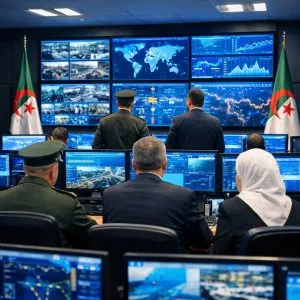
Algeria Establishes Mandatory Cybersecurity Units in Public Sector

Decree 26-07: Algeria Mandates Cybersecurity Units Across All Public Institutions

Decree 26-07: Algeria’s Cybersecurity Units Mandate — What Enterprises Must Do Now