Transport Displaces Fintech at the Top of Africa’s Funding League Table
For most of the past decade, African startup funding conversations began and ended with fintech. Mobile money, payment infrastructure, digital lending, and insurance technology dominated deal flow, valuations, and founder ambitions. In early 2026, that dominance broke.
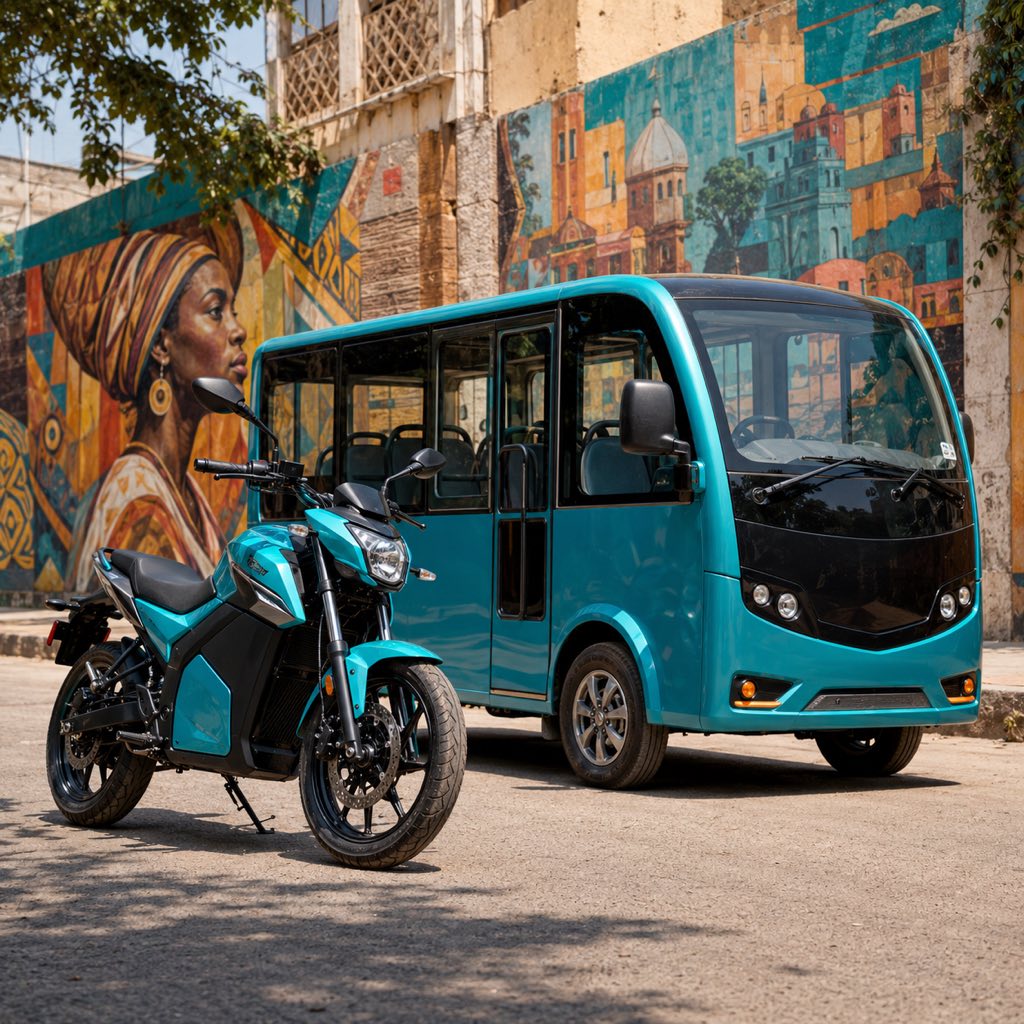
Transport and logistics startups captured the largest share of Africa’s startup capital in the first quarter of 2026, driven by a convergence of electric vehicle technology, infrastructure investment, and the recognition that African cities — whose informal transport networks have always been entrepreneurially managed — offer better conditions for EV deployment than traditional automotive markets. The motorcycle taxi (boda boda, okada, zemidjan) is the continent’s default last-mile transport vehicle: millions of riders, no dealership financing, constant fuel expense, and a driver community desperate for lower operating costs. That is exactly the problem electric mobility solves.
Two companies stand above the funding landscape: Spiro, which has raised more capital for African electric mobility than any company in history, and GoCab, which has reimagined the problem not as hardware deployment but as driver financial inclusion with EVs as the vehicle of delivery.
Spiro: $150 Million and 80,000 Motorcycles Later
Spiro began the year with the most dramatic validation in African clean energy startup history. In October 2025, it raised $100 million — Africa’s largest-ever electric mobility investment — to expand its battery-swap network across the continent. Three months later, in February 2026, Spiro secured an additional $50 million in debt facilities from Afreximbank, Nithio, and the Africa Go Green Fund, managed by Cyngum Capital — bringing total recent capital to $150 million.
The operational scale is remarkable: Spiro has deployed over 80,000 electric motorcycles, established more than 2,500 battery swap stations (over 400 in Kenya alone), circulated approximately 300,000 batteries, completed 30 million battery swaps, and enabled over one billion low-carbon kilometers of travel. The company operates in six countries — Kenya, Uganda, Rwanda, Nigeria, Benin, and Togo — with active pilots in Cameroon and Tanzania.
The market impact in Kenya is statistically visible. Kenya’s electric motorcycle market reached a 15.3 percent share of new motorcycle sales in 2025 (25,277 units), up from 7.1 percent in 2024 and 3.6 percent in 2023. Spiro holds approximately 60 percent of new e-motorcycle sales in Kenya — a market share that reflects both the quality of its battery-swap infrastructure and the difficulty of operating electric motorcycles in Africa without that infrastructure. A motorcycle that can swap a depleted battery in under 60 seconds at a station 10 km away is operationally competitive with gasoline. Without the station network, it is not.
The battery-swap model is Spiro’s core competitive insight. Africa’s electric vehicle adoption challenge is not demand — riders want lower fuel costs — but infrastructure: charging a battery overnight assumes a reliable power supply that most African cities cannot guarantee. Battery-swap bypasses the charging problem entirely. Riders swap a depleted battery for a fully charged one at a station, the same way they previously stopped to refuel. The economics work for drivers (lower operating costs than petrol), for Spiro (recurring swap fees plus vehicle financing), and for cities (reduced urban air pollution).
Advertisement
GoCab: Mobility Financing With EVs as the Delivery Mechanism
Where Spiro is fundamentally a hardware and infrastructure company, GoCab is a financial services company that uses electric vehicles as its product. Founded in 2024, GoCab raised $45 million in February 2026 — comprising $15 million in equity co-led by E3 Capital and Janngo Capital, plus $30 million in debt — after just 18 months of operations and $17 million in annual recurring revenue.
GoCab’s model addresses a structural problem that Spiro’s hardware approach does not: gig workers — ride-hailing drivers, delivery couriers — cannot access ethical vehicle financing. Banks require collateral. Lease companies charge predatory rates. The informal hire-purchase arrangements that prevail charge effective annual interest rates that can exceed 50 percent. GoCab uses telematics data from its driver platform to underwrite vehicle loans against demonstrated earning capacity rather than credit history or physical collateral, enabling a “drive-to-own” model where drivers progressively build equity in their vehicle through platform earnings.
The company offers Shariah-compliant financing — critical for market access across West Africa and North Africa — and operates in five countries: Côte d’Ivoire, Senegal, Morocco, Chile, and Nigeria. The Morocco presence is particularly notable from an Algerian perspective: Morocco’s ride-hailing market is structurally similar to Algeria’s, with Yassir and Temtem both operating across the Maghreb, and GoCab’s entry creates a potential regional financing infrastructure that could eventually extend further across North Africa.
GoCab is targeting $50 million in ARR by end of 2026 and $100 million in 2027 — a trajectory that implies roughly tripling the business in 18 months. The company’s core claim is that financial inclusion and electric mobility are not separate missions — they are the same mission, because drivers who own their vehicles invest in maintaining them and choose electric when the economics clearly favor it.
What This Means for Founders and Investors in Africa’s Transport Sector
The Spiro and GoCab cases are not simply funding announcements. They define the structural playbook for African transport tech in the second half of the 2020s. Understanding that playbook reveals where the next wave of opportunity and competitive pressure will emerge.
1. The Battery-Swap Model Is Africa’s EV Charging Infrastructure Standard
Spiro’s market share in Kenya and its six-country footprint demonstrate that battery-swap is winning the EV infrastructure debate in Africa — for the same reason that fiber-skipping to mobile internet worked: building a parallel infrastructure that avoids the existing infrastructure’s constraints is faster than upgrading the existing infrastructure. Founders building EV-adjacent businesses in logistics, fleet management, or energy storage should assume battery-swap as the de facto standard in major African markets and build for that architecture rather than plug-in charging.
2. Mobility Financing Is the Hidden Layer of the EV Transition
GoCab’s $17 million ARR at 18 months demonstrates that the financial inclusion problem in transport is large, underserved, and commercially attractive. Every EV deployment programme — whether motorcycle, three-wheeler, or light commercial vehicle — faces the same driver financing bottleneck. Startups that solve the financing layer (as GoCab does) or the insurance layer or the maintenance financing layer will become essential infrastructure for every hardware-focused EV company. The transport transition generates multiple fintech opportunities that are not visible until the hardware layer exists at scale.
3. Shariah-Compliant Structures Open the North African Market
GoCab’s Shariah-compliant financing model is not a niche accommodation — it is a market access strategy for the 500 million Muslims across North Africa, the Sahel, and East Africa for whom interest-bearing loans create both regulatory and cultural friction. Startups building mobility financing, trade financing, or working capital products for African markets should evaluate Shariah-compliant structures as table stakes for North African market entry, not as a subsequent adaptation.
4. The Data Asset Compounds With Every Kilometer
Both Spiro and GoCab are generating proprietary datasets that become more valuable as scale increases: Spiro accumulates battery performance data, rider behavior patterns, and station utilization rates across six countries and 30 million swaps. GoCab accumulates driver earnings data, vehicle performance data, and loan repayment patterns across five markets. These datasets are not incidental — they are the core competitive moat that prevents replication. Founders building at the intersection of mobility and data should plan from day one for how their operational dataset creates proprietary underwriting, maintenance prediction, or routing advantages that pure-capital competitors cannot easily replicate.
The Regional Picture: What Africa’s E-Mobility Surge Means Beyond the Continent
Africa’s electric motorcycle market is solving problems that the global automotive industry has not: how to deploy electric vehicles profitably in markets with unreliable grid infrastructure, low average income, high informal employment, and dense urban mobility demand. The solutions — battery-swap networks, driver-financing models, telematics-based underwriting — are not Africa-specific. They are globally relevant for the 3 billion people in Asia, Latin America, and South Asia who face similar constraints.
Spiro is already exporting its model: its technology and operations approach, developed through 30 million battery swaps across East and West Africa, is the most tested real-world dataset for electric motorcycle operations in constrained environments. GoCab’s expansion to Chile demonstrates that the mobility financing model is geographically portable — the gig worker financing problem in Santiago is structurally similar to the same problem in Lagos.
The African transport tech companies that achieve scale in 2026 are not solving a local problem. They are building the reference model for the global electric mobility transition in markets that the traditional automotive industry has historically underserved. That is a considerably larger prize than the African market alone.
Frequently Asked Questions
Q: How does Spiro’s battery-swap model work in practice?
A Spiro battery-swap station operates similarly to a parcel locker: digital authentication releases a locker containing a fully charged battery, the rider manually removes the depleted battery from their motorcycle and inserts the charged one — a process that takes under 60 seconds — and rides away. The depleted battery charges in the station until the next rider needs it. Riders pay a swap fee (typically cheaper than the equivalent gasoline cost) rather than owning or charging the battery themselves.
Q: Which African markets are most ready for EV mobility deployment?
Kenya has the most mature market, with 15.3 percent of new motorcycle sales being electric in 2025 and Spiro holding 60 percent of that market. Rwanda, Uganda, Nigeria, Benin, and Togo are active markets for Spiro. Morocco, Côte d’Ivoire, Senegal, and Nigeria are active for GoCab. The enabling conditions are similar across these markets: high motorcycle density, organized rider communities, and government willingness to support EV deployment through tax exemptions or station permits.
Q: Could GoCab or Spiro expand into Algeria?
Algeria’s motorcycle culture is less dominant than East or West African markets — the country’s geography and urbanization patterns favor cars and three-wheelers differently. GoCab’s Morocco presence creates the closest regional reference point. Algeria’s upcoming transport digitization efforts and its existing Startup Label infrastructure could attract pilot programmes, but the structural demand conditions (motorcycle density, informal gig economy scale) are currently less favorable than Spiro’s or GoCab’s core markets.
Sources & Further Reading
- Spiro Raises $50 Million for Electric Motorcycles and Battery Swapping — CleanTechnica
- Spiro Raises $100M — Africa’s Largest-Ever E-Mobility Investment — TechCrunch
- GoCab Raises $45M to Scale Driver Ownership and Electric Vehicles — TechPoint Africa
- GoCab Secures $45M to Scale EV Fleets and Financial Inclusion — Fintech Global
- Spiro Secures $50M from Afreximbank to Expand Battery-Swapping Network — ABC News
🔗 Related Intelligence

Logistics & Transport: Africa’s New Top-Funded Sector in 2026

Africa’s Utility-First VC Cycle: B2B SaaS and Mobility Win Capital in 2026

Africa’s AI Map: 207 Startups, Three Hubs, and the New Builders Behind Them

Africa Startup Funding 2026: $887M in Four Months as Deal Count Drops 51%