The Infrastructure Window Algeria Cannot Afford to Miss
Africa’s data center landscape is consolidating around a handful of gateway cities: Johannesburg, Lagos, Nairobi, Cairo. According to the Africa & Middle East Data Center Colocation Report 2026, the market will expand from $3.8 billion in 2025 to $11.1 billion by 2030, fueled by AI and GPU workload demand, hyperscaler build-out, and hybrid multi-cloud enterprise adoption. Algeria is absent from that shortlist — not because it lacks geography or energy, but because its colocation infrastructure has not yet reached the threshold that hyperscalers require before they commit capacity.
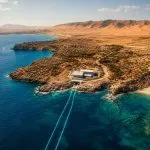
That gap, however, is closing. Algeria currently operates five submarine cable systems: SeaMeWe-4, TE North/TGN-Eurasia, the Oran-Valencia (ORVAL) link, Med Cable Network, and Alpal-2 — providing a combined installed capacity of 10.2 terabits per second across the Mediterranean corridor. The incoming Medusa cable system, connecting ten Mediterranean countries including Morocco, Algeria, Tunisia, Italy, Greece, and Egypt, will add a dedicated high-capacity, ultra-low-latency route from Algerian landing stations directly into European internet exchange points. Algérie Télécom and Italian carrier Sparkle signed the MoU for a new direct Italy-Algeria cable in July 2025, with the partnership also covering value-added services in cybersecurity, cloud computing, and technical support for data center development.
This is not incremental. A direct Italy link, combined with Medusa’s multi-country mesh, turns Algeria from a relay node into a genuine transit origin — the difference between being a pipe and owning the pump station.
What the Medusa Cable and the North African Mesh Actually Enable
The Medusa system is an 8,760-kilometer network designed with up to 24 fiber pairs per segment, each capable of carrying up to 20 terabits per second. For Algeria, this matters on two distinct layers.
First, raw capacity for domestic traffic growth: Algeria’s internet penetration reached 76.9% in 2023, leaving approximately 10.4 million people still offline. As that gap closes — through SNTN-2030’s 500-plus digitalization projects and Algérie Télécom’s infrastructure expansion — domestic bandwidth demand will surge. The Medusa-plus-Italy route provides the headroom to absorb that demand without congestion.
Second, transit revenue: when European hyperscalers route traffic to sub-Saharan Africa, the efficient path passes through the Mediterranean. Currently, the primary transit corridors run through Marseille and Egypt. Algeria sits between both. A carrier-neutral colocation facility in Algiers or Oran, co-located on the Medusa landing station, can sell rack space and cross-connect services to cloud providers that want a northern African transit point without the premium of the established Egyptian hubs. ConsoleConnect’s analysis of African digital infrastructure notes that 36 of 54 African nations now have data protection laws, creating compliance demand for regionally anchored traffic breakout — exactly the service an Algerian carrier-neutral facility can offer.
Advertisement
What Algerian Decision-Makers Should Do Right Now
1. Anchor a Carrier-Neutral Colocation Facility to the Medusa Landing Station
The highest-leverage move is to develop at least one carrier-neutral colocation facility co-located with or directly connected to Algeria’s Medusa landing point — either in Oran, near the existing ORVAL infrastructure, or in Algiers. “Carrier-neutral” is the critical qualifier: a facility owned exclusively by Algérie Télécom will not attract international cloud providers that require vendor-independent cross-connect options. The reference models here are Equinix in Marseille and Teraco in Johannesburg — both carrier-neutral, both positioned on major cable landing stations, both now the default transit point for their region. Equinix has committed $390 million over five years to African expansion. The window for Algeria to establish a carrier-neutral anchor before that investment reaches the Moroccan or Tunisian coast is measured in 18 to 36 months, not years.
2. Negotiate a Point of Presence Agreement Inside European IXPs
The Sparkle-Algérie Télécom MoU includes a commitment to provide “a point of presence in Europe fully dedicated to Algérie Télécom.” That PoP, once active, should be leveraged to peer directly inside one of the major European internet exchange points — AMS-IX in Amsterdam, DE-CIX in Frankfurt, or LINX in London. Direct IXP peering reduces round-trip latency for Algerian traffic by 20 to 40 milliseconds compared to transit-heavy routes, and it makes Algeria-anchored colocation commercially attractive to European enterprises that want a southern Mediterranean breakout point for Africa-bound traffic. The Ministry of Digital Transformation should treat this PoP negotiation as a trade infrastructure priority, not a telecom operator side deal.
3. Build a Sovereign-Compatible Compliance Framework for Cross-Border Data Transit
Thirty-six of Africa’s 54 nations have enacted data protection legislation, and the European General Data Protection Regulation imposes adequacy requirements on data flowing into third countries. An Algerian carrier-neutral facility that wants to serve European and Gulf hyperscalers must offer documented compliance guarantees: data residency options, audit rights, and incident notification SLAs that satisfy both GDPR and the emerging African Union Data Policy Framework. Law 18-07 on personal data protection provides the domestic foundation; the gap is a published cross-border data transfer framework that international legal counsel can review and approve before their clients commit rack space. ARPT and the MPTTN should prioritize publishing that framework in parallel with the physical infrastructure build.
4. Leverage Algeria’s Renewable Energy Advantage in Hyperscaler Negotiations
Hyperscalers publish carbon commitment targets that now directly influence where they place colocation demand. Algeria’s plan to commission 1,480 MW of new photovoltaic capacity by August 2026 — across nine new solar plants — creates a renewable energy supply argument that Kenya tried and failed to execute at scale. Unlike Kenya’s geothermal project, which required 1 GW from a 3 GW national grid (an impossible ask), Algeria’s solar build is additive capacity on an already-adequate national grid. A colocation facility powered by Algerian solar PPA (power purchase agreement) from Sonelgaz’s renewable division can credibly claim a green compute offer to hyperscalers. That is the language that Microsoft, AWS, and Google actually negotiate in, and Algeria needs to learn to speak it.
Where This Fits in Algeria’s 2026 Digital Ecosystem
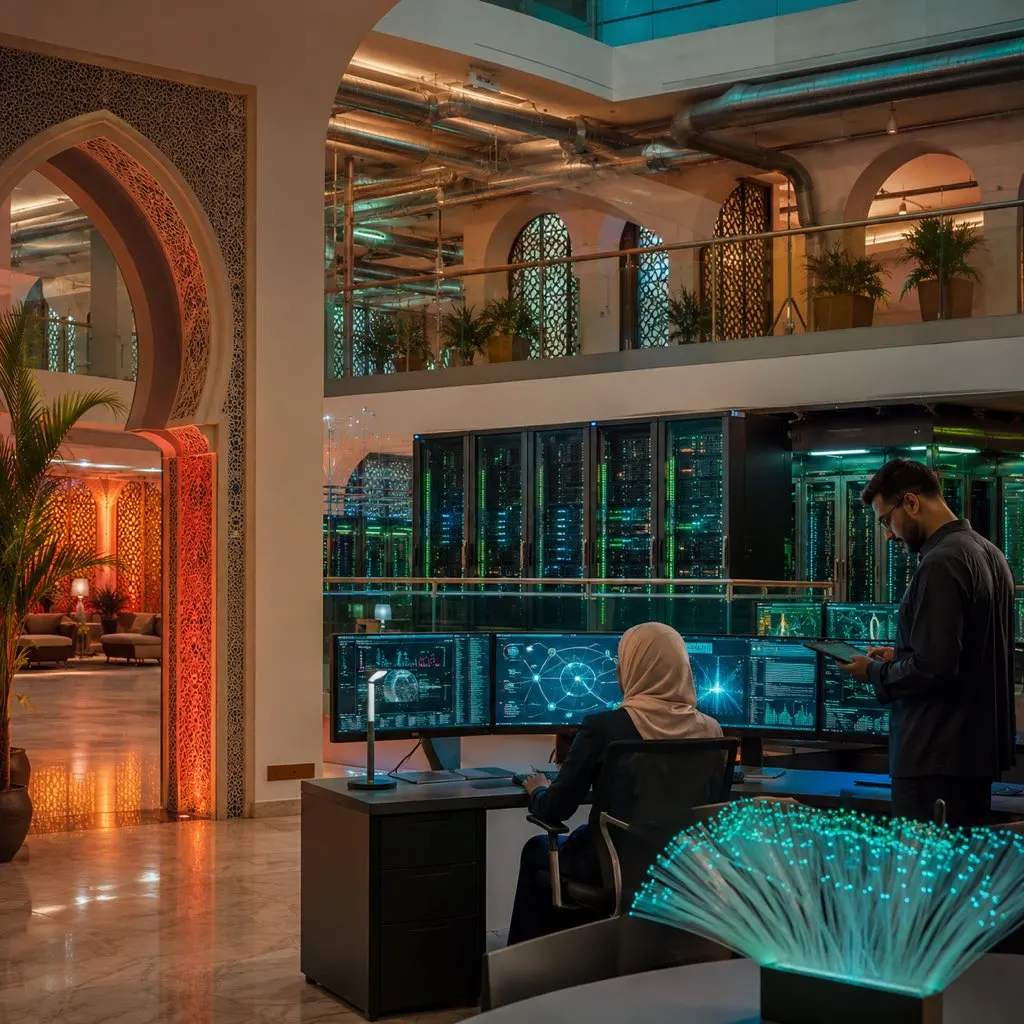
The colocation and transit hub opportunity does not require Algeria to build a hyperscale campus overnight. The realistic near-term outcome is a single carrier-neutral facility — 2 to 5 MW IT load, co-located on a cable landing station, with IXP peering in Europe and a published compliance framework — that attracts tier-two cloud providers and regional enterprises as anchor tenants.
That is enough to establish Algeria on the map that data center brokers and cloud architects consult when planning African deployments. It is also the entry point for the larger prize: as AI workload traffic between European and sub-Saharan African markets grows, the transit nodes that sit between them capture an increasing share of infrastructure spend without needing to compete directly with the hyperscaler campuses in Cairo or Johannesburg.
The SNTN-2030 strategy already commits to over 500 digitalization projects. Adding a carrier-neutral colocation policy — modeled on Morocco’s Casablanca Finance City infrastructure approach or Singapore’s data center industry development playbook — would give those projects a physical anchor point and a revenue model that outlasts any single government initiative.
Frequently Asked Questions
What is a carrier-neutral colocation facility and why does Algeria need one?
A carrier-neutral colocation facility is a data center that allows multiple telecom operators and cloud providers to cross-connect their networks without being locked into a single operator’s infrastructure. Building Algeria’s first carrier-neutral facility is the next infrastructure step — Algérie Télécom’s existing data centers are vertically integrated, so a neutral facility would give international cloud providers the kind of transit node they look for. Carrier-neutral facilities like Equinix or Teraco are the standard that hyperscalers require before committing capacity in a market.
How does the Medusa cable system differ from Algeria’s existing submarine cables?
Algeria’s five existing cable systems — SeaMeWe-4, ORVAL, and others — provide approximately 10.2 Tbps of combined capacity but connect Algeria primarily through legacy routes via Sicily and indirect Mediterranean paths. The Medusa system introduces a new direct, multi-fiber, ultra-low-latency route with up to 20 Tbps per fiber pair across ten countries. The accompanying Italy-Algeria cable (Sparkle-Algérie Télécom MoU) adds a direct mainland Italy link that currently does not exist, significantly reducing round-trip latency to European internet exchange points.
What would a realistic first colocation facility look like and who would pay for it?
A realistic initial facility would be 2 to 5 MW of IT load capacity — enough for 200 to 500 racks — co-located near an Algerian Medusa landing station. Financing models in comparable markets have combined public infrastructure funding (as anchor investor), a private operator for carrier-neutral management, and international development finance (IFC, AfDB). Algeria’s Algerian Startup Fund and its six public bank backers could serve as the anchor, with a private operator — ideally with international carrier-neutral experience — running the commercial operation.
Sources & Further Reading
- Africa & Middle East Data Center Colocation Data Report 2026 — GlobeNewswire
- Sparkle and Algérie Télécom Sign MoU for New Italy-Algeria Subsea Cable — Ecofin Agency
- Why Algeria Is Positioned to Become North Africa’s AI Leader — New Lines Institute
- Powering Africa’s Digital Future: Cloud Data Centres and Network Resilience — ConsoleConnect
- Algeria to Commission 1.48 GW of Solar Capacity by August — ESI Africa
🔗 Related Intelligence

Algeria as Africa’s Digital Transit Hub: The Cloud Corridor Strategy for 2026–2030
Algeria’s Dual Cable Landing: How Africa-1 and Medusa Should Change Your Cloud Routing Strategy

Medusa Subsea Cable: Algeria’s International Bandwidth Upgrade and What It Means for Cloud
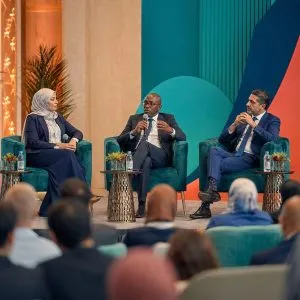
African Digital Summit: Algeria’s Infrastructure Bet