What Reopened at Bab Ezzouar — and Why It Matters
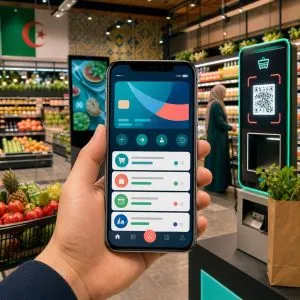
On 8 March 2026, Algerian super-app Yassir announced the acquisition of the Uno hypermarket chain from the Cevital Group, with financial terms undisclosed. The flagship at the Bab Ezzouar shopping centre was rebranded “Yassir Market” and reopened during Ramadan 2026. Coverage of the operational stack from Tech In Africa and Innovation Village confirms that transactions at Yassir Market run through Yassir Cash — Yassir’s digital wallet supported by a network of more than 5,000 cash agents — while traditional payment methods remain available, and that the store now features interactive digital kiosks for browsing extended catalogues. The Bab Ezzouar location also connects to the existing Yassir Food / Yassir Express delivery layer through the delivery.yassir.com market endpoint — meaning the same store is simultaneously a hypermarket, a dark-store fulfillment node, and a click-and-collect point.
This is the first time an Algerian super-app has owned the checkout layer end-to-end. The closest precedents — Carrefour, Numidis, and ARDIS — operate physical stores but do not control a wallet, a delivery fleet, and an ad-tech stack. Jumia, the only digital-native operator with comparable scale ambitions, exited Algeria in February 2026 and freed the lane for exactly this kind of integrated play.
The Operational Stack — POS, Wallet, Dark Store, Retail Media
Four operating layers converge at Bab Ezzouar, and each one is a separate strategic asset for Yassir.
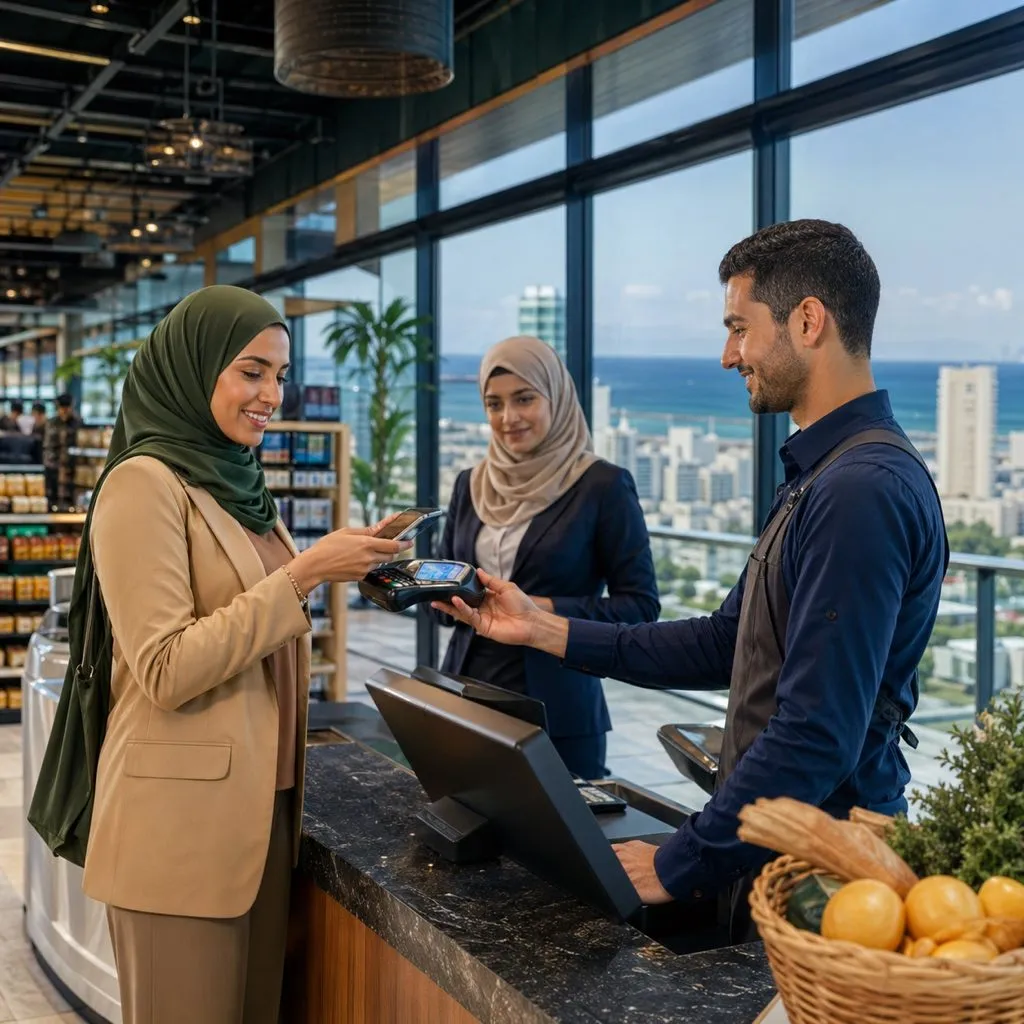
The first layer is the POS-to-wallet integration. Checkout counters at Yassir Market emphasise Yassir Cash as the preferred payment method, integrating Yassir’s financial services directly into store flow. Because Yassir Cash is itself backed by the 5,000-agent network, a customer can top up off-site, then pay on-site with no card, no cash handling, and no SATIM intermediary. Every transaction generates a first-party data event tied to a Yassir user ID — the foundational primitive for everything that follows.
The second layer is fulfillment. The Bab Ezzouar store is wired into Yassir Food / Yassir Express as a dark-store fulfillment node, meaning the same shelf inventory serves both walk-in shoppers and on-demand delivery. This is the architecture that quick-commerce operators like Getir and Gorillas pioneered globally, applied to a hypermarket footprint. For shoppers in Algiers’s eastern suburbs, this collapses the gap between supermarket trip and 30-minute home delivery.
The third layer is loyalty and identity. Yassir+ — the cross-product loyalty program — connects ride-hailing, food delivery, wallet, and now retail. A user who rides Yassir to work, orders Yassir Food at lunch, and shops at Yassir Market on Friday is on a single ledger, with cross-product offers that no Algerian competitor can match.
The fourth layer is retail media. On 17 March 2026, Yassir acquired the France-based retail media and ad-tech company Kawarizmi, explicitly to accelerate retail-media expansion across EMEA. With Bab Ezzouar’s POS data, Yassir Cash transaction logs, and Yassir Market kiosk impressions, Yassir now owns the inputs to a CPG-targetable retail-media network — the most profitable layer of modern grocery retail.
Advertisement
What the Bab Ezzouar Reopening Changes for the Algerian Market
Three shifts are now in motion. First, Algerian CPG brands suddenly have a domestic retail-media buyer competing for shelf attention — endcap promotions and basket-level offers are no longer purely Carrefour or ARDIS conversations. Second, every other Algerian retailer is now exposed to an O2O competitor whose marginal cost to deliver in Algiers approaches zero, because the delivery fleet was already fixed-cost. Third, the Yassir Cash adoption curve gets pulled forward by daily grocery transactions — turning a “ride and food” wallet into a primary payment account. None of these shifts existed in Algeria before March 2026.
What this means for Algerian retail and fintech operators
1. Carrefour, Numidis, and ARDIS need a wallet partnership within 12 months, not 24
The legacy Algerian hypermarket chains can no longer compete on assortment alone — Yassir’s Bab Ezzouar store offers a closed-loop wallet that lowers checkout friction and unlocks loyalty data they cannot match with a static rewards card. The pragmatic move is a Yassir Cash equivalent through a partnership with BaridiMob, Wimpay, or a CIB-issuing bank, plus a delivery integration with Temtem, Heetch, or a regional logistics provider. A 24-month timeline is too long; by then Yassir will have several more Yassir Market locations and a measurable retail-media revenue line. The realistic deadline is end-2026 for a wallet-and-delivery announcement, with execution in early 2027.
2. Algerian CPG brands should request retail-media inventory from Yassir Kawarizmi by Q3 2026
Brands that wait for Yassir to open self-serve retail-media tooling will be late; the pioneers of any retail-media network capture the lowest CPM and the cleanest measurement before competition arrives. Approach Yassir’s commercial team in Q2-Q3 2026 with a defined test budget — a single category, a measurable lift question, a 90-day flight — to claim early-mover access. The downside risk is small (a contained pilot budget) and the upside is a measurement baseline that lets you negotiate 2027 commitments from a position of evidence rather than hope. Brands that are slow here will be paying the post-discovery rate.
3. Algerian fintech founders should re-evaluate their “wallet-first” thesis against “wallet inside a super-app”
The Bab Ezzouar opening demonstrates that a stand-alone consumer wallet has a structural disadvantage against a wallet bundled with rides, food, delivery, and now grocery. If your 2026 fintech thesis was a single-purpose wallet, the realistic answer is to either (a) verticalise into a niche the super-app cannot serve well — B2B collections, freelancer invoicing, savings tools — or (b) become an embedded payments layer behind merchant brands rather than a consumer brand of your own. Investors who funded consumer-wallet plays in 2024-2025 will start asking this question at the next board meeting; have an answer ready.
4. Public-sector retailers and cooperatives should pilot O2O before a national chain rolls it out
The Office National Interprofessionnel du Lait (ONIL), state grain distribution networks, and the cooperative supply chain have a Bab-Ezzouar-style opportunity to digitise their own checkout and delivery before a private operator does it for them. A pilot that pairs CCP Business Cashless (live since 5 March 2026) with a delivery partner like Temtem and a basic loyalty layer is feasible within 90 days at a single location. The cost of inaction is that Yassir’s footprint, retail-media stack, and data lake become the de facto national grocery infrastructure — a strategic posture that will be very expensive to reverse.
5. Investors and analysts should rebuild Algeria retail TAM models around basket-level data
Pre-2026 Algeria retail TAM models were built on store counts, square metres, and chain estimates — proxies that ignored basket-level economics. Yassir Market makes basket-level data exist for the first time. Rebuild your models around average basket value, repeat-purchase rate, retail-media gross margin, and Yassir Cash share of tender. If your 2025 deck still leads with “X hypermarkets in Algeria,” it is already out of date; the unit of analysis is now the linked customer, not the store.
Where This Fits in Algeria’s 2026 Ecosystem
The Bab Ezzouar reopening is one milestone in a broader sequence — the Yassir-Huawei cloud and AI partnership, the Kawarizmi acquisition, and the parallel rise of CCP Business Cashless and BaridiMob merchant flows — that together describe a 2026 inflection point for Algeria’s digital economy. The country is moving from “online stores layered on top of physical commerce” to “physical commerce instrumented by software and a wallet.” That transition compresses several years of US/EU retail-tech evolution into a single 12-month window. It also changes who the relevant counterparties are: the next Algerian-market negotiation a multinational CPG runs is not with a buying office at a hypermarket chain — it is with the data team at a super-app. For the broader 20%-of-GDP digital target by 2030, Yassir Market is the clearest proof yet that the digital share of GDP will be earned at the till, not just in an app.
Frequently Asked Questions
What four technology layers converge at Yassir Market Bab Ezzouar and why do they matter together?
Four distinct operating layers converge at the Bab Ezzouar store, each a strategic asset in its own right. The POS-to-wallet integration connects checkout to Yassir Cash, generating a first-party data event tied to a Yassir user ID on every transaction. The dark-store fulfillment layer wires the same shelf inventory into Yassir Food/Yassir Express for on-demand delivery, collapsing the distance between a hypermarket trip and a 30-minute home delivery. The Yassir+ loyalty layer connects ride-hailing, food delivery, wallet, and retail purchases into a single cross-product ledger. The Kawarizmi retail-media layer turns POS data and transaction logs into CPG-targetable advertising inventory. No Algerian competitor controls all four simultaneously — which is why this is a structural shift, not just a product launch.
How does the Yassir Market model change the competitive position of legacy Algerian hypermarket chains?
Legacy chains — Carrefour, Numidis, ARDIS — operate physical stores but do not control a wallet, a delivery fleet, or an ad-tech stack. They compete on assortment and location, but Yassir Market now offers closed-loop wallet checkout that lowers friction and unlocks basket-level data they cannot match with a static rewards card. The key vulnerability is that Yassir’s marginal delivery cost approaches zero (fixed-cost fleet already deployed) while the legacy chains have no delivery option. The realistic response is a wallet partnership (with BaridiMob, Wimpay, or a CIB-issuing bank) plus a delivery integration (Temtem or Heetch) announced by end-2026 — on a 24-month timeline, Yassir will have more locations and a mature retail-media revenue line that makes the competitive gap much harder to close.
What does the Yassir-Kawarizmi retail media acquisition mean for Algerian CPG brands in 2026?
The Kawarizmi acquisition, announced March 17 2026, gives Yassir an ad-tech stack capable of targeting CPG advertising against basket-level purchase data from Bab Ezzouar POS, Yassir Cash transaction logs, and in-store kiosk impressions. This creates Algeria’s first domestic retail-media network where CPG brands can buy endcap promotions and basket-level targeted offers that previously only existed in Carrefour or ARDIS commercial conversations. Early movers get the lowest CPMs and the cleanest measurement baselines — brands that approach Yassir’s commercial team in Q2-Q3 2026 with a defined test budget will establish measurement benchmarks that justify 2027 commitments from evidence rather than hope.