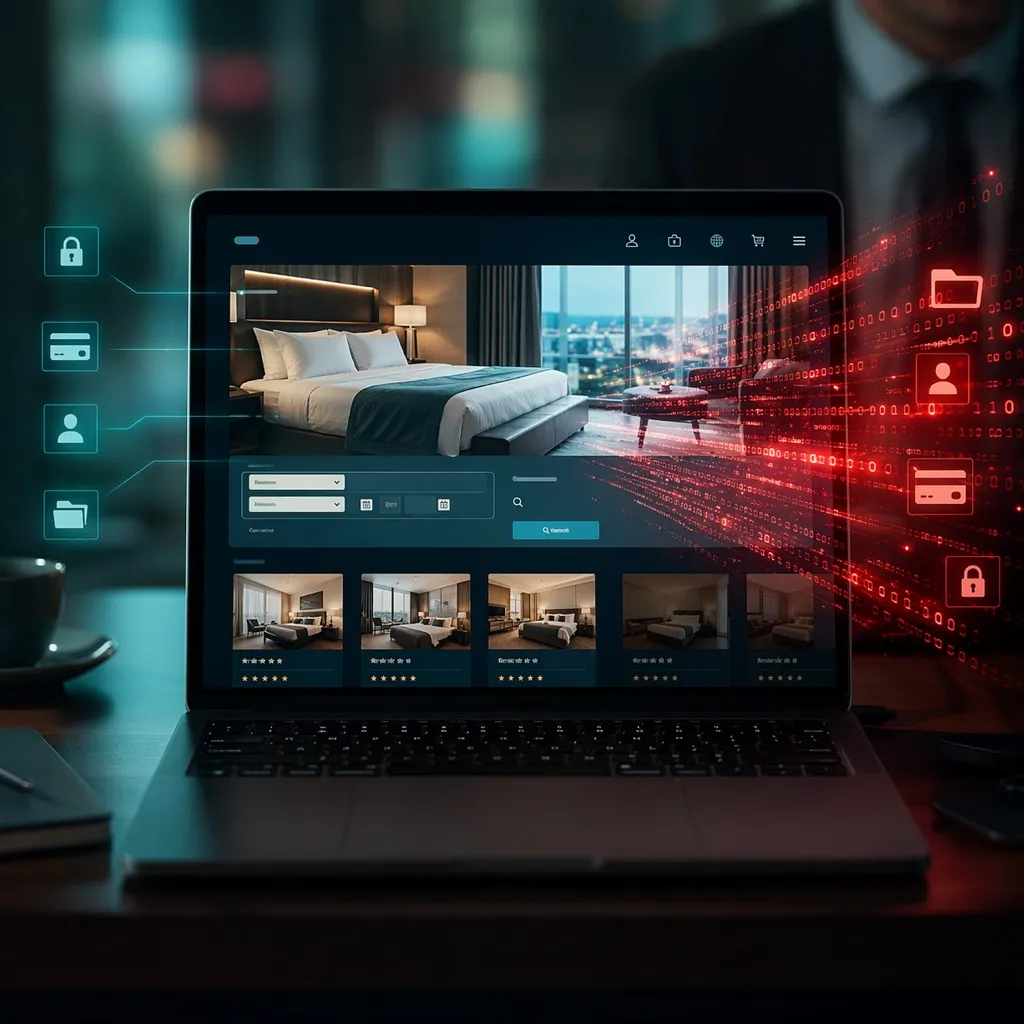
A Familiar Playbook Hits One of the World’s Largest Travel Platforms
On April 12, 2026, Booking.com began emailing customers to disclose that “unauthorized third parties may have been able to access certain booking information” tied to their reservations. A day later, the company publicly confirmed the breach. While Booking.com insists that financial details were not accessed, the leaked data — full names, email addresses, phone numbers, physical addresses, reservation specifics, and entire message histories between guests and accommodation providers — is arguably more dangerous for end users than a raw credit card dump.
The reason: this exact combination of data is the raw material for hyper-personalized phishing. Fraudsters no longer need to guess which hotel you booked, when you are arriving, or what language you typed your requests in. They can see it all. And the attacks have already started.
The Phishing Wave Arrived Before the Breach Notice
One of the most telling signatures of this incident is timing. Affected customers in Australia, the Netherlands, and the United Kingdom began reporting targeted WhatsApp messages weeks before Booking.com sent its official notification. The messages included accurate booking particulars — dates, hotel names, reservation numbers — lending them a credibility that generic phishing can never match. A Bali-bound Australian traveler reportedly lost $100 to a scammer impersonating Booking.com support, and multiple users on Reddit shared screenshots of “cancelled reservation” emails demanding more than €1,000 in fake reactivation charges.
Cybernews characterized the aftermath as a “scam wave targeting travelers’ bookings,” and security firms Bridewell and Sekoia have for years documented a consistent attack chain behind similar hospitality incidents: attackers compromise hotel partner credentials via infostealer malware, mine the partner’s reservation database through the platform’s extranet, then craft convincing lures against individual guests. The April 2026 incident fits that playbook precisely.
Supply Chain, Not a Direct Breach
Importantly, available reporting indicates the intrusion did not target Booking.com’s core infrastructure. Instead, it exploited weaknesses further down the travel supply chain — specifically, accommodation partner accounts that connect to Booking.com’s extranet. Once a single hotel’s staff machine is compromised by an infostealer like RedLine or LummaC2, attackers can harvest session tokens and login credentials, then authenticate to the reservation system as the hotel itself. The platform sees a legitimate partner pulling guest data. The guest sees a message from their real hotel. The chain breaks at a single overworked front-desk laptop.
This supply chain pattern matters because Booking.com cannot fully defend its users with platform-side controls alone. The company has forced PIN resets across existing and past reservations and is rolling out additional monitoring, but hundreds of thousands of accommodation partners remain the soft underbelly.
Advertisement
Scale, Context, and the Wider Hospitality Risk Picture
Booking.com has not disclosed how many customers were notified. What is clear is that the incident landed in a year when the hospitality sector is already under sustained attack. Choice Hotels International disclosed a January 14, 2026 breach where attackers used social engineering to bypass multifactor authentication and reach franchisee records. Hospitality industry reporting shows that 31% of organizations in the sector have experienced a data breach, and the average cost of a hospitality breach reached $3.86 million in recent measurement years.
The Shiji Group’s 2026 “Trust Dividend” analysis makes the business case bluntly: in an industry where most customers book through digital channels first and trust the brand second, cybersecurity has become central to brand integrity. A breach does not just leak data — it shatters the assumption that a reservation platform is a safe intermediary between a traveler and an unfamiliar hotel on the other side of the world.
What Customers and Operators Should Do Now
For travelers with recent or upcoming Booking.com reservations, the immediate steps are straightforward but urgent. Reset your Booking.com PIN and password, enable two-factor authentication, and treat every unsolicited message that references a specific reservation — even one that looks like it is from the hotel — as suspect until verified through the official app or a direct phone call to the property. Never click payment links inside WhatsApp messages, SMS, or emails claiming your booking is at risk.
For accommodation operators and travel intermediaries, the lesson is harder. Endpoint protection against infostealers, mandatory multifactor authentication on extranet accounts, and regular credential hygiene audits are no longer optional. The attack no longer starts at the platform — it starts at a single infected partner device.
The Broader Pattern
What makes the Booking.com incident significant is not its novelty but its inevitability. Large platforms whose business model depends on thousands of loosely affiliated partners will continue to inherit the security posture of their weakest partner. Social engineering remains the dominant entry point, AI is industrializing the production of personalized lures, and the 2026 hospitality threat landscape is shifting from opportunistic ransomware toward targeted, long-tail data exploitation.
Booking.com will recover — its brand is strong, and financial data was not exposed. The individual travelers phished out of thousands of euros using their own accurate itineraries may not be so lucky. The real cost of a supply chain breach, in this industry, is paid one booking at a time.
Frequently Asked Questions
What data did the Booking.com breach expose?
Full names, email addresses, phone numbers, physical addresses, reservation details (dates, hotel, booking numbers), and the complete message history between guests and accommodation providers. Booking.com says financial data and passwords were not accessed.
How did attackers get in if Booking.com’s core systems were not breached?
They compromised accommodation partner accounts using infostealer malware like RedLine or LummaC2, harvested session tokens and credentials from hotel staff machines, then used those to authenticate to Booking.com’s extranet as the legitimate hotel and pull guest data.
What should I do if I have a recent or upcoming Booking.com reservation?
Reset your Booking.com PIN and password immediately, enable two-factor authentication, and treat any WhatsApp, SMS, or email mentioning your booking as suspect until you verify it through the official Booking.com app or a direct phone call to the property.
Sources & Further Reading
- Booking.com confirms hackers accessed customers’ data — TechCrunch
- New Booking.com data breach forces reservation PIN resets — BleepingComputer
- Booking.com data breach: Customer reservation data exposed — Help Net Security
- Booking.com breach sparks scam wave targeting travelers’ bookings — Cybernews
- Booking.com warns of possible reservation data exposure — The Register
- The Trust Dividend: Strengthening Hospitality’s Digital Integrity in 2026 — Shiji Insights