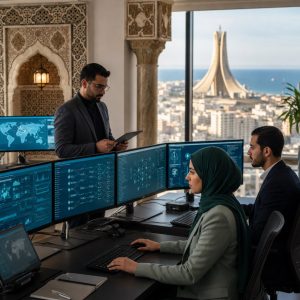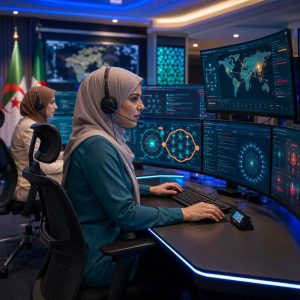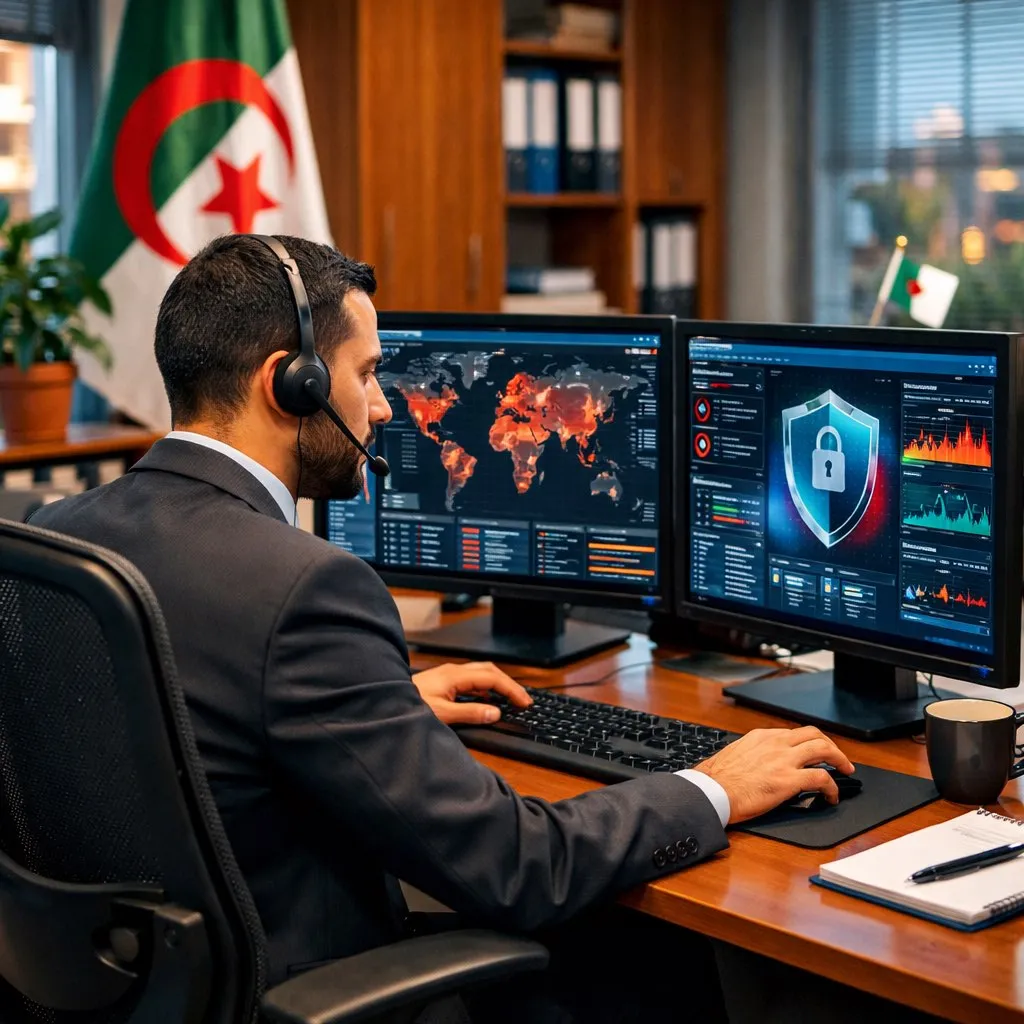
The cybersecurity profession is experiencing a paradox. Demand for security analysts has never been higher, with certain specialized roles seeing growth rates exceeding 300% over the past three years, yet the global workforce gap continues to widen. For Algerian professionals, this global shortage represents both a national security concern and an extraordinary career opportunity.
According to the ISC2 2025 Cybersecurity Workforce Study, the world needs an estimated 4.8 million additional cybersecurity workers to meet employer demands. That gap represents 47.1% of the total 10.2 million workforce needed. For every cybersecurity professional working today, there is almost one unfilled seat beside them.
The AI Threat Acceleration
What makes the current hiring surge different from previous cybersecurity cycles is the role of artificial intelligence. The threat landscape has fundamentally shifted.
According to the World Economic Forum’s Global Cybersecurity Outlook 2026, 87% of respondents identified AI-related vulnerabilities as the fastest-growing cyber risk. This is not theoretical. A full 73% of security professionals report that AI-powered threats are already hitting their organizations, with hyper-personalized phishing, automated exploit chaining, and adaptive malware leading the attack vectors.
The result is a transformed job market. Over 64% of cybersecurity job listings in 2026 require AI, machine learning, or automation skills, up from roughly 10% just two years ago. New AI-specific security roles are growing at 25% or more annually:
- AI Threat Hunter — specialists who identify and neutralize AI-generated attack patterns
- AI Security Architect — designers of security frameworks for AI/ML systems
- Model Security Engineer — professionals who protect machine learning models from adversarial attacks
- Zero Trust Architect — experts implementing identity-first security across distributed environments
- AI Governance Specialist — professionals ensuring AI systems comply with emerging regulations
The Skills Gap Overtakes Headcount
The 2026 SANS Cybersecurity Workforce Research Report marks a significant shift: skills gaps have decisively overtaken headcount shortages as the industry’s top workforce challenge. This distinction matters. Organizations are not just looking for more bodies in seats. They need professionals with specific, advanced capabilities.
The consequences are real. According to the report, 27% of organizations have experienced actual security breaches directly resulting from workforce capability gaps, not from lack of personnel but from lack of the right skills.
At the same time, traditional roles are being reshaped. Among organizations experiencing role changes, SOC and security analysts lead reductions at 32%, followed by threat intelligence analysts at 26% and incident responders at 22%. These roles are not disappearing but are being automated and elevated, requiring higher-level analytical and AI-adjacent skills.
Advertisement
What This Means for Algeria
Algeria’s cybersecurity context adds urgency to the global trends. The country recorded over 70 million cyberattacks in 2024, ranking 17th globally among most-targeted nations. President Tebboune’s signing of Presidential Decree No. 25-321 in December 2025, formally approving the National Cybersecurity Strategy for 2025-2029, signals that the government recognizes the scale of the challenge.
Several developments are creating a more favorable environment for cybersecurity careers in Algeria:
Expanded training infrastructure. The 285,000 new vocational training places announced for 2026 include certificate-oriented cybersecurity qualification programs. The Ministry of Formation and Vocational Education, in coordination with the Information Systems Security Agency (ASIS), has launched initiatives to strengthen cybersecurity capabilities.
Certification pathways. Algeria’s cybersecurity strategy includes programs aligned with international standards including ISO 27001, CISSP, and CEH certifications. Competition programs like Capture the Flag (CTF) events help identify and develop emerging talent.
Institutional demand. Presidential Decree No. 26-07, signed January 7, 2026, mandates the creation of dedicated cybersecurity units across government institutions, creating immediate demand for qualified professionals.
International cooperation. Bilateral agreements for skills transfer and training through MENAFATF partners, EU programs, and other international frameworks are expanding Algeria’s access to advanced cybersecurity education.
Career Entry Points for Algerian Professionals
For Algerian professionals looking to enter or advance in cybersecurity, the current landscape offers several strategic pathways:
Entry level (0-2 years). Focus on foundational certifications like CompTIA Security+, followed by hands-on experience through CTF competitions and SOC analyst roles. Algeria’s vocational training expansion provides increasingly accessible entry points.
Mid-career transition (2-5 years). IT professionals with existing infrastructure or development experience can pivot through specialized certifications. The CEH (Certified Ethical Hacker) and cloud security certifications offer the fastest path to employable skills.
Advanced specialization (5+ years). The highest-demand, highest-compensation roles are in AI security, zero trust architecture, and governance. The CISSP remains the gold standard for senior positions, while newer certifications in AI security governance are emerging.
Remote work opportunity. The global cybersecurity talent shortage means international companies are increasingly open to remote workers. Algerian professionals with strong English or French language skills and recognized certifications can access a global job market from home.
Salary Outlook
While Algeria’s domestic cybersecurity salaries remain lower than international benchmarks, the remote work trend is narrowing the gap. Entry-level cybersecurity positions in Algeria typically offer 800,000 to 1,200,000 DZD annually, while remote positions with international companies can reach 3 to 5 times that range. Specialized roles in AI security command premium compensation globally, with average salaries exceeding $130,000 in North American markets.
Frequently Asked Questions
Which cybersecurity certifications are most valuable for Algerian professionals?
CompTIA Security+ provides the strongest entry-level foundation. For mid-career professionals, CEH (Certified Ethical Hacker) and cloud security certifications from AWS or Azure offer rapid career advancement. CISSP remains the gold standard for senior roles. Algeria’s national strategy includes subsidized pathways for ISO 27001 and CEH certifications.
How can I transition from general IT to cybersecurity in Algeria?
The most effective path combines formal certification with practical experience. Start with CompTIA Security+ or CEH, participate in Algeria’s national CTF competitions to build hands-on skills, and look for SOC analyst or junior security roles in government institutions now mandated to have cybersecurity units under Decree 26-07.
Are remote cybersecurity jobs accessible from Algeria?
Yes, and increasingly so. The 4.8 million global workforce gap means international companies actively recruit remote talent. Strong English or French skills, recognized certifications (CISSP, CEH, cloud security), and reliable internet connectivity are the key requirements. Algeria’s time zone positioning between Europe and the Gulf makes it particularly attractive for regional remote roles.
Sources & Further Reading
- ISC2 2025 Cybersecurity Workforce Study — ISC2
- 50+ Cyber Security Job Statistics & Trends for 2026 — StationX
- Algeria Expands Vocational Training to Meet Growing Cybersecurity Demand — TechAfrica News
- AI Cybersecurity in 2026: Key Trends & Threats — Kiteworks
- The Cybersecurity Talent Cliff: Closing the 4.8 Million Skills Gap — Viva IT