The Legislative Tsunami
The United States is experiencing an unprecedented wave of AI legislation at the state level. As of March 2026, state lawmakers in 45 states have introduced 1,561 AI-related bills — a dramatic acceleration from the 600+ bills tracked in 2024 and the approximately 100 that were enacted into law that year. The pace shows no sign of slowing, with an additional 145 bills enacted in 2025.
This legislative surge reflects a critical dynamic: in the absence of comprehensive federal AI regulation, states are moving independently to address AI risks. The result is an emerging patchwork of regulations that varies significantly by state, creating compliance complexity for organizations operating across state lines.
MultiState’s AI Legislation Tracker now monitors all 50 states, documenting the breadth and diversity of approaches. While some states pursue narrow, sector-specific rules, others are attempting comprehensive AI governance frameworks that address everything from deepfakes to automated decision-making.
Healthcare AI: The Regulatory Frontline
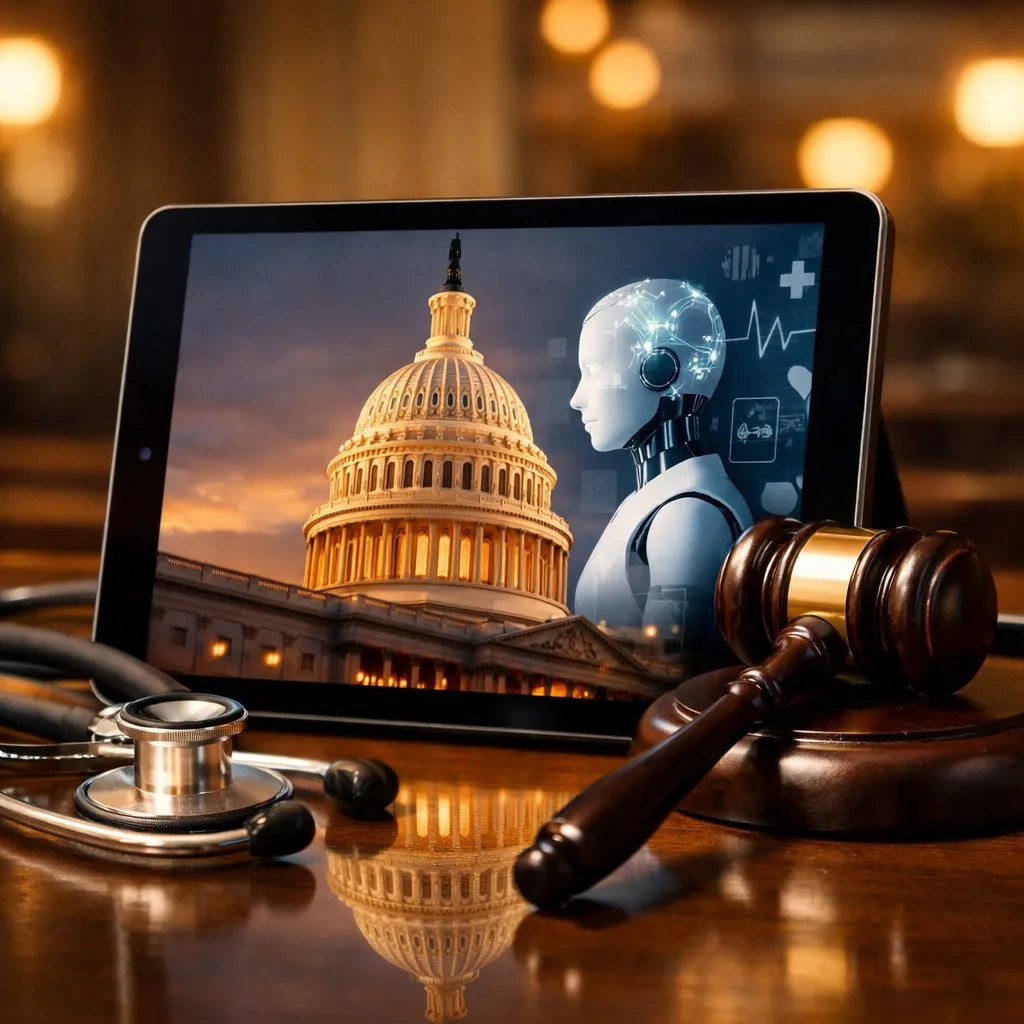
Healthcare has emerged as the most intensely regulated sector for AI applications. Across states and in Washington, legislators have introduced over 250 AI bills specifically impacting healthcare, with 33 of these enacted into law in 21 states.
The central concern is accountability. When AI systems influence or make healthcare decisions — from treatment recommendations to insurance claim adjudications — patients and providers need transparency and recourse. Several states have responded with specific protections.
Indiana enacted requirements for healthcare professionals and insurers to disclose when AI is used in healthcare decisions or communications. Insurers must similarly disclose when AI systems influence coverage or treatment determinations.
Utah is pursuing AI healthcare regulation through its innovative AI Learning Laboratory program, including guidance for mental health providers on AI use. Utah’s 2026 legislative session addressed AI in health practice, health insurance, schools, and deepfake protections.
Washington advanced major AI bills out of committee, including provisions for chatbot disclosure and AI transparency in healthcare settings.
The Patchwork Problem
The state-by-state approach creates significant challenges for businesses. A health tech startup deploying AI across multiple states must comply with potentially dozens of different disclosure requirements, accountability standards, and audit obligations. This compliance burden falls disproportionately on smaller companies that lack dedicated regulatory teams.
The legal landscape is further complicated by the interaction between state AI laws and existing federal frameworks like HIPAA. Organizations must navigate multiple layers of regulation simultaneously, creating uncertainty about which requirements take precedence in cases of conflict.
Some industry groups are advocating for federal preemption — a comprehensive national AI law that would override state-level regulations. However, federal AI legislation has stalled repeatedly, making the patchwork increasingly entrenched with each state session.
Advertisement
Beyond Healthcare: Key Regulatory Themes
While healthcare dominates the legislative agenda, several other themes are emerging across state AI bills.
Deepfake and Synthetic Media: Multiple states have enacted or introduced laws requiring disclosure of AI-generated content, with specific provisions for political advertising, pornographic deepfakes, and commercial misrepresentation.
Employment and Hiring: Several states are restricting the use of AI in hiring decisions, requiring human review of AI-generated candidate assessments and mandating bias audits for automated hiring tools.
Education: States are grappling with AI use in schools, addressing everything from student data privacy to the use of AI tutoring tools and ChatGPT-style writing assistants.
Consumer Protection: Broad consumer protection bills are emerging that require businesses to disclose when consumers are interacting with AI systems, particularly in customer service and financial advisory contexts.
Federal-State Tension
A significant policy tension is building between federal and state approaches. A presidential executive order signaled disruption to state AI regulatory efforts, creating uncertainty about whether federal action will eventually preempt state laws.
Meanwhile, the National Institute of Standards and Technology (NIST) continues to develop AI risk management frameworks that some states reference in their legislation. This creates a semi-harmonized approach where federal standards inform state regulation without formally preempting it.
The key question for 2026-2027 is whether Congress will pass comprehensive AI legislation. If it does, many state laws may be partially or fully preempted. If it does not, the state patchwork will continue to expand, creating an increasingly complex regulatory environment.
Implications for Global Tech Companies
The U.S. state AI regulatory wave has global implications. International companies serving U.S. markets must comply with this patchwork, and the most restrictive state laws effectively set the floor for compliance across the country. This dynamic mirrors the “Brussels Effect” seen with EU regulation, but multiplied across 50 jurisdictions.
For AI companies worldwide, the U.S. state landscape provides a preview of regulatory directions likely to spread globally: transparency requirements, healthcare-specific AI accountability, and mandatory human oversight in high-stakes decisions.
Frequently Asked Questions
Why are US states regulating AI instead of the federal government?
Federal AI legislation has repeatedly stalled in Congress due to partisan disagreements and lobbying from tech companies. In the absence of comprehensive federal regulation, states have moved independently to address AI risks facing their constituents. This has created a patchwork of 1,500+ bills across 45 states, each with different requirements and standards.
What specific healthcare AI restrictions are states imposing?
States are primarily requiring disclosure and human oversight. Indiana requires healthcare providers and insurers to disclose when AI influences decisions or communications. Utah regulates AI use in mental health practice and health insurance. Washington has advanced chatbot disclosure requirements. Several states are moving to ban AI-only health claim denials, requiring human review of any AI-generated coverage decision that adversely affects patients.
How does this affect international companies deploying AI in the US?
International companies must comply with the AI regulations of every state where they operate or serve customers. The most restrictive state law effectively becomes the compliance floor nationwide, as companies typically implement a single compliance standard rather than state-by-state variations. This means global AI companies must track and adapt to regulations from dozens of U.S. jurisdictions simultaneously.
Sources & Further Reading
- State AI Legislation Tracker 2026: All 50 States — MultiState
- New State AI Laws Effective January 1, 2026: A New Executive Order Signals Disruption — King & Spalding
- HRx: New Year, New AI Rules: Healthcare AI Laws Now in Effect — Akerman LLP
- U.S. Artificial Intelligence Law Update: Navigating the Evolving Regulatory Landscape — Baker Botts
- AI Legislative Update: March 20, 2026 — Transparency Coalition