The Price War Is Over. The Revenue War Has Begun.
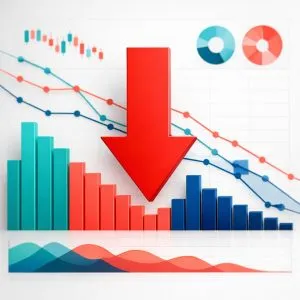
For most of 2025, China’s AI industry was locked in a bruising price war. DeepSeek’s open-source strategy and ultra-low API pricing forced every major Chinese AI lab to slash costs, with ByteDance, Tencent, Baidu, and Alibaba all cutting model prices to maintain market share. API access that cost dollars per million tokens at Western providers was available for pennies from Chinese alternatives.
That era is ending. On April 8, 2026, Zhipu AI raised prices for its latest model, GLM-5.1, by 8-17% across different tiers — including input tokens, output tokens, and cloud usage pricing. This marks the company’s second price increase in 2026, following a 30% hike on coding subscription plans in February with the launch of GLM-5.
Zhipu is not alone. Alibaba and Baidu have also quietly raised prices for AI computing services in recent months, signaling a broader industry shift from market-share capture to revenue generation. The message from China’s AI sector is clear: free and near-free AI was a customer acquisition strategy, not a business model.
Why Prices Are Rising
The price increases reflect multiple converging pressures:
Rising infrastructure costs. The manufacturing cost of high-performance AI compute has risen sharply in early 2026. GPU prices have increased as Nvidia’s supply remains constrained, and the AI memory supercycle has driven up HBM chip costs. Chinese AI labs face additional cost pressure from U.S. export controls that restrict access to the most advanced chips, forcing reliance on older or domestically produced alternatives that are less efficient.
Scaling model capabilities. GLM-5.1 is a meaningfully more capable model than its predecessor, with improved reasoning, longer context windows, and better multilingual performance. More capable models require more compute per query, and providers cannot absorb these costs indefinitely at below-cost pricing.
Investor pressure. Zhipu became the first major Chinese AI company to go public in January 2026, and public markets demand revenue growth and a path to profitability. The company’s 2025 revenue rose 132% to 724 million yuan ($100 million), but that growth was partly fueled by below-cost pricing. Investors are now pushing for sustainable unit economics.
Demand exceeding supply. Some Chinese AI model developers reported that revenue over a 20-day period in late January 2026 exceeded their total earnings for all of 2025. When demand outstrips supply, pricing power shifts to providers — and they are using it.
Zhipu’s Position in China’s AI Landscape
Zhipu AI occupies a distinctive position among China’s AI companies. Founded in 2019 as a spin-off from Tsinghua University, the company has positioned itself as a full-stack AI provider offering both open-source and commercial models. Its GLM series competes directly with Baidu’s Ernie, Alibaba’s Qwen, and the various models from ByteDance and Moonshot AI.
The company’s IPO in January 2026 made it the first Chinese AI “tiger” to list publicly, and shares surged 35% after its first earnings report showed the 132% revenue growth. Zhipu’s market capitalization now positions it as one of the most valuable pure-play AI companies globally.
Unlike DeepSeek, which has focused on pure research and open-source model releases without a clear monetization strategy, Zhipu has always oriented toward commercial applications. Its customer base spans enterprise deployments, cloud API usage, and developer tooling — a diversified revenue model that gives it pricing flexibility.
Advertisement
The DeepSeek Shadow
DeepSeek’s influence on China’s AI pricing dynamics cannot be overstated. The company’s aggressive open-source strategy and ultra-low API pricing created a deflationary spiral that pressured every competitor to match or undercut its prices. For Chinese enterprise customers, this was a windfall — high-quality AI capabilities at a fraction of Western prices.
But DeepSeek’s strategy has a structural limitation: it does not generate significant revenue. The company remains focused on research and model development, funded by its parent company’s profits from quantitative trading. While this is sustainable for DeepSeek, it is not a model that publicly traded companies or VC-backed startups can replicate indefinitely.
Zhipu’s price increases represent a deliberate break from the DeepSeek-driven pricing paradigm. By raising prices while simultaneously releasing a more capable model, Zhipu is making a market argument: customers will pay more for better capabilities, especially in enterprise contexts where model quality directly impacts business outcomes.
The question is whether the market will follow. If Alibaba, Baidu, and ByteDance match Zhipu’s price increases, the era of ultra-cheap Chinese AI will end. If they continue to undercut, Zhipu risks pricing itself out of the market — though its public market obligations may leave it no choice.
The Broader Monetization Shift
Zhipu’s price increases are part of a wider recalibration happening across China’s AI industry:
Alibaba’s consumer monetization. Rather than competing solely on API pricing, Alibaba is integrating AI into its commerce platforms. Its Qwen chatbot has experimented with enabling users to purchase goods directly through conversational prompts — creating an entirely new revenue stream that bypasses the API pricing competition entirely.
Baidu’s enterprise pivot. Baidu has raised prices for AI cloud computing services while focusing on enterprise contracts that bundle AI capabilities with cloud infrastructure, data services, and industry-specific solutions. This bundle pricing makes direct API cost comparisons less meaningful.
Hardware-software integration. Chinese companies are increasingly linking their AI models to proprietary hardware and cloud infrastructure, creating lock-in effects that reduce customer price sensitivity. When switching costs are high, moderate price increases are absorbed without significant churn.
What This Means for Global AI Economics
China’s AI pricing shift has implications well beyond the Chinese market:
The floor on AI costs is rising. China’s ultra-low API prices set a global benchmark that pressured even U.S. providers to reduce inference costs. If Chinese prices rise 10-30%, the global floor rises with them, potentially slowing the deflationary trend in AI inference costs that enterprise buyers have been counting on.
AI monetization models are diversifying. The API-pricing model is giving way to more complex revenue structures: subscription tiers, usage-based pricing with minimum commitments, bundled infrastructure-plus-model offerings, and vertical solutions with application-layer revenue. Pure API pricing is becoming a commodity baseline, not the primary revenue driver.
Public markets are disciplining AI spending. Zhipu’s IPO and subsequent price increases demonstrate that public market investors demand revenue growth and margin improvement. As more AI companies go public — or seek to — the era of growth-at-all-costs pricing will give way to sustainable business models.
Enterprise customers should plan for cost increases. Organizations that built their AI strategies around ultra-low Chinese model prices should expect gradual price normalization. Building architecture that can switch between providers — or run smaller models locally — provides insurance against pricing shifts.
The price war that DeepSeek ignited in 2025 was always unsustainable. Zhipu’s 8-17% increase is the first clear signal that China’s AI industry is entering its next phase: the transition from market-share capture to revenue generation. The companies that survive this transition will be those that can justify their pricing through superior capabilities, not just lower costs.
Frequently Asked Questions
Why is Zhipu raising prices after a year of aggressive price cuts across China’s AI industry?
Three converging pressures: rising GPU and memory costs driven by the AI hardware supercycle, investor demands for sustainable revenue after Zhipu’s IPO, and demand outstripping supply — some Chinese AI providers reported that 20 days of revenue in January 2026 exceeded their entire 2025 earnings. The price war was a customer acquisition strategy, not a viable long-term business model.
How do Chinese AI model price increases affect the global market?
China’s ultra-low API prices set a global floor that pressured even Western providers to reduce inference costs. If Chinese prices rise 10-30%, the global floor rises with it, potentially slowing the deflationary trend in AI inference costs that enterprise buyers worldwide have been counting on.
Should organizations that rely on Chinese AI APIs switch to Western providers or open-source models?
Not necessarily switch, but diversify. Building provider-agnostic architectures that can route queries to the most cost-effective model per task type provides insurance against pricing shifts. For non-critical workloads, smaller open-source models (Mistral, Llama) running on local infrastructure may offer better long-term cost predictability than any cloud API.
Sources & Further Reading
- Zhipu Raises AI Model Prices 8%-17% As GLM-5.1 Launches — GuruFocus
- Shares of China AI ‘tiger’ Zhipu surge 35% after revenue doubles in first earnings report — CNBC
- China’s Zhipu AI open-sources flagship model, raises prices to narrow gap with US rivals — South China Morning Post
- Zhipu AI Launches GLM-5 Model with 30% Price Increase in First 2026 LLM Hike — TrendForce
- Analysis: Alibaba and Baidu raise AI pricing as token-based model reshapes cloud economics — Digitimes