Beyond EUV: The DUV Escalation
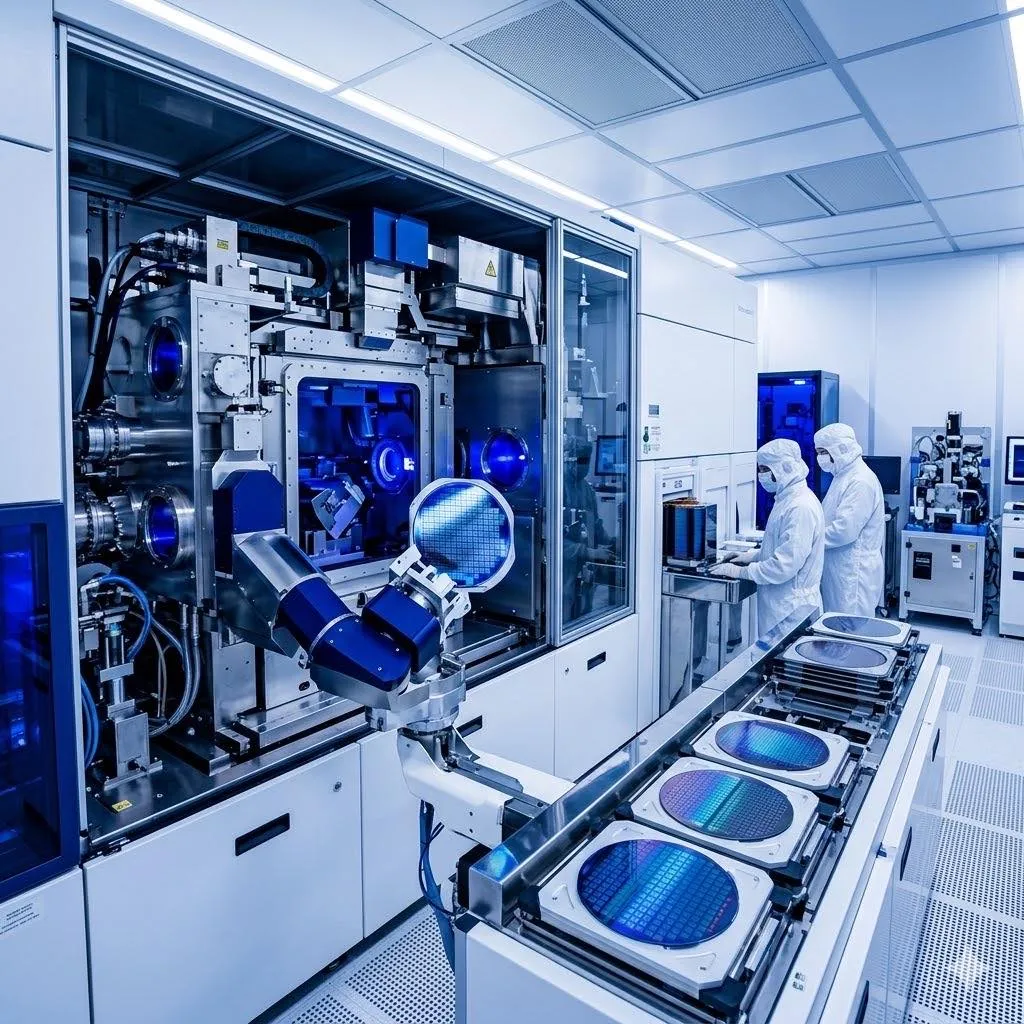
Previous U.S. semiconductor export controls focused on cutting-edge extreme ultraviolet (EUV) lithography machines — the most advanced chipmaking tools, produced exclusively by Dutch company ASML. Those restrictions were effective but narrow: China could still purchase older deep ultraviolet (DUV) immersion lithography systems to produce chips at mature nodes sufficient for many AI and military applications.
The Multilateral Alignment of Technology Controls on Hardware (MATCH) Act, introduced by a bipartisan group of lawmakers on April 2, 2026, closes that gap. The legislation explicitly extends restrictions to DUV immersion lithography systems — the workhorses of semiconductor manufacturing that China’s largest chipmakers have relied on since EUV was cut off.
The strategic logic is straightforward: China’s chipmaking industry has demonstrated an ability to push the limits of DUV technology further than Western analysts initially expected. SMIC has reportedly produced chips at 7nm and even 5nm-equivalent nodes using multi-patterning DUV techniques. By restricting DUV access, the MATCH Act targets the foundation of China’s workaround strategy.
What the MATCH Act Actually Does
The legislation contains several provisions that go beyond existing export controls:
Entity-based targeting. The MATCH Act explicitly names China’s leading semiconductor companies — SMIC, Hua Hong, Huawei, CXMT, and YMTC — and prohibits both the sale and servicing of restricted equipment to these entities. Previous controls focused on technology thresholds (e.g., chip size limits); the MATCH Act shifts to company-level restrictions that are harder to circumvent through shell entities or technology reclassification.
Broad servicing definition. The Act defines “servicing” expansively to include installation, maintenance, remote software updates, and technical support. This is significant because chipmaking equipment requires ongoing vendor support to operate effectively. Even if Chinese firms already possess DUV machines, cutting off servicing would degrade their performance over time.
DUV immersion lithography inclusion. For the first time, DUV immersion lithography systems are explicitly included in the restricted category. This is ASML’s core product segment and represents a substantial portion of its revenue from China, which was its single largest market in 2025 at 33% of total revenue.
Allied alignment mechanism. The MATCH Act gives allied supplier nations — primarily the Netherlands, Japan, South Korea, and Taiwan — 150 days to demonstrate that they have implemented equivalent export controls. If they fail to do so, the U.S. Department of Commerce would impose restrictions extraterritorially on any equipment containing American technology, regardless of where it is manufactured.
Zero-threshold extraterritoriality. The extraterritorial provision applies to foreign-made tools containing “more than 0%” of American technology or requiring servicing that relies on American technologies. Given the deeply integrated nature of the semiconductor supply chain, this effectively covers virtually all advanced chipmaking equipment worldwide.
ASML in the Crosshairs
ASML is the most directly affected non-Chinese company. China represented 33% of ASML’s total revenue in 2025, though that share was already projected to fall to around 20% in 2026 as previous EUV restrictions took effect. The MATCH Act would accelerate this decline significantly.
Bank of America’s scenario analysis estimates that a full ban on immersion lithography tools and related services to China could reduce ASML’s revenues by 14-15% and cut EBIT by 16-17% on a gross basis. ASML’s share price fell sharply on the day the legislation was introduced, reflecting market concern about the revenue impact.
The servicing provisions are particularly consequential. ASML’s installed base in China generates substantial recurring revenue through maintenance contracts, spare parts, and software updates. Cutting off servicing would not only eliminate this revenue stream but would also gradually impair the performance of existing Chinese fabs, as DUV equipment requires regular calibration and component replacement.
Japan’s Tokyo Electron and the Netherlands’ ASML are the two most exposed non-U.S. equipment makers. U.S.-based Applied Materials, Lam Research, and KLA are already subject to existing export controls but would face tighter restrictions under the MATCH Act.
Advertisement
The Allied Alignment Challenge
The MATCH Act’s 150-day deadline for allied alignment is its most geopolitically ambitious provision. Previous multilateral export control agreements — such as the Wassenaar Arrangement — have taken years to negotiate and implement. The MATCH Act compresses this timeline into five months, with the implicit threat of unilateral extraterritorial enforcement if alignment fails.
The Netherlands and Japan have already implemented their own semiconductor equipment export controls, but these do not fully match the MATCH Act’s scope. The Dutch restrictions, implemented in 2024, focus on the most advanced DUV systems but allow some immersion lithography exports. Japan’s controls similarly target specific technology thresholds rather than named entities.
The 150-day mechanism creates a diplomatic pressure cooker. Allied governments must balance their own economic interests — particularly the revenue their companies earn from Chinese customers — against the risk of being subject to U.S. extraterritorial enforcement. For a country like the Netherlands, where ASML is the most valuable publicly traded company, this is not a simple decision.
South Korea faces its own dilemma. Samsung and SK Hynix both have significant memory chip production operations in China. While the MATCH Act primarily targets lithography equipment, any expansion of the control framework could eventually affect memory manufacturing equipment, threatening South Korean companies’ Chinese operations.
China’s Likely Response
China has signaled that it would view the MATCH Act as a significant escalation. Beijing has already deployed retaliatory measures in response to previous export controls, including restrictions on exports of critical minerals (gallium, germanium, and antimony) used in semiconductor manufacturing, and antitrust investigations against U.S. technology companies operating in China.
The MATCH Act’s entity-level targeting of Huawei and SMIC — companies that China views as national champions — raises the stakes further. China’s semiconductor industry has been accelerating efforts to develop domestic lithography capabilities, though most analysts assess that China remains 5-10 years behind ASML’s current DUV technology.
The broader risk is a technology decoupling spiral: U.S. restrictions accelerate China’s drive for self-sufficiency, China’s progress increases the perceived need for tighter controls, and each round of escalation deepens the division of the global technology ecosystem into competing blocs.
What Happens Next
The MATCH Act faces a legislative path that includes committee review, potential amendment, and floor votes in both the House and Senate. Bipartisan support improves its chances, but the business community — particularly companies with significant China revenue — is lobbying aggressively against the most restrictive provisions.
Even if the legislation does not pass in its current form, it signals the direction of U.S. policy. The shift from technology-based to entity-based controls, the inclusion of DUV systems, and the 150-day allied alignment mechanism represent the next phase of semiconductor export control strategy. Equipment manufacturers, chipmakers, and AI companies should plan accordingly.
Frequently Asked Questions
What makes the MATCH Act different from previous semiconductor export controls?
Previous controls targeted cutting-edge EUV lithography machines. The MATCH Act extends restrictions to DUV immersion lithography — the workhorse technology China used to produce chips at 7nm and 5nm nodes after EUV was restricted. It also shifts from technology thresholds to named-entity targeting (SMIC, Huawei, YMTC), making workarounds harder.
How does the 150-day allied alignment mechanism work?
The Act gives allied nations (Netherlands, Japan, South Korea, Taiwan) 150 days to implement equivalent export controls. If they fail, the U.S. would impose restrictions extraterritorially on any equipment containing American technology — even equipment manufactured entirely abroad. This “zero-threshold” provision covers virtually all advanced chipmaking tools worldwide.
Could the MATCH Act lead to higher consumer electronics prices globally?
Yes. If DUV restrictions slow China’s mature-node chip production, global supply of chips used in smartphones, automotive electronics, and industrial equipment could tighten. This would drive up prices for finished goods worldwide, including in markets like Algeria that import most electronic equipment.
Sources & Further Reading
- Commentary: US MATCH Act tightens chip tool controls as China builds local supply chain — Digitimes
- ASML shares fall after proposed U.S. export curbs target an already fragile China market — CNBC
- MATCH Act Targets ASML and Chinese Chipmakers in New U.S. Export Crackdown — EconoTimes
- What is MATCH Act and what it means for ASML? — Investing.com
- US lawmakers aim to ban export of DUV chipmaking and etching tools to leading firms in China — Tom’s Hardware