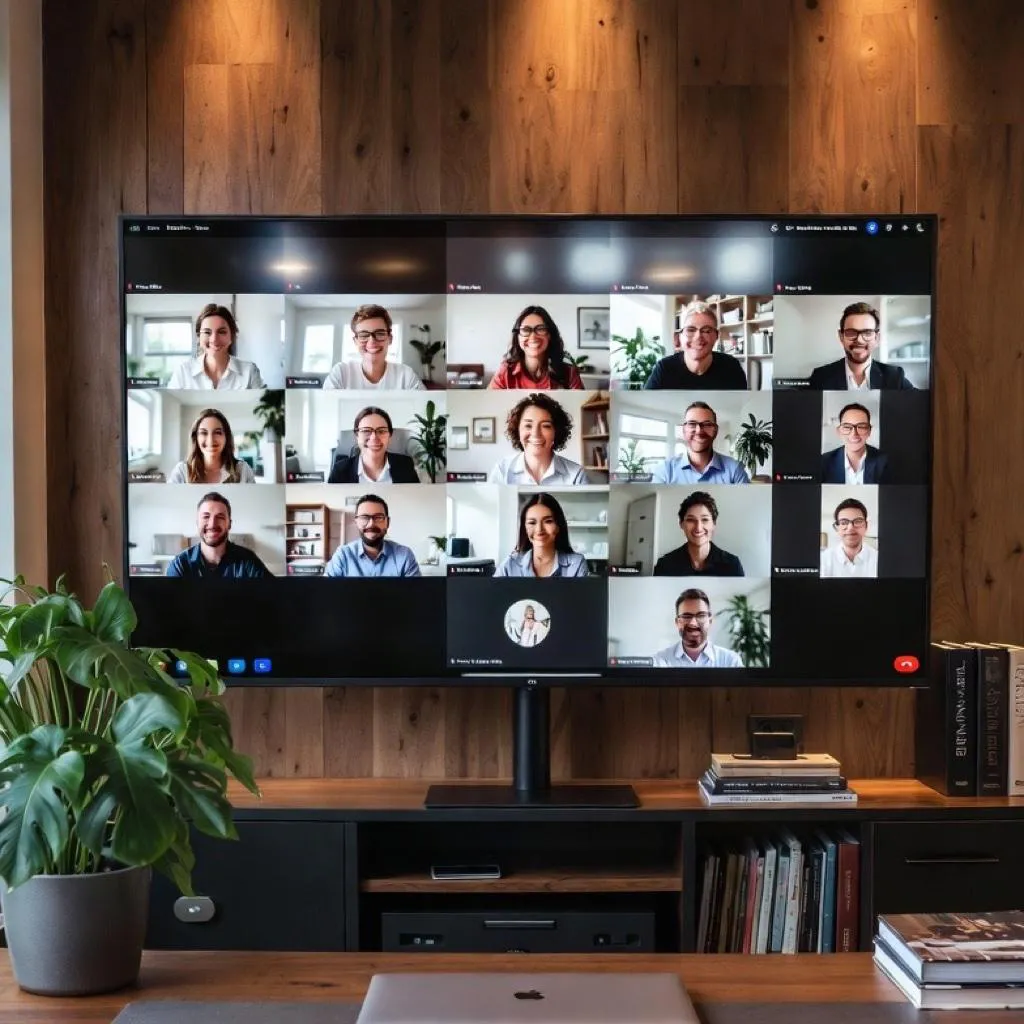
The great experiment is over — and the results are in. Five years after COVID-19 forced the largest remote work trial in human history, the workforce has settled into a new normal. It is neither the fully remote utopia that optimists predicted nor the full return to office that executives demanded. Instead, the world has arrived at a fragile but surprisingly stable hybrid equilibrium — and nowhere is that truer than in the global technology sector.
For tech workers, developers, product managers, and IT professionals, understanding where the remote work pendulum has settled in 2026 is not just about personal preference. It shapes salary negotiations, career trajectories, hiring pools, and the very architecture of how software gets built.
The Numbers: Where We Stand in 2026
Gallup’s Q2 2025 survey of 17,660 U.S. adults provides the clearest snapshot of where remote-capable employees have landed:
- 27% work fully remotely
- 52% operate in hybrid arrangements (some days remote, some in office)
- Only 21% are fully on-site five days per week
These figures specifically describe remote-capable U.S. employees — not the entire global workforce. But the pattern broadly mirrors trends across other advanced economies, and it sets the benchmark that companies and policymakers reference worldwide.
In the technology sector specifically, the numbers skew even more remote-friendly:
Source: Gallup Q2 2025 Hybrid Work Survey (remote-capable U.S. employees)
The tech industry remains the most remote-tolerant major sector. With 91% of remote-capable tech workers operating in either remote or hybrid arrangements, the five-day office week has become an anomaly — not the norm. Hybrid workers now average 2.3 office days per week, up slightly from 2.1 days in 2022, suggesting the equilibrium point has nearly stabilized.
The Return-to-Office Tensions: Big Names vs. Big Backlash
2024 and 2025 were marked by a wave of high-profile return-to-office (RTO) mandates. Amazon required full five-day attendance for its 350,000 corporate employees starting January 2, 2025. JPMorgan Chase followed with its own five-day mandate effective March 2025. Apple, Google, Meta, and Microsoft all pushed three-day minimums with varying degrees of enforcement.
The backlash was swift and measurable. Research from Baylor University’s Hankamer School of Business, analyzing over 3 million workers at S&P 500 firms, found that companies enforcing full RTO mandates experience:
- A 23% longer time to fill vacancies (from 51 to 63 days per hire)
- A 17% drop in hiring acceptance rates, even after adjusting for national hiring trends
- A 13-14% increase in abnormal employee turnover, with female employee turnover nearly 3x higher than male employees
Meanwhile, 64% of remote workers say they would quit or start job hunting if forced back full-time, and around 62% of workers report feeling more productive in remote or hybrid models across multiple surveys.
Perhaps most revealing: by early 2026, 88% of executives managing hybrid or remote teams stated they would not enforce a full five-day return — even at companies that publicly announced such policies, according to the Stanford/Atlanta Fed Survey of Business Uncertainty. The mandates are often walk-backs in disguise.
What Workers Are Actually Willing to Trade
The depth of commitment to flexibility is striking. An NBER study by researchers at Harvard, Brown, and UCLA found that tech workers are willing to accept on average a 25% pay cut for partially or fully remote work. The study, based on Levels.fyi data from approximately 1,400 tech workers evaluating job offers, found participants had an average total compensation of $239,000 — well above the industry median. At more representative salary levels ($112,500 to $148,600 depending on source and role), that 25% trade-off still represents $28,000 to $37,000 per year in compensation workers are willing to forgo. This is not a casual preference — it is a core career priority.
Worker preferences on days in office per week (Robert Half 2026):
- 1-2 days in office: 28% of workers prefer this
- 3-4 days in office: 27% prefer this
- Fully remote: 25% prefer this
- Fully on-site: 20% prefer this
The sweet spot is clear: most knowledge workers want flexibility, with a couple of anchor days for collaboration and culture.
Why the Hybrid Model Won (For Now)
Hybrid work did not emerge as the dominant model by accident. It won because it satisfies the key needs of both employers and employees better than either extreme:
For Employers
- Reduces real estate costs (many companies have cut office space by 30-40%)
- Expands talent pools beyond commutable distances
- Allows retention of high performers who would otherwise leave — particularly women, who leave at disproportionately higher rates after RTO mandates
- Maintains culture through in-person anchor days
For Employees
- Preserves flexibility and autonomy
- Eliminates daily commuting (average U.S. commute: 27 minutes each way, totaling 200+ hours per year)
- Enables better work-life integration
- Reduces wardrobe and food costs
For Teams
- Async-first communication improves documentation and reduces meeting overload
- Tools like Notion, Slack, Linear, Figma, and Loom have matured enough to support deep collaborative work across time zones
- Video fatigue has declined as teams found the right meeting cadence
The Global Geography of Remote Work
Remote work is not equally distributed around the world. Geography, internet infrastructure, and cultural norms shape how much flexibility workers actually get.
United States
The U.S. has stabilized at a hybrid-dominant model. Remote work rates have plateaued at roughly 27% fully remote for remote-capable workers. Tech hubs like San Francisco, New York, and Seattle have seen significant population shifts as workers relocated to lower-cost cities. A notable compliance gap has emerged: required office time increased 12% from 2024 to 2025, but actual attendance only rose 1-3%.
Europe
European workers enjoy strong legal protections for flexible work. Several EU member states have codified “right to request” remote work — the Netherlands through its 2022 “Work Where You Want Act,” Portugal through its Employment Code, and France through its pioneering telework and “right to disconnect” legislation. Germany and the U.K. show high hybrid adoption (55-60% of knowledge workers). Eastern Europe is emerging as a major remote-work hub, with Poland, Romania, and Ukraine producing top engineering talent.
Asia-Pacific
The picture is mixed. Japan and South Korea maintain strong in-office cultures, with hybrid adoption slower than the West. India has become a dominant force in remote tech work — GitHub’s Octoverse 2025 report confirms that India has surpassed the United States as the largest open-source contributor base, adding 5.2 million new developers in 2025 alone (14% of all new GitHub accounts). English-language proficiency and massive talent supply are driving global hiring.
Latin America and Africa
The emerging story of 2025-2026 is the rise of distributed hiring from Latin America and Africa. Countries like Brazil, Mexico, Colombia, Nigeria, Kenya, and Morocco are seeing surging demand from U.S. and European companies. Platforms like Remote.com, Deel, and Rippling have made cross-border hiring frictionless.
The Tools Powering the Distributed World
The tooling ecosystem for remote and hybrid work has matured dramatically:
AI-native tools are increasingly embedded in remote workflows. GitHub Copilot reduces the need for synchronous pair programming. Claude and ChatGPT help distributed teams draft, summarize, and synthesize across async threads. AI meeting assistants (Otter.ai, Fireflies, Granola) automatically capture notes and action items.
Advertisement
The Dark Side: What Remote Work Gets Wrong
No honest analysis of remote work can ignore the real challenges.
Collaboration and Innovation
Stanford economics research suggests that while productivity on well-defined tasks holds up (or improves) remotely, complex creative collaboration — the kind that produces breakthrough innovation — suffers. Spontaneous hallway encounters, whiteboard sessions, and serendipitous idea collisions are hard to replicate on video.
Career Advancement
Multiple studies now confirm the “proximity bias” effect: employees physically present in the office receive more promotions, better performance reviews, and more mentorship opportunities than equally qualified remote colleagues. For early-career professionals especially, fully remote arrangements can slow career development.
Mental Health and Isolation
The isolation problem is real. Gallup’s 2024 data found that 25% of fully remote employees report experiencing daily loneliness. The U.S. Surgeon General has classified loneliness as a public health epidemic, comparing its health risks to smoking 12+ cigarettes daily. Remote work — while convenient — contributes to social disconnection when not managed intentionally.
Blurred Boundaries
Remote workers in many surveys report working more hours, not fewer, compared to office workers. The commute disappears but the meeting culture expands to fill the void. “Always-on” culture — checking Slack at 10pm, joining early morning calls for global teams — is a documented problem in distributed organizations.
What Companies Are Getting Right: Best Practices in 2026
The organizations that have figured out distributed work share key practices:
1. Structured async communication: Default to written communication, use video sparingly, document decisions
2. Defined in-person moments: Quarterly or biannual team gatherings (“onsites”) for relationship-building and strategic work
3. Outcome-based performance: Measure results, not hours or activity signals
4. Meeting-free blocks: Protected deep-work time built into schedules
5. Stipends for home office: Companies providing $1,000-$3,000/year for hardware, ergonomic furniture, and internet
6. Time zone-conscious scheduling: Respecting personal hours, especially for global teams
What’s Next: 2026 and Beyond
Looking ahead, several trends will shape the next phase of distributed work.
AI Takes More Async Work
As AI agents become capable of handling more tasks autonomously, the synchronous coordination overhead of teams decreases. A developer working with AI coding assistants produces more alone than a team of three did a decade ago.
The Rise of the 4-Day Work Week
The movement is gaining serious traction, but the details matter. Iceland’s landmark 2015-2019 trial tested genuinely reduced hours (35-36 hours across four days), with productivity maintained or improved — and roughly 86% of Icelanders now work four-day weeks. Belgium took a different approach: its 2022 law offers employees a four-day option, but as compressed hours (4 x 10-hour days, same 40-hour total). Tokyo introduced four-day schedules for public sector employees in 2025. By 2027, expect some variation of the four-day model to become mainstream in tech.
Digital Nomad Infrastructure
Over 40 million people globally now identify as digital nomads, up from roughly 35 million in 2023, with the community generating an estimated $787 billion per year in economic value. Countries are competing for this spending power through Digital Nomad Visas — Portugal, Spain, Greece, Costa Rica, UAE, and Georgia among the most popular, with over 50 countries now offering such programs.
VR/AR Collaboration
Apple Vision Pro, Meta Quest 3, and upcoming headsets promise more immersive remote collaboration. While adoption is still early, by 2027-2028, “spatial computing” meeting rooms may genuinely replicate some of the spontaneity of in-person work.
For Tech Professionals: Practical Takeaways
Whether you are a developer, a tech manager, or an aspiring professional:
- Negotiate your setup: Remote and hybrid arrangements are negotiable in almost all tech roles today — ask explicitly
- Build in-person capital: Even in remote jobs, find opportunities for face time — team onsites, conferences, local meetups
- Invest in your home office: Your ergonomics and internet connection are professional tools
- Document obsessively: In distributed teams, your written output defines your visibility
- Beware proximity bias: If you are remote and your manager is in office, be deliberate about visibility
- Join global networks: Remote work unlocks global career opportunities — LinkedIn, GitHub, and professional communities are your new office lobby
Conclusion
Remote and hybrid work is no longer an experiment — it is the operating system of the modern global tech workforce. The 2026 equilibrium is hybrid-dominant, AI-augmented, and still evolving. Companies that treat flexibility as a perk risk losing top talent to those that treat it as a baseline — and the data shows they will lose women at nearly three times the rate of men.
For tech professionals, the distributed world offers extraordinary opportunity: global job markets, geographic flexibility, and the autonomy to build careers on your own terms. But it demands new skills — async communication, self-management, deliberate relationship building, and the discipline to draw boundaries in a world where work has no walls.
The office is not dead. But the five-day commute is.
Frequently Asked Questions
What is remote work in 2026?
Remote Work in 2026: The Hybrid Equilibrium That’s Reshaping Global Tech Careers covers the essential aspects of this topic, examining current trends, key players, and practical implications for professionals and organizations in 2026.
Why does remote work in 2026 matter?
This topic matters because it directly impacts how organizations plan their technology strategy, allocate resources, and position themselves in a rapidly evolving landscape. The article provides actionable analysis to help decision-makers navigate these changes.
How does the return-to-office tensions: big names vs. big backlash work?
The article examines this through the lens of the return-to-office tensions: big names vs. big backlash, providing detailed analysis of the mechanisms, trade-offs, and practical implications for stakeholders.
Sources & Further Reading
- Hybrid Work in Retreat? Barely — Gallup Q2 2025
- How Much Do Employees Value Remote Work? — NBER Working Paper #33383 (Harvard/Brown/UCLA)
- Return-to-Office Mandates and the Hidden Cost of Brain Drain — Baylor University
- Return to Office: Not Everybody Is Doing It — Stanford/Atlanta Fed Survey
- Remote Work Statistics and Trends 2026 — Robert Half
- GitHub Octoverse 2025 — GitHub
- Tech Salary Report 2025 — Dice
- 1 in 5 Employees Worldwide Feel Lonely — Gallup 2024
- Advisory on the Epidemic of Loneliness and Isolation — U.S. Surgeon General (May 2023)