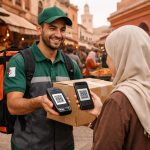
The Deal: A Super App Goes Physical
On March 8, 2026, Algerian super app Yassir announced the acquisition of the Uno hypermarket chain from the Cevital Group, one of Algeria’s largest private conglomerates. Financial terms were not disclosed. The stores will be fully rebranded as “Yassir Market,” with the flagship location at the Bab Ezzouar shopping centre in Algiers set to reopen during Ramadan 2026.
This is not a typical tech company dabbling in physical retail. Yassir is building what amounts to Algeria’s first true omnichannel commerce infrastructure — a closed loop where digital wallets, physical stores, last-mile delivery, loyalty rewards, and B2B logistics all operate under a single brand umbrella.
The move is strategic on multiple levels. It fills the vacuum left by Jumia’s February 2026 exit from Algeria. It gives Yassir physical fulfilment nodes for its existing grocery delivery business. And it positions the company to capture a retail market where the vast majority of transactions still happen in cash and in person.
What Yassir Is Acquiring
Uno is not a small operation. Founded in 2007 as a subsidiary of Cevital’s Numidis retail division, Uno grew into Algeria’s largest hypermarket chain, operating 23 locations across the country — including five full-scale hypermarkets, one supermarket, sixteen motorway service station stores, and one convenience format outlet. The chain employs more than 1,800 people and stocks over 50,000 products. Uno maintains partnerships with international brands including Procter & Gamble, Unilever, and RB.
For Yassir, this acquisition delivers something that no amount of venture capital can build quickly: a nationwide physical retail footprint with established supply chains, warehouse infrastructure, and brand recognition among Algerian consumers.
The Yassir Market Vision: Hybrid Retail Reimagined
The transformation from Uno to Yassir Market goes far beyond a rebrand. According to reports from multiple sources, the flagship Bab Ezzouar location is being redesigned as a showcase for Yassir’s hybrid retail concept, integrating several key digital features into the physical shopping experience.
Click-and-Collect Grocery Fulfilment
Dedicated zones within each store will allow customers to place orders through the Yassir app and pick up their groceries at their preferred retail location. This bridges the gap between the convenience of online ordering and the immediacy of physical retail — a model that has proven successful in markets like France (with Leclerc Drive) and the United Kingdom (with Tesco Click+Collect), but has never been deployed at scale in Algeria.
In-Store Digital Kiosks
Interactive digital terminals will enable customers to browse extended product catalogues beyond what is physically stocked on shelves, compare prices, and complete purchases. This effectively transforms each store into a showroom for Yassir’s entire product ecosystem, allowing a hypermarket-sized selection in a convenience-format footprint.
Yassir Cash Integration
Perhaps the most strategically significant element is the integration of Yassir Cash, the company’s digital wallet backed by a network of over 5,000 agents. In a country where cash remains dominant and credit card penetration is low, Yassir Cash provides a bridge — customers can top up their wallets through physical agents using cash, then spend digitally both online and in-store. Each Yassir Market location becomes, in effect, a Yassir Cash deposit and spending point.
Yassir+ Loyalty Program
The Yassir+ loyalty programme, which already rewards users across ride-hailing, food delivery, and grocery services, will extend to in-store purchases at Yassir Market. Every transaction — whether a ride to work, a food delivery at lunch, or a weekly grocery shop — earns points within the same ecosystem. This cross-service loyalty flywheel is the hallmark of successful super app models globally, from Grab in Southeast Asia to Rappi in Latin America.
Expanded Product Categories
The product mix at Yassir Market locations is being expanded significantly beyond traditional hypermarket fare. New offerings will include premium goods sections, beauty corners, chocolateries, in-store bakeries, fast food counters, and catering services. A white-label private brand is also in the pipeline. This positions Yassir Market not merely as a grocery destination but as a lifestyle retail hub — a strategy that reflects global retail trends toward experience-driven shopping.
Filling the Jumia-Shaped Hole
The timing of Yassir’s acquisition is not coincidental. In February 2026, Jumia ceased all operations in Algeria as part of its broader restructuring toward profitability. The pan-African e-commerce company is targeting EBITDA breakeven by the fourth quarter of 2026 and full-year profitability by 2027. Algeria had contributed roughly 2% of Jumia’s gross merchandise value, but Jumia determined that the market’s structural challenges — currency restrictions, cash-dominant consumer behaviour, and logistics fragmentation — made profitability elusive. The move follows similar exits from South Africa and Tunisia.
Where Jumia saw obstacles, Yassir sees native advantages. As an Algerian-founded company, Yassir already understands and has built around these constraints. Its Yassir Cash wallet addresses the cash preference. Its rider and driver network handles last-mile logistics. And now, its physical stores provide the fulfilment infrastructure that pure e-commerce players like Jumia struggled to build affordably.
The contrast is instructive. Jumia attempted to replicate an Amazon-style pure e-commerce model in a market where consumers prefer to see and touch products before buying, where cash remains king, and where home addresses are often informal. Yassir’s omnichannel approach — where customers can order online, browse in-store, pay with a digital wallet funded by cash agents, and pick up or receive delivery — addresses every one of these friction points simultaneously.
The B2B Logistics Layer
Beyond consumer retail, Yassir is developing a B2B logistics operation designed to handle bulk deliveries for institutional clients, including embassies, hotels, and large corporations. Uno’s existing warehouse and distribution infrastructure will be reoriented as procurement and distribution hubs, leveraging the last-mile delivery network already embedded in Yassir’s operations.
This is a significant revenue diversification play. B2B logistics in Algeria remains fragmented, with most institutional procurement handled through informal networks of middlemen and wholesalers. A tech-enabled, reliable bulk delivery service connected to a national hypermarket chain could capture meaningful market share in a segment that has few organized competitors.
The B2B play also hedges against the consumer unit economics that have troubled grocery delivery startups globally. Consumer grocery delivery operates on razor-thin margins, with customer acquisition costs and last-mile delivery expenses often consuming the entire gross margin. Institutional bulk delivery — where order values are dramatically higher, delivery routes are predictable, and contracts provide recurring revenue — offers fundamentally better economics. By building both channels from the same infrastructure, Yassir can cross-subsidize its consumer growth with B2B profitability.
Advertisement
The Super App Thesis: From Rides to Retail
To understand the strategic logic of acquiring a hypermarket chain, it helps to understand what Yassir has become. Founded in 2017 by Noureddine Tayebi — a Stanford PhD in Electrical Engineering who spent over eight years at Intel in Silicon Valley before returning to build Algeria’s tech ecosystem — Yassir has grown from a simple ride-hailing app into a full-stack super app. The company has raised a total of approximately $193 million in funding, including a $150 million Series B round in 2022 led by Bond (Mary Meeker’s fund), with participation from DN Capital, Dorsal Capital, and Y Combinator — making it the highest-valued startup in North Africa.
The company’s service portfolio now spans ride-hailing, food delivery, grocery delivery, parcel logistics, e-commerce, and digital payments through Yassir Cash, serving millions of users across multiple countries.
The Uno acquisition represents the natural evolution of the super app model: when you already have the users, the payment infrastructure, and the delivery network, adding physical retail nodes creates a flywheel effect where each service strengthens the others. A customer who shops at Yassir Market may discover Yassir’s delivery service. A ride-hailing user may try Yassir’s grocery delivery. A Yassir Cash user gains a new place to spend and earn rewards. The ecosystem becomes self-reinforcing.
The Uno deal also follows a pattern of strategic acquisitions. In September 2023, Yassir rescued the French division of express delivery platform Flink from judicial receivership, saving more than 270 jobs. In June 2024, Yassir acquired Tunisian food delivery startup KooL. And days after the Uno deal, Yassir announced the acquisition of Kawarizmi, a Paris-based adtech and programmatic advertising company — signalling ambitions to monetize the data and attention flowing through its growing retail network. But the Uno acquisition is the foundational play: the one that gives Yassir the physical infrastructure to become a true commerce platform rather than merely a delivery app.
Algeria’s Retail Market: The Opportunity
Algeria’s retail landscape is ripe for disruption. The country’s approximately 48 million consumers represent one of Africa’s largest domestic markets, but organized retail penetration remains remarkably low. Modern retail formats — hypermarkets, supermarkets, and convenience chains — account for only about 3% of annual retail turnover according to Numidis estimates, with traditional neighbourhood shops (epiceries) and informal markets still dominating.
The grocery delivery market in Algeria is projected to reach $207.7 million in 2025, with an expected revenue growth of 15.5% in 2026. User penetration in grocery delivery stands at approximately 15% and rising. The broader e-commerce market is expanding rapidly, with overall digital commerce revenue reaching $799 million in 2024. The average revenue per user in the grocery delivery segment is projected at $35.09 for 2025, suggesting significant room for growth as platform trust increases.
Yet these digital figures tell only part of the story. The real prize is the physical retail market — worth tens of billions of dollars annually — where digital tools can improve margins, inventory management, and customer experience even for shoppers who prefer to buy in person. Yassir Market’s omnichannel model is designed to capture value from both the digital-first customer who orders online and the traditional shopper who walks into a store but pays with Yassir Cash and earns Yassir+ loyalty points.
The broader online food delivery market — encompassing both grocery and prepared meals — is projected to reach $281.5 million in 2025 and grow at a compound annual rate of 12.75% to reach $454.9 million by 2029. Yassir, through its combined food delivery, grocery delivery, and now physical retail operations, is positioned to capture value across this entire spectrum.
The Data Advantage: Why Physical Retail Makes a Super App Smarter
One dimension of the Yassir-Uno deal that has received less attention is the data advantage that physical retail provides to a digital platform.
When Yassir operates purely as a delivery app, it captures transaction data — what a customer ordered, when, and how much they paid. When Yassir operates physical stores, it captures behavioural data — how customers move through aisles, which products they pick up and put back, which promotions drive foot traffic, and how basket composition changes across seasons and holidays.
Combined with ride-hailing data (where customers go and when), food delivery data (what restaurants they prefer), and Yassir Cash transaction data (how much they spend across all categories), the addition of in-store shopping data gives Yassir a 360-degree view of consumer behaviour that no other company in Algeria possesses.
This data flywheel has strategic implications beyond retail. It enables more precise advertising targeting (relevant to the Kawarizmi acquisition), better demand forecasting for inventory management, personalized promotions through the Yassir+ loyalty program, and — critically — the ability to extend credit or financial products based on a comprehensive understanding of a customer’s spending patterns. In markets like Southeast Asia, super apps like Grab and Gojek have leveraged similar data advantages to launch lending products that traditional banks cannot match for accuracy of risk assessment.
Challenges Ahead
The transformation of Uno into Yassir Market is ambitious, and execution risk is real.
Store renovation at scale. Converting 23 locations from a traditional hypermarket format to a tech-integrated retail experience requires significant capital expenditure and operational expertise that differs fundamentally from building software.
Supply chain management. Yassir inherits Uno’s existing supplier relationships and logistics operations, but optimizing these for an omnichannel model — where the same inventory must serve walk-in customers, click-and-collect orders, and home delivery — demands sophisticated demand forecasting and warehouse management systems.
Digital payment adoption. While Yassir Cash has over 5,000 agents, the shift from cash transactions to digital wallet payments within physical stores is a behavioural change that takes time. Algeria’s broader digital payment ecosystem is still maturing.
Competition from Chinese platforms. Temu and Shein are aggressively expanding in African markets, offering ultra-low prices on imported goods. While Yassir Market’s value proposition centres on fresh groceries and domestic products where Chinese platforms cannot compete, the broader e-commerce market will face growing pressure from these global players.
Regulatory environment. Algeria’s retail sector is subject to regulations on pricing, imports, and foreign currency that can shift unexpectedly. As a company that has raised significant foreign capital, Yassir must navigate the intersection of its international investor expectations with Algeria’s economic policy framework.
Talent and management. Running hypermarkets requires a fundamentally different skill set from building technology products. Store managers, procurement specialists, fresh food supply chain experts, and retail operations leaders are a different workforce than software engineers and product designers. Integrating Uno’s existing 1,800+ retail employees into Yassir’s tech-driven culture — while retaining the institutional knowledge that keeps stores running smoothly — is a management challenge that has tripped up many tech-to-physical transitions globally.
The Ramadan stress test. Launching the flagship Bab Ezzouar location during Ramadan is strategically brilliant for visibility — Ramadan is Algeria’s peak shopping season, with household grocery spending surging significantly — but operationally risky. Any technical failures, stock-outs, or service disruptions during the highest-traffic period of the year would be amplified by the intense public attention on the reopening.
Competitive Landscape: Who Else Is in the Game?
Yassir Market does not operate in a vacuum. While no other Algerian company has built a comparable omnichannel infrastructure, several competitors are active in adjacent segments.
Temu and Shein represent the Chinese e-commerce wave that is reshaping consumer expectations across Africa. Their ultra-low pricing on manufactured goods, aggressive marketing budgets, and sophisticated supply chains pose a threat to the non-food categories that Yassir Market will stock. However, neither platform can compete in fresh groceries, bakery, or prepared foods — categories that drive the highest frequency of repeat visits to physical stores.
Traditional supermarket and hypermarket chains — including Ardis (owned by Arcofina Group, with hypermarkets in Algiers and Oran) and other regional players — continue to serve Algeria’s organized retail segment. These chains lack the digital infrastructure, delivery network, and payment ecosystem that Yassir brings, but they have loyal customer bases, established supplier relationships, and operational expertise in physical retail management.
Local delivery startups operate in niche segments of the food and grocery delivery market, but none has assembled the combination of physical stores, digital payments, last-mile logistics, and loyalty infrastructure that Yassir is building.
The question is whether Yassir can execute faster than traditional retailers can digitize, and whether it can build physical retail expertise faster than competitors can build technology platforms. The company that succeeds in both dimensions simultaneously will define Algeria’s next-generation retail landscape.
What This Means for Algeria
The Yassir-Uno deal is more than a corporate acquisition. It represents a structural shift in how technology companies engage with Algeria’s real economy.
For years, Algeria’s startup ecosystem was criticized for producing “apps” disconnected from the country’s fundamental economic needs. The super app model — where digital infrastructure meets physical commerce — offers a different paradigm. When a technology company acquires hypermarkets, installs digital kiosks, integrates digital wallets, and builds B2B logistics, it creates employment across the value chain, from warehouse workers and store staff to software engineers and data analysts.
The employment implications are significant. Uno’s 23 locations employ more than 1,800 workers in roles ranging from cashiers and stock clerks to logistics coordinators and supply chain managers. The Yassir Market transformation will require additional hires in technology integration, digital marketing, data analytics, and customer experience management. Rather than the Silicon Valley pattern where technology eliminates jobs, the Yassir model in Algeria is creating jobs — adding digital roles on top of existing retail employment.
The Ramadan 2026 flagship opening at Bab Ezzouar will be the first real test of whether Yassir can execute this vision. If Yassir Market delivers on its promise of seamless hybrid shopping — where the convenience of digital ordering meets the trust and immediacy of physical retail — it could set the template for how Algeria’s retail sector modernizes.
In a market where Jumia retreated, Yassir is doubling down. The question is no longer whether Algeria’s digital economy can sustain its highest-valued startup. The question is whether a super app can transform how 48 million Algerians shop.
Frequently Asked Questions
How does Yassir’s acquisition of Cevital’s 23-store Uno chain create Algeria’s first integrated omnichannel commerce platform?
The acquisition gives Yassir a nationwide physical retail footprint — 5 hypermarkets, 1 supermarket, 16 motorway service stations, and 1 convenience outlet — employing 1,800+ people and stocking 50,000+ products with partnerships including Procter & Gamble and Unilever. Yassir is transforming these into “Yassir Market” locations with click-and-collect grocery fulfilment, in-store digital kiosks for extended product browsing, Yassir Cash digital wallet integration (5,000+ agents), and Yassir+ cross-service loyalty rewards. This creates a closed loop where ride-hailing, food delivery, grocery, fintech, and physical retail all operate under one brand.
Why did Jumia exit Algeria in February 2026 while Yassir doubled down with the Uno acquisition just weeks later?
Jumia ceased Algeria operations as part of its push toward EBITDA breakeven by Q4 2026, determining that Algeria’s structural challenges — currency restrictions, cash-dominant consumer behaviour, and logistics fragmentation — made profitability elusive. Algeria contributed roughly 2% of Jumia’s gross merchandise value. Yassir sees these same constraints as native advantages: its Yassir Cash wallet addresses the cash preference, its rider network handles last-mile logistics, and physical stores now provide fulfilment infrastructure. Where Jumia tried to replicate Amazon-style pure e-commerce, Yassir’s omnichannel model meets consumers where they are.
With only 3% of Algeria’s retail turnover in organized modern formats, how large is the opportunity Yassir Market is targeting?
Algeria’s 48 million consumers represent one of Africa’s largest domestic markets, yet modern retail (hypermarkets, supermarkets, chains) accounts for just about 3% of annual retail turnover. The grocery delivery market alone is projected at $207.7 million for 2025 with 15.5% growth, while the broader online food delivery market is projected to reach $281.5 million in 2025 growing to $454.9 million by 2029. The real prize is the physical retail market worth tens of billions annually, where Yassir Market’s digital kiosks, Yassir Cash payments, and Yassir+ loyalty can capture value from both online-first and traditional walk-in shoppers.
Sources & Further Reading
- Yassir reprend les hypermarches Uno et se lance dans la grande distribution — Algerie Eco
- Algeria’s Yassir Acquires Uno Hypermarkets, Moving Into Physical Retail — Tech In Africa
- North African Superapp Yassir Acquires Uno Hypermarket Chain in Major Retail Pivot — Innovation Village
- Algerian Super-App Yassir Buys Uno Hypermarkets to Fill the Jumia-Shaped Hole — Launch Base Africa
- Yassir Acquires Uno Hypermarkets To Expand Omnichannel Retail In Algeria — WeeTracker
- Jumia to Exit Algerian Market as Part of Strategic Profitability Push — TechAfrica News
- Yassir Pulls In $150M for Its Super App, Led by Bond — TechCrunch
- Numidis / Uno — Cevital Group
- Yassir Acquires France-Based Kawarizmi — Disrupt Africa
- Yassir Cash — Yassir Official
🔗 Related Intelligence

Yassir’s $150M Bet: Building Algeria’s Answer to Grab and Gojek

Yassir Acquires Kawarizmi: Algeria’s First Retail Media Play

TemTem’s Super-App Gamble: Can Algeria’s Second Ride-Hailing Platform Beat the Odds?

E-Commerce in Algeria: The .com.dz Domain Requirement, Trade Registry