

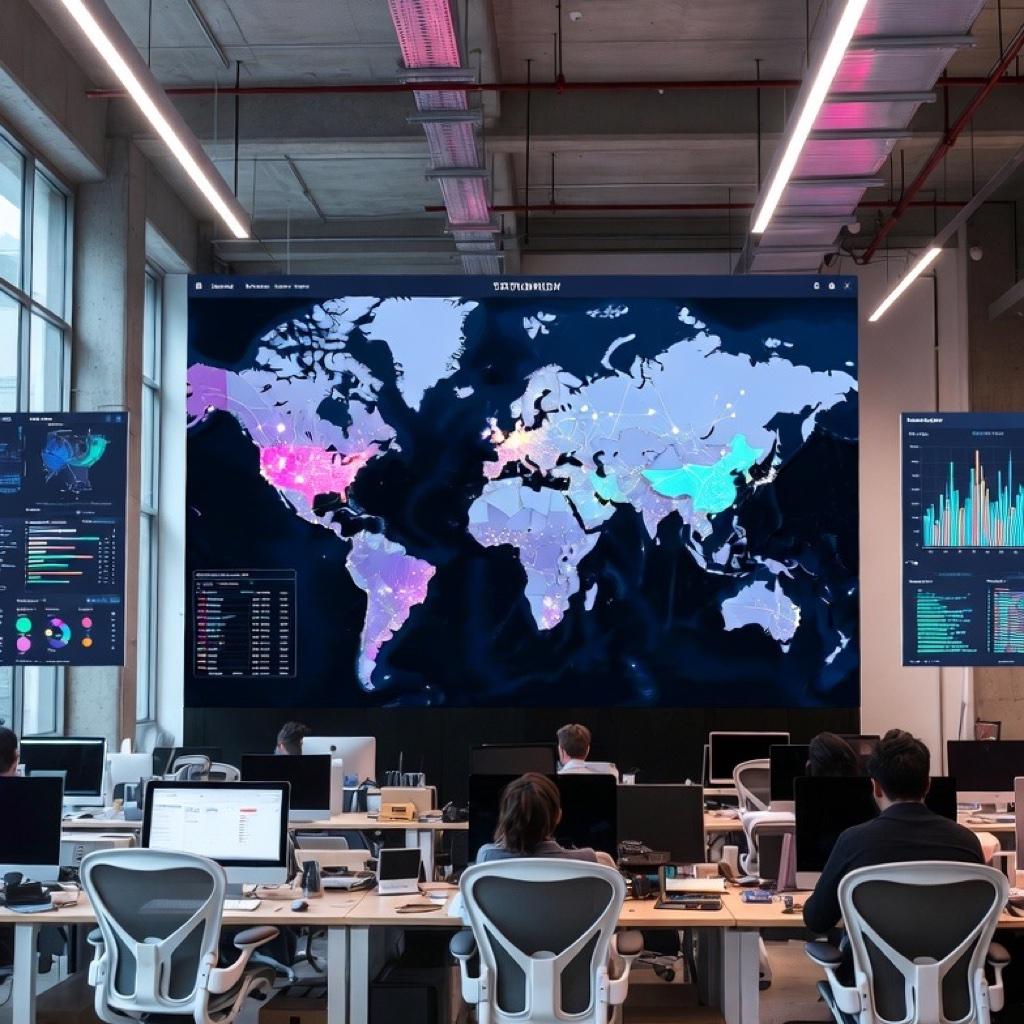
Silicon Valley’s dominance over global startup activity is real but no longer total. The combination of astronomical housing costs, visa friction for international talent, post-pandemic remote work normalization, and the democratization of cloud infrastructure has enabled serious startup ecosystems to emerge — and in some cases mature — in cities that were not on the venture capital map a decade ago. Dubai, Singapore, Warsaw, Nairobi, and Montreal are not consolation prizes for founders who could not get into Y Combinator. They are increasingly the locations of choice for founders who understand where capital is accessible, where talent is concentrated, and where regulatory environments are favorable for the next decade of growth.
Why Silicon Valley’s Grip Is Loosening
The factors that made Silicon Valley irreplaceable — density of capital, density of technical talent, and the network effect of decades of cumulative success — have not disappeared. But they have been partially neutralized. Remote work demonstrated that distributed engineering teams can build at the same quality level as co-located ones. Cloud infrastructure made it possible to build a global product from anywhere with an internet connection. And the globalization of venture capital — with major US funds opening offices in London, Singapore, and Riyadh — means founders no longer need to fly to Sand Hill Road to pitch.
The visa environment for international founders in the US has also deteriorated relative to alternatives. The H-1B process remains complex and uncertain. The O-1 visa requires demonstrated extraordinary ability. UK’s global talent visa, Singapore’s tech.pass, and the UAE Golden Visa have all been explicitly designed to attract technical founders and make relocation frictionless. For a founder based in Eastern Europe, Southeast Asia, or the Middle East considering where to incorporate their company, the calculus has changed.
Dubai: Capital and AI Ambition
Dubai has made the most aggressive play to position itself as a global tech hub. The Dubai International Financial Centre (DIFC) has evolved from a financial services enclave into a full-spectrum tech ecosystem, hosting hundreds of startups, providing licensing, and connecting founders to regional capital from Gulf sovereign wealth funds. The UAE government’s 100,000 Coders initiative and its AI strategy — which includes the Ministry of AI, the first of its kind globally — signal a serious long-term commitment to building technology competitiveness from the state level.
The capital environment is distinctive. Gulf sovereign wealth funds — ADIA, Mubadala, PIF, and QIA — are actively investing in technology both directly and through fund-of-funds structures with global VC firms. For a fintech or enterprise software startup targeting the GCC market of 55 million relatively wealthy consumers, having a Dubai presence provides both regional market access and proximity to some of the world’s largest pools of investable capital.
The limitations are also real. Dubai’s startup ecosystem remains more shallow in terms of serial entrepreneur density than London or Singapore. Building a deep product engineering team locally can be difficult in some technical domains. And the cost of living, while lower than San Francisco, is not cheap.
Singapore: Asia Pacific’s Regulatory Sandbox
Singapore has been the preferred Asian hub for Western founders and investors since the early 2010s and has solidified that position through consistent policy execution. The government’s Monetary Authority of Singapore (MAS) has built one of the world’s most sophisticated fintech regulatory frameworks, including the Payment Services Act and a structured licensing regime that provides clarity without being prohibitive. The Tech.Pass visa allows senior tech professionals and founders to relocate without employer sponsorship, and startup formation can be completed in 24 hours through the BizFile+ system.
The ecosystem has produced global companies — Sea Group (gaming and e-commerce), Grab (super app), and Razer (gaming hardware) among them — that provide proof of concept that Singapore-based companies can achieve global scale. For startups targeting Southeast Asian markets of over 700 million people and a growing middle class, Singapore offers an ideal base: English-language, rule of law, low corporate tax rate, and proximity to the markets being served.
Warsaw: Eastern Europe’s Quiet Tech Capital
Warsaw is less globally visible than Dubai or Singapore but has been quietly building a serious startup ecosystem that is increasingly catching the attention of pan-European investors. Poland produces roughly 15,000 computer science graduates annually, has relatively low engineering salaries compared to Western Europe, and has benefited from significant EU structural funds that have built out universities, incubators, and early-stage support infrastructure.
The companies that have emerged from Warsaw and Poland more broadly are genuine winners. Allegro, the dominant e-commerce platform in Central and Eastern Europe with 20 million active buyers, listed on the Warsaw Stock Exchange in 2020 in the largest European tech IPO of that year. Bolt (ride-hailing and delivery, founded in Estonia but with significant Polish operations), Booksy (appointment software for service businesses), and DocPlanner (healthcare appointment platform) have all raised major international rounds.
For European founders, Warsaw’s cost arbitrage — engineering salaries at 40-60% of London or Berlin rates for equivalent talent — provides a structural advantage in building capital-efficient startups. The EU single market provides seamless access to 450 million consumers without customs or regulatory barriers.
Advertisement
Nairobi: The M-Pesa Innovation Legacy
Nairobi occupies a unique position in the global startup geography. Kenya’s M-Pesa mobile money system — launched by Safaricom in 2007 — gave Kenya a decade-plus head start in mobile financial services relative to the rest of the world, including developed markets. That head start generated a generation of entrepreneurs who built on top of the M-Pesa infrastructure and developed deep expertise in building services for underserved populations with limited formal banking access.
The resulting ecosystem — iHub, Andela’s alumni network, M-Kopa, and dozens of fintech and agritech startups — has attracted international attention and capital. M-Kopa, which offers asset-based financing for solar panels and smartphones, has raised over $250 million from international investors including Goldman Sachs. The thesis animating international capital in Nairobi is straightforward: Africa’s consumer base of over 1.4 billion people represents the last major underpenetrated consumer technology market, and Nairobi has the technical talent and innovation culture to build for it.
Montreal: The AI Research Cluster
Montreal’s strength is narrower but deeper than most alternative hubs. The concentration of AI research talent — centered on MILA (the Quebec AI Institute), founded by Yoshua Bengio), McGill University, and the Université de Montréal — gives Montreal arguably the highest density of academic AI expertise per capita of any city in the world. The practical impact of this research cluster has been significant: Element AI (acquired by ServiceNow), Coveo (TSX-listed AI search), and Lightspeed Commerce (NYSE-listed commerce platform) all emerged from the Montreal ecosystem.
For founders building in foundation model research, applied machine learning, or AI-native products, Montreal offers access to research talent at lower cost than San Francisco or London, with strong ties to US venture capital through Boston and New York relationships.
What Makes a Hub: The Four Factors
Comparing ecosystems across geographies reveals a consistent set of factors that determine whether a hub reaches escape velocity or remains a regional curiosity:
| Factor | What It Requires |
|---|---|
| Capital Access | Local angel networks + regional VCs + access to international funds |
| Technical Talent | University pipelines + diaspora return + immigration-friendly policies |
| Regulatory Environment | Startup-friendly formation + IP protection + clear fintech/crypto rules |
| Network Effects | Density of serial entrepreneurs, accelerators, and exit success stories |
Algeria’s Position in the MENA Startup Map
Algeria sits at an interesting position in the regional ecosystem geography. With 47 million people, significant hydrocarbon-funded public capital, a large young technically-educated population, and proximity to both the GCC and European markets, the structural ingredients for a serious startup ecosystem are present. The government’s Digital Algeria 2025-2030 plan and the 2020 Startup Law provide foundational regulatory infrastructure.
The gap relative to Dubai or Casablanca (Morocco’s competing MENA hub) is primarily in capital availability, ecosystem density, and international connectivity. Building the bridge between Algeria’s talent base and the regional capital flows from the Gulf is the strategic opportunity for the next five years.
Advertisement
Decision Radar (Algeria Lens)
| Dimension | Assessment |
|---|---|
| Relevance for Algeria | High — Algeria is actively competing for position in the MENA startup map and can learn from hub development strategies |
| Infrastructure Ready? | Partial — startup law and incubator infrastructure exist; banking and payment infrastructure for international transactions remains a constraint |
| Skills Available? | Yes — Algeria graduates large numbers of engineers annually; the challenge is retention and creating conditions for these graduates to build locally |
| Action Timeline | Immediate — positioning decisions made in the next 2-3 years will determine Algeria’s trajectory in the regional startup geography |
| Key Stakeholders | Ministry of Digital Economy, ANEF, Caisse des Dépôts, Flat6Labs Algeria, university engineering departments, diaspora investor networks |
| Decision Type | Strategic |
Quick Take: The global dispersion of startup activity is an opportunity for Algeria to accelerate its ecosystem positioning. The playbook from Dubai, Singapore, and Warsaw — aggressive visa policies for international talent, regulatory clarity for fintech, and deliberate state investment in the innovation infrastructure — is replicable with political will. Algeria’s proximity to GCC capital flows and its large engineering talent base are genuine competitive assets that remain underdeveloped.
Sources & Further Reading
- Global Startup Ecosystem Report 2025 — Startup Genome
- MENA Startup Ecosystem 2025 — Wamda Research
- Dubai International Financial Centre — DIFC Innovation Hub
- Fintech Ecosystem Development — Monetary Authority of Singapore
- AI Research at MILA — Quebec AI Institute
- Africa Tech Venture Capital Report 2025 — Partech Africa
🔗 Related Intelligence

Beyond Software: Deep Tech Hardware Startups in Quantum, Photonic, and Neuromorphic Computing

The Exit Window in 2026: IPOs, Big Tech Acquisitions, and What Founders Should Expect

The AI-Native Startup Stack: Infrastructure Choices That Define the Next Generation of Companies

Finding and Managing Startup Co-Founders in the AI Era






Advertisement