

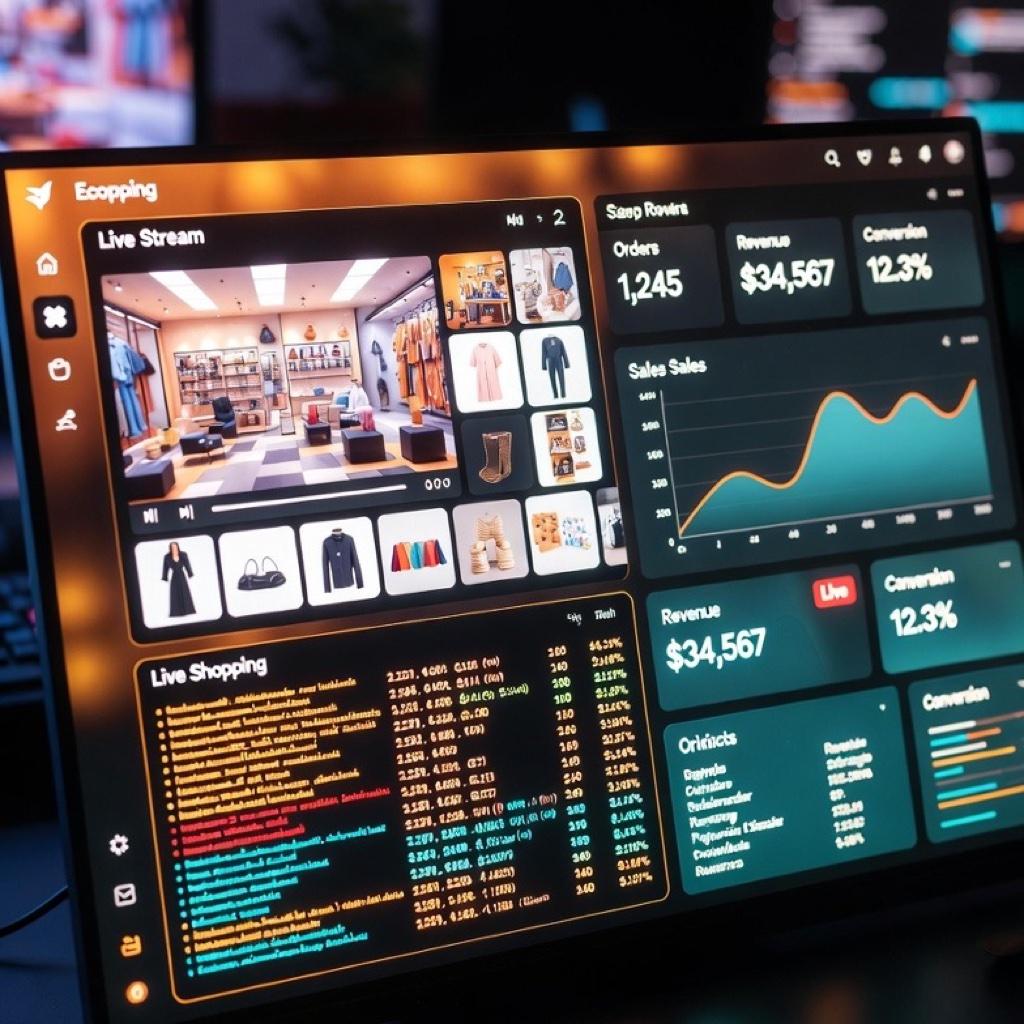
The checkout button never used to live inside a video. That changed. In 2026, the fastest-growing retail channel in the world is not a website, not an app store, and not a search engine — it is the infinite scroll of short-form video. Social commerce, the fusion of entertainment and purchasing, has crossed from trend to structural shift, generating an estimated $1.2 trillion in global sales and accelerating at a rate that is making traditional e-commerce executives genuinely nervous.
TikTok Shop sits at the center of this story. Launched in the US market in late 2023 and aggressively expanded through 2024 and 2025, TikTok Shop has moved from curiosity to category killer in verticals like beauty, fashion accessories, and household goods. The mechanism is psychologically precise: a user watches a 45-second video demonstrating a skincare product, the creator tags the item, and the viewer buys without ever leaving the app. The friction between desire and purchase has been reduced to a single tap.
The Architecture of Impulse
What separates social commerce from traditional e-commerce is not just placement — it is intent. When a user opens Amazon or a brand’s website, they arrive with purchase intent already formed. Social commerce inverts this. The content generates the intent. This distinction has enormous implications for how products are discovered, how brands are built, and how advertising dollars flow.
TikTok’s algorithm is the decisive engine here. Unlike Instagram, which still leans on follower graphs, TikTok’s For You Page surfaces content to non-followers based on engagement signals. This means a small brand with the right product demonstration video can reach millions of potential buyers at effectively zero media cost. The creator becomes the distribution channel. Short-form video drives a disproportionate share of TikTok Shop’s gross merchandise value — internal data suggests that approximately 58% of GMV on the platform originates from short video content rather than live streams or search. Research from Bazaarvoice found that 79% of TikTok users have discovered a product on the app, and 37% immediately wanted to buy it — a discovery-to-intent conversion rate that no other platform can match.
Instagram Shopping and Pinterest’s shoppable boards operate on similar principles but with different mechanics. Instagram has embedded shopping across Stories, Reels, and its dedicated Shop tab, allowing brands to tag products across every surface. Pinterest, with its inherently aspirational and high-intent user base — people actively planning purchases, home renovations, and wardrobes — has invested heavily in visual search linked directly to product catalogs. Pinterest’s conversion rates on shoppable pins consistently outperform display advertising benchmarks because the context is already commercial: users arrive planning to buy something.
YouTube Shopping adds another dimension. Google’s integration of product tags directly into YouTube videos and live streams — allowing viewers to browse and purchase without leaving the video — leverages the platform’s dominance in long-form product reviews and tutorials. For considered purchases (electronics, appliances, software), YouTube’s educational commerce model complements TikTok’s impulse-driven approach.
Live Shopping: The Biggest Shift You Haven’t Noticed Yet
If short-form video commerce is the daily engine, live shopping is the spectacle. Live commerce — real-time video streams where hosts demonstrate products and viewers buy in the moment — generated over $600 billion in China in 2025 through platforms like Taobao Live and Douyin (TikTok’s Chinese counterpart). The West has been slower to adopt, but the trajectory is clear.
TikTok LIVE Shopping events in the US and UK have produced consistent sellouts across categories from electronics to limited-edition fashion drops. Amazon Live, the company’s answer to this trend, has gained traction with influencer-hosted programming. YouTube Shopping, integrated directly into live streams, allows creators to surface and sell products without directing viewers away from the video. The psychological mechanism driving live commerce is urgency combined with social proof: when a host says “only 200 units left” and the comments fill with purchase confirmations, the buying pressure is real and immediate.
The brands winning in live commerce are not necessarily the largest. Speed and authenticity matter more than budget. A founder demonstrating their own product, answering live questions, and reacting in real time builds trust in ways that produced advertising cannot replicate. This has democratized retail reach in a manner that the old web never quite managed. In Southeast Asia, where Shopee Live and Lazada Live have become dominant shopping channels, small vendors routinely generate five-figure daily revenue through live sessions — a model that is now being replicated in MENA markets through platforms like noon and Temu.
Advertisement
Amazon’s Strategic Response
Amazon is not standing still. The company has aggressively expanded Amazon Live, integrated creator affiliate programs through its Influencer Program, and added short-form video content to product detail pages. But Amazon’s structural challenge is that its platform was designed around search-based discovery, not algorithmic entertainment. Replicating the serendipity of a TikTok For You Page inside a search-centric product index is a genuinely hard engineering and UX problem.
More significantly, TikTok Shop is winning on price perception. The app’s integration with a network of mostly Asian manufacturers — many of them the same factories that supply established brands — has created a direct-to-consumer pipeline that cuts out traditional retail markups. Buyers comparing a TikTok Shop skincare product to its equivalent on Amazon’s first-party catalog frequently find significant price differences. For price-sensitive consumers, this is decisive.
The competitive dynamics are pushing Amazon toward content and away from pure search. Its acquisition strategy and partnership approach in 2025 reflected this pivot: more creator programs, more video integration, more social signals feeding its recommendation engine. The rise of Temu and Shein — which combine social-media-native interfaces with ultra-low-cost supply chains — has intensified the pressure on Amazon from multiple directions simultaneously.
Platform Regulation and the TikTok Variable
Social commerce’s trajectory carries a significant geopolitical asterisk. TikTok’s ownership by ByteDance has made it a recurring target for US legislative action. The forced divestiture debate that dominated 2024 and resurfaced in 2025 introduced real uncertainty into TikTok Shop’s long-term market position in the US. Brands that had built entire go-to-market strategies around TikTok found themselves hedging by simultaneously investing in Instagram Reels commerce and YouTube Shopping.
This regulatory uncertainty has, paradoxically, accelerated the professionalization of social commerce as a whole. Brands are no longer treating any single platform as a guaranteed channel. Diversified social commerce strategies — maintaining presence across TikTok, Instagram, Pinterest, and YouTube simultaneously — have become standard practice for any brand generating meaningful revenue through social.
The European Union’s Digital Services Act and Digital Markets Act add another regulatory dimension, requiring greater transparency in algorithmic product recommendations and advertising disclosures. These regulations may constrain some of the most aggressive social commerce tactics — particularly around undisclosed affiliate relationships and algorithmic amplification of paid content.
Advertisement
🧭 Decision Radar
| Dimension | Assessment |
|---|---|
| Relevance for Algeria | Medium — Algeria’s 27.5 million social media users and growing mobile commerce adoption make this trend highly relevant for local brands and entrepreneurs; however, TikTok Shop direct commerce infrastructure is not yet operating in Algeria |
| Infrastructure Ready? | Partial — Mobile penetration is strong and social media usage is high, but integrated in-app payment rails and formal creator commerce ecosystems are absent; CCP/BaridiMob provide payment infrastructure that could be bridged |
| Skills Available? | Partial — Algerian creators and micro-influencers exist and are active, but monetization frameworks, affiliate marketing structures, and live commerce production skills remain underdeveloped |
| Action Timeline | 6-12 months — Algerian e-commerce startups and brands should begin building creator partnership programs and shoppable content capabilities now; full live commerce infrastructure is a 12-24 month horizon |
| Key Stakeholders | E-commerce platforms (Yassir, local DZ platforms), consumer brands, fintech startups, creator-economy entrepreneurs, digital marketing agencies |
| Decision Type | Strategic |
Quick Take: The social commerce wave will reach Algeria through platform spillover and regional adoption well before dedicated infrastructure arrives locally. Algerian brands and e-commerce startups that begin building creator partnerships, shoppable content libraries, and live video capabilities today will be positioned to capture early-mover advantage when the channel matures in the MENA region. The 27.5 million social media users represent a substantial audience already primed for video-driven discovery — the missing piece is the commerce layer.
Sources & Further Reading
- Social Commerce Forecast 2025-2026 — eMarketer
- Social Commerce Global Statistics — Statista
- TikTok Shop’s US Expansion Strategy — TechCrunch
- What the West Can Learn from China’s Live Commerce Boom — Business Insider
- Amazon vs. TikTok Shop: The Battle for Product Discovery — Wired
- The Social Commerce Opportunity — McKinsey & Company
- Social Commerce Statistics — Bazaarvoice
🔗 Related Intelligence

The Marketplace Wars: Amazon, Temu, Shein, and the Battle for Global E-Commerce

Cross-Border Ecommerce Under Siege: De Minimis Tariffs Hit Temu and Shein

Agentic Commerce: Google’s Universal Commerce Protocol and the AI Shopping Revolution

Big Tech on Trial: The Global Antitrust Wave Reshaping the Tech Industry in 2025-2026






Advertisement