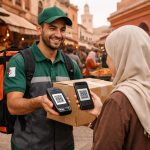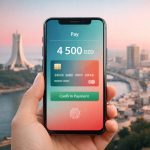
Millions of Algerians trust their phones with sensitive data every day — bank transfers through BaridiMob, ride bookings through Yassir, mobile top-ups through telecom apps. But how secure are the applications that handle this data? In a market where mobile-first services are expanding faster than security practices can keep pace, the gap between user trust and actual app security is widening into a chasm.
This article examines the security posture of Algeria’s most downloaded mobile applications using the OWASP Mobile Top 10 framework, identifying common vulnerabilities and offering practical guidance for both developers and users.
Algeria’s Mobile App Boom — and the Security Debt It Carries
Algeria’s mobile ecosystem has undergone a dramatic transformation. According to DataReportal’s Digital 2025 report, the country has 54.8 million cellular mobile connections — equivalent to 116% of the population, since many Algerians carry multiple SIM cards. Internet users number 36.2 million, representing a 76.9% online penetration rate. BaridiMob alone has crossed 10 million downloads on Google Play, making it one of the most widely adopted fintech apps in North Africa. Yassir operates in over 60 cities across six countries and serves more than 10 million users as a super app spanning ride-hailing, food delivery, and payments. Telecom operators Djezzy, Mobilis, and Ooredoo each have millions of active app users managing accounts, data packages, and payments.
Yet this growth has outpaced security investment. Most Algerian app developers — whether at startups or government-backed institutions — face constrained budgets, limited access to professional penetration testing tools, and minimal regulatory pressure to conduct security audits. The result is an app landscape where convenience runs well ahead of protection.
Algeria currently has no mandatory mobile application security standards. While Presidential Decree No. 26-07, published in the Official Gazette on 21 January 2026, requires public institutions to establish dedicated cybersecurity units, it does not extend to private-sector mobile app security certification or audit requirements. Compare this with the EU’s Cyber Resilience Act, which mandates security-by-design for all digital products, or Singapore’s Cybersecurity Labelling Scheme, which rates the security of consumer smart devices on a four-tier scale — a model that could be adapted for mobile app certification.
Methodology: What a Security Audit Looks Like
A professional mobile app security audit typically examines applications against the OWASP Mobile Top 10, the industry standard taxonomy of mobile security risks. The 2024 edition of this list identifies the following critical vulnerability categories:
- Improper Credential Usage — Hardcoded credentials, insecure storage of API keys
- Inadequate Supply Chain Security — Third-party SDK vulnerabilities, unverified dependencies
- Insecure Authentication/Authorization — Weak session management, broken access controls
- Insufficient Input/Output Validation — Injection attacks, data leakage through logs
- Insecure Communication — Unencrypted traffic, missing certificate pinning
- Inadequate Privacy Controls — Excessive data collection, analytics tracking without consent
- Insufficient Binary Protections — Lack of obfuscation, reverse engineering exposure
- Security Misconfiguration — Debug modes left on, insecure default settings
- Insecure Data Storage — Plaintext data on device, unprotected databases
- Insufficient Cryptography — Weak algorithms, improper key management
Security researchers use tools such as MobSF (Mobile Security Framework), Frida for dynamic analysis, Burp Suite for traffic interception, and jadx for APK decompilation. For this analysis, we reference publicly documented findings, common patterns observed in similar markets, and architectural assessments based on publicly available app behaviors.
BaridiMob: Algeria’s Digital Wallet Under the Microscope
BaridiMob, developed by Algérie Poste, is arguably the most security-critical app in the Algerian ecosystem. It manages CCP (Compte Courant Postal) accounts for millions of users and processes peer-to-peer transfers, bill payments, and merchant transactions.
What Works
BaridiMob has made visible improvements over recent versions. The app requires SMS-based OTP (one-time password) for transaction confirmation, uses HTTPS for API communications, and has implemented session timeout mechanisms. According to Algérie Poste’s published data policy, user data is transmitted securely via HTTPS and is not shared with third parties.
Areas of Concern
Certificate pinning gaps. Certificate pinning is a technique that ensures an app only communicates with a server presenting a specific, pre-approved SSL certificate. Without it, an attacker on the same Wi-Fi network (a coffee shop, university campus, or hotel) can intercept traffic using a man-in-the-middle attack. Many financial apps in emerging markets have historically lacked robust certificate pinning implementations, making them vulnerable to proxy-based interception.
Excessive permissions. A security-conscious app should request only the minimum permissions necessary. Financial apps that request access to contacts, camera, location, and storage beyond what their core features require create unnecessary attack surfaces. Every additional permission is a potential data leak vector if the device is compromised.
Local data storage practices. On Android, apps that store sensitive session tokens or account data in SharedPreferences without encryption, or that write transaction data to local SQLite databases without protection, expose this information to any app with root access or to forensic extraction tools. Even on non-rooted devices, Android backup mechanisms can sometimes extract this data.
API endpoint exposure. Financial apps frequently communicate with backend APIs that may not implement proper rate limiting, input validation, or authentication token rotation. Attackers who reverse-engineer the APK can extract API endpoints and attempt credential stuffing, parameter tampering, or unauthorized data access.
Yassir: The Super App’s Expanding Attack Surface
Yassir has evolved from a ride-hailing app into a super app encompassing food delivery, grocery shopping, payments, and even physical retail following its 2026 acquisition of the Uno hypermarket chain. Each new feature module expands the app’s attack surface. Notably, Senegal’s Commission de Protection des Donnees Personnelles (CDP) formally warned Yassir in 2023 to comply with the country’s data protection rules when the company expanded operations there — a signal that data governance is a live concern.
Permission Model
Yassir requires location services (expected for ride-hailing), but the app also requests persistent background location access, contacts, camera, microphone, and phone state. While some of these support legitimate features (driver communication, profile photos), the breadth of permissions creates a rich data profile that, if compromised, reveals intimate details about user behavior.
Third-Party SDK Risk
Super apps like Yassir typically integrate dozens of third-party SDKs — analytics (Firebase, Mixpanel), advertising, crash reporting, mapping services, payment processors. Each SDK is a potential supply chain vulnerability. In March 2024, security researchers discovered that misconfigured Firebase instances across more than 900 applications had exposed over 125 million user records, including names, emails, phone numbers, and billing details. The root cause was developers using Firebase’s permissive test mode and never implementing proper security rules — a misconfiguration pattern common in fast-moving startups.
Payment Security
As Yassir processes more financial transactions, the security of its payment infrastructure becomes critical. The integration with various payment gateways and the storage of card details (or tokenized equivalents) should comply with PCI DSS standards. In the Algerian market, where PCI DSS enforcement is limited, the onus falls largely on the company’s internal security practices.
Telecom Apps: Djezzy, Mobilis, and Ooredoo
Telecom operator apps manage subscriber accounts, recharge credits, data packages, and increasingly offer mobile money services. These apps have direct access to phone number identification and subscriber data.
Common Issues Across Telecom Apps
Outdated WebView components. Many telecom apps rely heavily on embedded WebViews to render content, which can introduce web-based vulnerabilities (XSS, CSRF) into a mobile context. If WebView components are not updated to patch known browser engine vulnerabilities, they become persistent attack vectors.
Insecure deep linking. Deep links allow external sources (websites, SMS messages, other apps) to navigate directly to specific screens within an app. If deep link handlers do not validate the source and parameters, attackers can craft malicious links that trigger unintended actions — such as initiating a recharge to an attacker-controlled number.
SMS-based authentication weakness. All three operators rely heavily on SMS for account verification and authentication. SMS is inherently insecure — susceptible to SIM swap attacks, SS7 protocol vulnerabilities, and interception. While SMS OTP is better than no second factor, it falls short of app-based authenticators or hardware security keys.
Account data exposure. Telecom apps that display full phone numbers, billing addresses, or identity document numbers without masking create phishing opportunities. Screenshots shared on social media, or data captured by screen-recording malware, can harvest this visible information.
Advertisement
E-Commerce and Service Apps
Algeria’s growing e-commerce sector includes apps like Ouedkniss — the country’s largest classifieds platform with over 800,000 daily visits — along with Jumia Algeria and various food delivery platforms. These apps collect shipping addresses, payment information, and purchase histories.
Common Vulnerabilities
Insecure API design. E-commerce APIs that use sequential integer IDs for orders or user profiles (e.g., `/api/user/1001`, `/api/user/1002`) without proper authorization checks allow IDOR (Insecure Direct Object Reference) attacks, where an attacker can enumerate and access other users’ data simply by incrementing the ID.
Hardcoded secrets. Developers under deadline pressure sometimes embed API keys, database credentials, or encryption keys directly in the app’s source code. Android APKs are trivially decompilable using tools like jadx, meaning any hardcoded secret is effectively public. This is a pervasive issue in apps developed under tight timelines with limited code review processes.
Unvalidated input. Search fields, comment sections, and review forms that do not sanitize user input can be exploited for injection attacks, potentially allowing attackers to manipulate database queries or inject malicious scripts.
The Regulatory Gap
Algeria’s cybersecurity regulatory framework, while evolving rapidly, has significant gaps in the mobile application domain.
What Exists
Presidential Decree No. 26-07 (January 2026) requires public institutions to establish dedicated cybersecurity units that report directly to institution heads and coordinate all data protection and system security actions. Presidential Decree No. 25-321 (December 2025) approved Algeria’s national information systems security strategy for 2025-2029. The ASSI (Agence de Securite des Systemes d’Information), operating under the Ministry of National Defense, implements national cybersecurity policies and defends critical infrastructure. The CNSSI (Conseil National de la Securite des Systemes d’Information) provides strategic coordination at the national level.
Algeria’s data protection law (Law 18-07 of June 2018) establishes principles for personal data processing and is enforced by the ANPDP (National Authority for Personal Data Protection). The framework was significantly strengthened by Law No. 11-25 (July 2025), which modernized the 2018 framework by requiring organizations to appoint Data Protection Officers, maintain detailed processing records, and conduct Data Protection Impact Assessments.
What Is Missing
- No mandatory app security certification for apps published in Algeria
- No security audit requirements for financial or government mobile apps
- No vulnerability disclosure framework that protects security researchers
- No app store-level security scanning requirements beyond Google Play’s standard checks
- No breach notification requirements specific to mobile app developers who suffer data breaches
Regional Comparison
Morocco’s DGSSI, designated as the National Cybersecurity Authority under Law 05-20, has published a National Directive on Information System Security covering government and critical infrastructure sectors. Tunisia’s ANCS (which replaced the former ANSI in 2023 via Decree-Law 2023-17) requires mandatory cybersecurity audits for critical information systems. In the Gulf, Saudi Arabia’s NCA mandates security assessments for government apps, including platforms like Absher and Tawakkalna that serve millions of citizens daily. The UAE’s TDRA has established mobile app security requirements for regulated sectors including healthcare, finance, and telecommunications.
Algeria’s absence of comparable mobile-specific standards leaves the market largely self-regulating — and self-regulation in cybersecurity historically produces uneven results. For context, Algeria recorded over 70 million cyberattacks in 2024, ranking 17th globally among most-targeted nations, underscoring the urgency of closing this regulatory gap.
Real-World Attack Scenarios
Understanding how these vulnerabilities translate into actual attacks helps contextualize the risk.
Scenario 1: Coffee Shop Credential Theft
An attacker sets up a rogue Wi-Fi hotspot at a popular Algiers cafe. Users who connect and open a banking app without certificate pinning have their API traffic intercepted. The attacker captures authentication tokens and uses them to initiate transfers before the session expires.
Scenario 2: Fake Update Social Engineering
A fake “BaridiMob v4.0” APK circulates on Facebook groups and Telegram channels, promising new features. Users who install it outside the Google Play Store grant it the same permissions as the real app. The trojanized version harvests credentials and forwards SMS OTPs to the attacker.
Scenario 3: Supply Chain Compromise
A popular Algerian e-commerce app integrates a third-party analytics SDK that is later found to be exfiltrating user data to external servers. Because the app developer did not audit the SDK’s network behavior, user browsing habits and purchase data were silently harvested for months.
Scenario 4: IDOR Data Leak
A security researcher discovers that an Algerian food delivery app exposes order details, including delivery addresses and phone numbers, through predictable API endpoints. By iterating through order IDs, anyone can retrieve thousands of customers’ personal data. Without a vulnerability disclosure program, the researcher has no safe channel to report the issue.
Recommendations for Algerian App Developers
Immediate Actions
- Implement certificate pinning in all apps that handle sensitive data. Use libraries like OkHttp’s CertificatePinner on Android or TrustKit on iOS. Test pinning with tools like Frida to verify it cannot be trivially bypassed.
- Audit permissions ruthlessly. Remove every permission that is not essential to core functionality. Use Android’s runtime permission model to request access only when the feature that needs it is actively used.
- Encrypt local storage. Use Android’s EncryptedSharedPreferences and EncryptedFile APIs (part of Jetpack Security) instead of plain SharedPreferences. For SQLite databases, use SQLCipher.
- Remove hardcoded secrets. Use server-side configuration delivery or platform-specific secure storage (Android Keystore, iOS Keychain) to manage API keys and credentials. Integrate secret-scanning tools like gitleaks or truffleHog into CI/CD pipelines.
- Implement proper input validation on both client and server sides. Never trust client-side validation alone.
Medium-Term Improvements
- Adopt OWASP MASVS (Mobile Application Security Verification Standard) as the baseline for all development projects. Target Level 2 (defense-in-depth) for any app handling financial or personal data.
- Integrate SAST and DAST tools into the development pipeline. MobSF for static analysis, Burp Suite or OWASP ZAP for API testing.
- Establish a vulnerability disclosure program. Even a simple [email protected] email address with a published policy dramatically improves the chance of receiving responsible disclosures.
- Conduct third-party penetration testing at least annually for apps handling financial data. Use firms certified by CREST or OSCP-qualified testers.
- Implement app integrity checks — detect rooted/jailbroken devices, detect running debuggers, detect tampering with the APK signature.
Architectural Best Practices
- Move to token-based authentication with short-lived JWTs, refresh tokens, and proper revocation mechanisms.
- Implement API rate limiting and anomaly detection to identify credential stuffing, scraping, and automated attacks.
- Use code obfuscation (ProGuard/R8 for Android, bitcode for iOS) combined with runtime application self-protection (RASP) for high-value apps.
What Users Can Do Today
While the primary responsibility lies with developers, Algerian app users can take practical steps to protect themselves.
- Only install apps from Google Play Store or Apple App Store. Never install APKs from Facebook groups, Telegram channels, or random websites, regardless of what features they promise.
- Review app permissions. On Android, go to Settings > Apps > [App Name] > Permissions. Revoke any permission that does not align with the app’s function.
- Keep apps updated. Security patches are delivered through app updates. Enable automatic updates.
- Use a different password for every app. A password manager like Bitwarden (free, open-source) generates and stores unique passwords.
- Enable two-factor authentication wherever it is offered.
- Be skeptical of links. Never click links in SMS messages claiming to be from your bank or telecom provider. Instead, open the official app directly.
- Monitor your accounts. Regularly check BaridiMob transaction history and CCP statements for unauthorized transactions.
The Path Forward
The mobile app security challenge in Algeria is not a technology problem — it is a governance, investment, and awareness problem. The tools and knowledge to build secure apps are freely available. What is missing is the regulatory push, the institutional commitment, and the cultural shift that treats security as a core product requirement rather than an afterthought.
The establishment of a national mobile app security certification framework — even a voluntary one initially — would set a baseline. Incentives such as “security certified” badges on app store listings could drive competitive adoption. University computer science programs should integrate OWASP mobile security into their curricula. And Algerian companies building apps that handle millions of users’ financial and personal data must recognize that a security breach is not a hypothetical risk — it is an inevitability for which the only question is when, not if.
The cost of a proactive security audit is a fraction of the cost of a breach — measured not just in dinars, but in the public trust that Algeria’s digital economy depends on.
Frequently Asked Questions
How can I check if an Algerian app is secure?
Look for basic indicators: Does the app use HTTPS (lock icon in browser version)? Does it offer two-factor authentication? Does it request only necessary permissions? While you cannot perform a full audit as a user, these visible signals suggest the developers take security seriously. You can also check if the company has a published security or privacy policy.
Are apps on Google Play Store automatically safe?
No. Google Play Protect scans for known malware, but it does not audit apps for insecure API designs, data leaks, or privacy violations. In March 2024, researchers found that over 900 apps with misconfigured Firebase databases had exposed 125 million user records — despite being distributed through official stores. The Play Store is safer than sideloading, but it is not a guarantee of security.
What should I do if I discover a vulnerability in an Algerian app?
If the company has a published security contact or bug bounty program, report through that channel. If not, try reaching the company’s technical team through professional channels (LinkedIn, official email). Document your finding with screenshots and steps to reproduce. Avoid publicly disclosing the vulnerability before giving the company reasonable time to fix it (typically 90 days). Unfortunately, Algeria does not yet have a legal framework protecting security researchers, so proceed cautiously.
Sources & Further Reading
- OWASP Mobile Top 10 (2024) — OWASP Foundation
- Mobile Application Security Verification Standard (MASVS) — OWASP
- Android Security Best Practices — Google Developers
- MobSF — Mobile Security Framework (Open Source)
- Algeria Strengthens Cybersecurity Framework — TechAfrica News
- Algeria Orders Cybersecurity Units in Public Sector — Ecofin Agency
- Misconfigured Firebase Instances Expose 125 Million User Records — SecurityWeek
- Digital 2025: Algeria — DataReportal
- Senegal Regulator Warns Yassir on Data Protection — Tech In Africa
- Certificate Pinning for Mobile Applications — OWASP Cheat Sheet
🔗 Related Intelligence

Algeria’s Data Protection Law (18-07): What Every Business Must Know in 2026

Software and Intellectual Property in Algeria: What Developers and Startups Need to Know

Bug Bounty and Ethical Hacking in Algeria: Is There a Legal Framework for Responsible

Algeria’s Data Protection Law: A Pioneer in Africa’s Growing Privacy Landscape