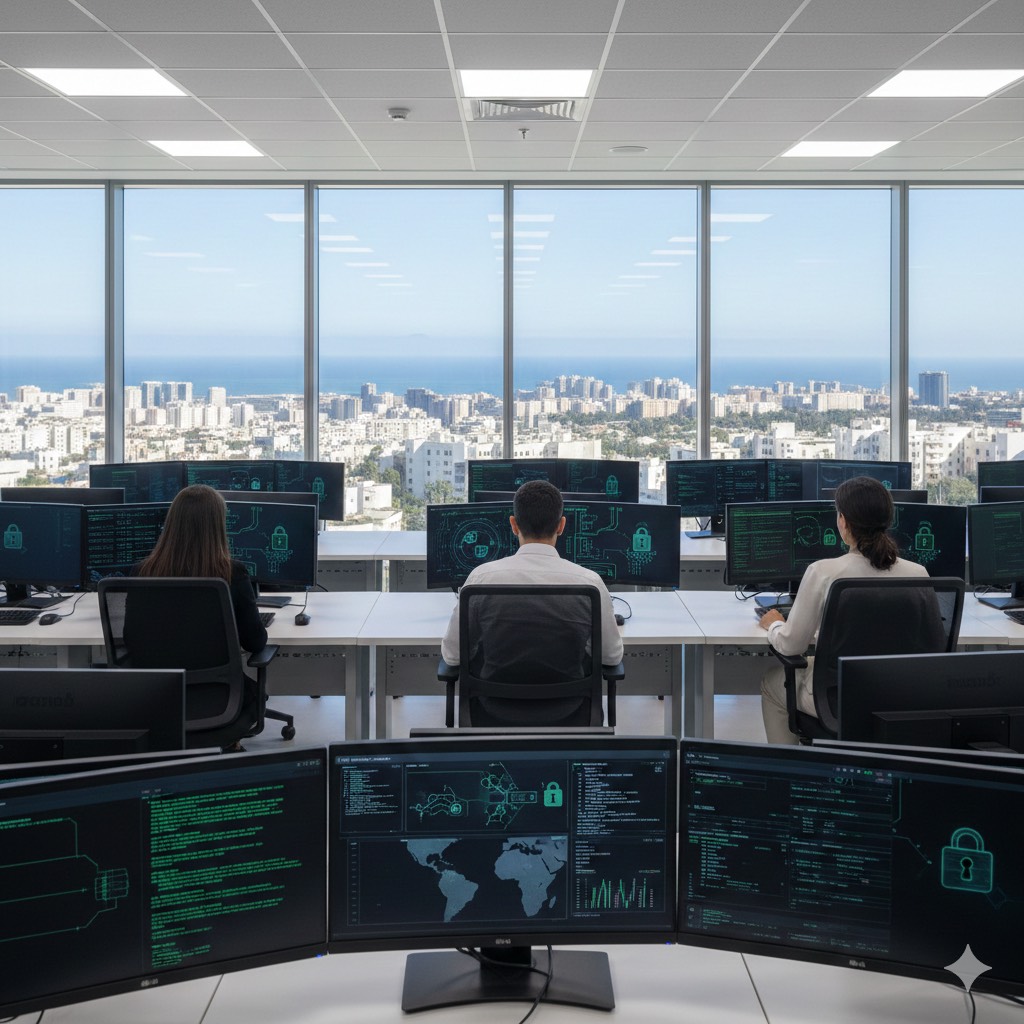
The world faces a structural shortage of cybersecurity professionals. The ISC2 2024 Cybersecurity Workforce Study — the industry’s most authoritative annual measurement — put the global shortfall at 4.8 million professionals, the largest gap ever recorded. The gap increased 19% year-over-year, even as the global cyber workforce held at 5.5 million — essentially flat growth of just 0.1%, the slowest since ISC2 began tracking. For the first time, lack of budget surpassed lack of qualified talent as the top reason organizations cited for understaffing.
For Algeria, this global shortage creates a paradox: the country simultaneously faces a domestic talent shortage (not enough security professionals to protect Algerian organizations) and a talent export opportunity (Algerian security professionals are globally competitive and internationally in demand). Managing this tension — keeping enough talent at home while building a pipeline that earns global recognition — is one of the central challenges of Algeria’s cybersecurity strategy.
Quantifying Algeria’s Cybersecurity Workforce
There is no official published figure for the number of certified cybersecurity professionals in Algeria. Based on available data from professional certification bodies, industry surveys, and training providers:
- CISSP holders (Certified Information Systems Security Professional): estimated in the low hundreds — a remarkably small number for a country of 47 million
- CEH holders (Certified Ethical Hacker): estimated at several hundred, growing as training providers expand offerings
- ISO 27001 Lead Implementers/Auditors: concentrated in banking, telecoms, and energy sectors
- Total active cybersecurity professionals: Only 1.5% of surveyed tech workers in the State of Algerian Software Engineering 2024 report identified as cybersecurity engineers
These numbers are dramatically insufficient for the compliance obligations that Presidential Decree 26-07 (January 2026) just created: every Algerian public institution must now establish a dedicated cybersecurity unit. With approximately 2,000 public institutions likely above the threshold, and each unit requiring a minimum of two qualified cybersecurity professionals, the decree alone could create demand for thousands of new cybersecurity professionals in the public sector — far exceeding the estimated current workforce.
Where Algeria’s Security Talent Comes From Today
University Programs
Algeria’s universities offer cybersecurity specializations at the master’s level within computer science, networks, and information systems programs. The most relevant include:
- USTHB (Houari Boumediene University of Science and Technology, Algiers): Master’s in Information System Security; research output in cryptography and network intrusion detection
- ESI (École Nationale Supérieure d’Informatique): Produces Algeria’s most competitive computer scientists with cybersecurity concentration
- ESST (École Supérieure en Sciences et Technologies): Bachelor’s in Security & System/Network Administration — covering fundamentals through hands-on experience in CTF competitions and hackathons
- INSIM Oran: MSc in Information Security
- ESAA (Algerian Higher School of Business): MBA in Cyber Security Management, in collaboration with CYBEARS
The National School of Cybersecurity
The most significant development in Algeria’s cybersecurity education pipeline: in June 2024, the government created by presidential decree the École Nationale Supérieure de Cybersécurité at Sidi Abdellah, Algiers. The school — 100% dedicated to cybersecurity — opened for its first academic year in September 2024, with a mission to train engineers and doctors specialized in cybersecurity. This represents Algeria’s first institution entirely focused on producing cybersecurity professionals at scale.
Self-Taught and Certification-Driven Practitioners
A significant portion of Algeria’s security community is self-taught. Algeria has an active CTF (Capture the Flag) culture — competitive hacking challenges organized through university clubs and informal communities that develop practical penetration testing and forensics skills. The Algeria National Cyber Security CTF, hosted by ESI-SBA, is one of several organized competitive events.
Several Algerian security researchers have disclosed vulnerabilities in systems operated by major international companies, earning recognition on bug bounty programs. This grassroots talent pool produces practitioners who may hold no formal cybersecurity degree but can outperform credential-holders in practical assessments.
Vocational Training and Government Initiatives
In February 2026, the Ministry of Vocational Education and ASIS (Information Systems Security Agency) launched a National Conference to Strengthen Capabilities in Cybersecurity, announcing new certificate-oriented qualification programs using smart classrooms and remote learning infrastructure. This initiative, alongside Cisco Networking Academy programs active in Algerian universities, aims to broaden the pipeline beyond traditional university tracks.
Advertisement
The Salary Problem: Why Talent Leaves
According to the State of Algerian Software Engineering 2024 survey, cybersecurity salaries in Algeria range from approximately 80,000 DZD/month (~$590) for junior security engineers to 100,000–150,000 DZD/month (~$740–$1,110) for mid-level and senior professionals — competitive within the Algerian economy but dramatically below international rates:
| Role | Algeria (USD/month) | France (USD/month) | UAE (USD/month) |
|---|---|---|---|
| SOC Analyst (L2) | $500–800 | $3,500–5,000 | $4,000–6,500 |
| Penetration Tester | $700–1,200 | $5,000–8,000 | $5,500–9,000 |
| CISO | $1,500–3,000 | $10,000–18,000 | $12,000–20,000 |
The salary differential creates persistent emigration pressure. French-speaking cybersecurity firms in Paris, Lyon, and Montréal actively recruit Algerian security talent. The Gulf — particularly UAE and Saudi Arabia — recruits Algerian CISOs and security architects at compensation packages that cannot be matched domestically.
Notably, 22% of Algerian cybersecurity professionals already work remotely for international employers, according to the State of Algerian Software Engineering survey — a trend that retains talent physically in Algeria while directing their skills (and earning power) toward foreign organizations.
What Organizations Should Do: A Practical Talent Strategy
For Algerian organizations that must comply with Decree 26-07 and build out security capability:
Short-Term (2026): Build What You Have
- Identify internal IT staff with security aptitude and sponsor their certification (Security+, CEH, or AWS Security Specialty)
- Engage National School of Cybersecurity graduates as they enter the market — create structured internship-to-hire pipelines
- Subscribe to DZ-CERT advisories and assign responsibility for monitoring and response to an existing IT team member while the dedicated unit is being built
Medium-Term (2027–2028): Build the Unit
- Hire a qualified CISO (internal promotion or external hire) who can design and staff the unit
- Consider a managed SOC — for organizations below $50M revenue, a managed Security Operations Center from a qualified service provider is more cost-effective than a fully internal build
- Achieve ISO 27001 certification — the certification process itself forces implementation of the controls that actually reduce risk
Long-Term: Invest in Pipeline
- Partner with USTHB, ESI, or the National School of Cybersecurity for thesis supervision and internship programs
- Sponsor employees through CISSP or CISM certification pathways (18-month investment per candidate)
- Create competitive salary bands that retain security talent at 20–30% above general IT compensation — the cost of replacing a departed security professional far exceeds the cost of retention
The Opportunity for Algerian Security Professionals
In the global market, being an Algerian cybersecurity professional in 2026 is a genuine advantage:
- French language: Fluency in French opens the entire French-speaking international security market (France, Belgium, Canada, Switzerland, West Africa)
- Arabic language: Growing demand for Arabic-speaking security professionals across the MENA region, where Saudi NCA, UAE NESA, and emerging frameworks in Egypt and Morocco are creating regulatory compliance markets
- Strong mathematical foundation: Algerian engineering education’s emphasis on mathematics translates directly into cryptography, threat modeling, and algorithmic security competencies
- Competitive cost: For European companies, hiring an Algerian remote security professional delivers strong skills at a fraction of European cost — and 22% of the Algerian cyber workforce already works this way
For Algerian professionals: the certifications worth prioritizing in 2026, in order of return on investment, are CompTIA Security+ (entry-level credibility, widely recognized), AWS Security Specialty (cloud security demand is growing fastest), CEH (government and banking procurement often requires it), and CISSP (the senior credential that unlocks CISO-level roles).
Advertisement
Decision Radar
| Dimension | Assessment |
|---|---|
| Relevance for Algeria | Critical — the talent gap is the single biggest barrier to implementing Decree 26-07 compliance |
| Action Timeline | Immediate — organizations need to start building cybersecurity units now; qualified talent takes 12-18 months to develop |
| Key Stakeholders | HR Directors, CISOs, IT Directors, University Program Directors, Vocational Training Administrators, Individual Tech Professionals |
| Decision Type | Strategic — requires long-term workforce planning, not just tactical hiring |
| Priority Level | High |
Quick Take: The cybersecurity talent gap in Algeria is real and urgent — there are far fewer qualified professionals than Decree 26-07 requires. Organizations should start building internal capability now through certification sponsorship and structured internship pipelines. Individual professionals should invest in certifications (Security+, CEH, CISSP) that have immediate market value both domestically and internationally.
Sources
- ISC2 2024 Cybersecurity Workforce Study
- ISC2 Workforce Growth Slows — First Look
- Cybersecurity Workforce in Algeria — State of Algeria Dev
- Algeria’s Rise as a Cybersecurity Hub — Systelium
- Algeria Expands Vocational Training for Cybersecurity — TechAfrica News
- National School of Cybersecurity at Sidi Abdellah — Africa Cybersecurity Mag
- Algeria National Cyber Security CTF — ESI-SBA
- ESAA MBA Cyber Security Management
- Presidential Decree 26-07 — ARPCE
- Algeria Orders Cybersecurity Units — Ecofin Agency
- Cybersecurity Skills Gap 2025 — DeepStrike
- Sonatrach 2024 Results — DZWatch





Advertisement