

Three Fronts, One Target
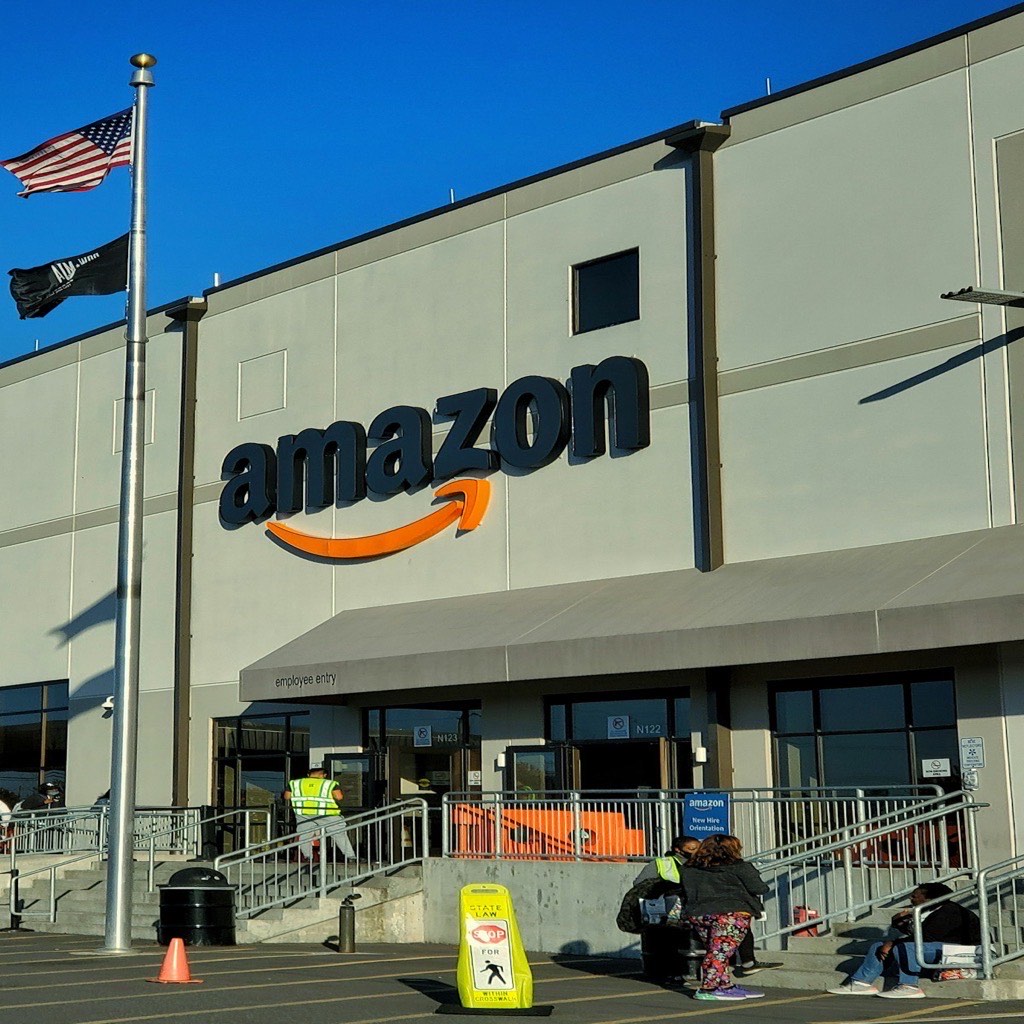
Amazon is facing simultaneous antitrust enforcement actions in Germany, California, and federal court, each targeting a core element of its marketplace business: control over third-party seller pricing. The convergence of these cases — from different jurisdictions, initiated by different authorities, applying different legal frameworks — represents the most serious regulatory challenge Amazon has confronted since its founding.
On February 5, 2026, Germany’s Federal Cartel Office (Bundeskartellamt) issued a landmark decision prohibiting Amazon from controlling the prices that third-party sellers charge on its platform. The ruling included an order to disgorge approximately 59 million euros in gains attributed to the anticompetitive pricing practices. Amazon’s stock dropped 4.5% on the announcement. Less than three weeks later, on February 24, the California Attorney General filed for a preliminary injunction against Amazon, seeking immediate relief from what the state alleges are anticompetitive pricing agreements that inflate consumer prices. And underlying both actions, the Federal Trade Commission’s federal antitrust case against Amazon — filed in September 2023 — continues to advance through the courts.
Each case approaches the pricing question from a slightly different angle, but the core allegation is consistent: Amazon uses its dominant marketplace position to prevent sellers from offering lower prices on competing platforms, effectively setting a floor on internet-wide pricing that harms consumers and competing marketplaces.
The German Ruling: A European Precedent
The Bundeskartellamt’s February 5 decision is, by any measure, the most consequential antitrust ruling against Amazon to date. Germany’s competition authority found that Amazon violated competition law through two interconnected mechanisms: its fair pricing policy and its Buy Box algorithm.
The fair pricing policy, as the Bundeskartellamt analyzed it, penalized sellers who listed products at lower prices on competing platforms. If a seller offered a product for $20 on Amazon but $18 on their own website or on a competing marketplace, Amazon’s algorithms could suppress the seller’s listing, remove their Buy Box eligibility, or flag the listing for review. The practical effect was that sellers maintained uniform prices across all channels, with Amazon’s price serving as the floor.
The Buy Box algorithm compounded this effect. The Buy Box — the prominent “Add to Cart” button on an Amazon product page — routes approximately 80-90% of purchases on the platform. Eligibility for the Buy Box depends on multiple factors including price competitiveness, fulfillment method, and seller metrics. Amazon’s algorithm, the Bundeskartellamt found, effectively required sellers to offer their lowest available price on Amazon to maintain Buy Box eligibility. Since losing the Buy Box is commercially devastating for sellers, this created powerful economic pressure to ensure Amazon always had the lowest or equal-lowest price.
The 59 million euro disgorgement, while modest relative to Amazon’s revenues, establishes the principle that gains derived from anticompetitive pricing control can be clawed back. More importantly, the behavioral remedy — the prohibition against controlling seller pricing — requires Amazon to fundamentally alter how its marketplace algorithms evaluate and rank third-party offers.
Amazon has announced its intention to appeal the decision, a process that could extend through the German court system for several years. But the Bundeskartellamt’s ruling already has persuasive authority with competition agencies across Europe and beyond. The European Commission, which has its own ongoing investigation into Amazon’s marketplace practices, is reportedly studying the German decision closely.
California: The State-Level Attack
The California Attorney General’s filing on February 24 for a preliminary injunction brings the pricing fight to Amazon’s largest US market. California’s case alleges that Amazon’s pricing agreements with sellers constitute vertical price-fixing arrangements that violate the state’s Cartwright Act — California’s antitrust statute, which in some respects provides broader protections than federal antitrust law.
The California case focuses on the consumer harm dimension. The state argues that by preventing sellers from offering lower prices on competing platforms, Amazon eliminates price competition across the internet. A consumer searching for a product on Google, Walmart.com, or Target.com will not find prices lower than Amazon’s, not because Amazon offers the best deal but because sellers are contractually or algorithmically prevented from pricing lower elsewhere. The result, California alleges, is artificially inflated prices across the entire ecommerce ecosystem.
The preliminary injunction request is strategically significant. If granted, it would require Amazon to immediately cease enforcing its pricing policies in California while the full case proceeds — a relief that could take months or years. Even the threat of a preliminary injunction creates settlement pressure, as operating under court-imposed restrictions on a core business practice is operationally disruptive.
California’s action also reflects a broader trend of state attorneys general stepping into antitrust enforcement roles that the federal government has historically led. With the FTC case proceeding on its own timeline and through its own legal theories, California’s parallel state action creates multiple fronts that Amazon must defend simultaneously, increasing both legal costs and the probability that at least one jurisdiction achieves a restrictive outcome.
Advertisement
The FTC Federal Case: The Systemic Challenge
The Federal Trade Commission’s case, filed in September 2023, is the broadest of the three actions. Unlike the German and California cases, which focus specifically on pricing, the FTC’s complaint encompasses Amazon’s entire marketplace ecosystem, alleging that the company maintains its monopoly through a range of anticompetitive practices including pricing algorithms, fulfillment requirements, and advertising coercion.
The FTC’s theory extends beyond seller pricing to include what the agency terms “Project Nessie” — an internal Amazon algorithm allegedly designed to identify competitors’ pricing behavior and coordinate price increases across the marketplace. The existence of such an algorithm, if proven, would elevate the case from vertical restraints (Amazon controlling its sellers) to horizontal coordination (Amazon influencing market-wide pricing), a more serious antitrust violation.
The case is being tried under Section 2 of the Sherman Act, which prohibits monopolization and attempted monopolization. The FTC must demonstrate both that Amazon possesses monopoly power in a relevant market and that it has maintained that power through anticompetitive conduct rather than superior products or business acumen. Amazon’s defense rests on the argument that its marketplace practices benefit consumers through lower prices, faster delivery, and wider selection — the consumer welfare standard that has dominated US antitrust analysis for decades.
The FTC case is proceeding through discovery and pre-trial motions, with a trial date not expected before late 2026 or 2027. The outcome will depend heavily on the legal framework applied: under a traditional consumer welfare analysis, Amazon’s argument that its practices ultimately benefit consumers carries significant weight. Under a broader structural competition analysis — which the FTC has been advocating — the harm to seller autonomy and competing marketplaces may be sufficient regardless of short-term consumer price effects.
Implications for Marketplace Economics
The three-front enforcement action against Amazon’s pricing practices has implications that extend far beyond Amazon itself. Every major online marketplace — eBay, Etsy, Walmart Marketplace, Mercado Libre — uses some form of pricing algorithm that considers cross-platform pricing. If the German, Californian, or federal actions establish that such practices violate competition law, the ripple effects will reshape marketplace business models globally.
For third-party sellers, the immediate implication is potentially greater pricing freedom. If Amazon can no longer penalize sellers for offering lower prices on competing platforms, sellers could use Amazon for demand generation while offering discounts on their own websites or lower-commission platforms. This would increase price competition across ecommerce channels, benefiting consumers but potentially reducing Amazon’s price competitiveness relative to alternatives.
For competing marketplaces, the cases offer a potential lifeline. One of the central challenges facing Amazon competitors is that sellers on their platforms cannot undercut Amazon’s price without risking Amazon’s algorithmic penalties. If those penalties are prohibited, competitors could attract sellers with lower commission rates that enable lower consumer prices — the competitive dynamic that antitrust enforcement is designed to restore.
For Amazon, the financial risk is less about fines and disgorgements (even the German 59 million euros is a rounding error on Amazon’s balance sheet) and more about structural remedies that could weaken the Buy Box’s commercial leverage and reduce the platform’s pricing power. If Amazon must decouple Buy Box eligibility from cross-platform pricing, the Buy Box becomes a weaker tool for controlling marketplace dynamics, and Amazon’s ability to ensure it offers the lowest internet price is diminished.
The Stock Market Signal
Amazon’s 4.5% stock decline on the Bundeskartellamt announcement — wiping approximately $80 billion in market capitalization — reveals how seriously investors take the antitrust risk. The magnitude of the reaction, relative to the modest size of the German fine, indicates that investors are pricing not the specific German ruling but the systemic risk: that coordinated global antitrust enforcement could fundamentally alter Amazon’s marketplace business model.
Analyst reactions have been divided. Bulls argue that Amazon’s marketplace practices genuinely benefit consumers and that antitrust cases are notoriously difficult to win, particularly in the US where the consumer welfare standard favors companies that deliver low prices. They point to Amazon’s track record of successfully navigating regulatory challenges in multiple jurisdictions over its 30-year history.
Bears counter that the simultaneous three-front enforcement is qualitatively different from prior challenges. The German ruling provides a template that other European regulators can follow. California’s state action creates a parallel legal track independent of FTC success. And the FTC case, if it reaches trial, exposes Amazon’s internal algorithms and documents to public scrutiny in ways that could generate additional regulatory and legislative action regardless of the trial’s outcome.
The stock market reaction also reflects a broader investor reassessment of platform marketplace models in an era of aggressive antitrust enforcement. Apple, Google, and Meta are all facing their own antitrust actions. The era of platform capitalism operating largely free of competition enforcement appears to be ending, and investors are beginning to price regulatory risk as a persistent factor in platform company valuations.
What Comes Next
The Amazon pricing cases will unfold over years, not months. The German appeal process, the California litigation, and the FTC trial each have their own timelines and procedures. Definitive outcomes in any of the three cases are unlikely before 2027 at the earliest.
In the interim, the cases create a chilling effect. Amazon must balance its commercial interest in maintaining pricing algorithms against the litigation risk of aggressive enforcement. Sellers, aware that regulatory scrutiny is intensifying, may test boundaries by offering lower prices on competing platforms. Competing marketplaces will invest in attracting sellers with the argument that the pricing playing field is being leveled.
The most significant long-term impact may be legislative rather than judicial. The German ruling and the FTC case are generating legislative attention in the EU, UK, and US. The EU’s Digital Markets Act already designates Amazon as a gatekeeper with specific obligations around marketplace fairness. The UK’s Digital Markets, Competition and Consumers Act provides the Competition and Markets Authority with powers to impose conduct requirements on designated platforms. US lawmakers are considering marketplace fairness legislation that would codify restrictions on platform self-preferencing and pricing control.
Amazon’s global antitrust reckoning is not a single battle but a war of attrition across multiple fronts, jurisdictions, and legal theories. The company’s size, resources, and legal sophistication make it a formidable defendant. But the breadth and coordination of the enforcement actions — and the growing political consensus that platform marketplace power requires constraint — suggest that the regulatory landscape for Amazon’s marketplace will look meaningfully different by decade’s end.
Advertisement
🧭 Decision Radar (Algeria Lens)
| Dimension | Assessment |
|---|---|
| Relevance for Algeria | Medium — Algeria has no direct Amazon marketplace presence, but the global precedent on platform pricing control matters for Algeria’s emerging ecommerce platforms (Yassir Market, Jumia Algeria) and for the Competition Council’s approach to digital market regulation |
| Infrastructure Ready? | Partial — Algeria’s Competition Council exists but has limited experience with digital marketplace enforcement; the legal and technical capacity to investigate algorithmic pricing practices is nascent |
| Skills Available? | No — Expertise in digital market competition analysis, algorithmic pricing audits, and platform economics is extremely scarce in Algeria’s regulatory and legal communities |
| Action Timeline | 12-24 months — Algeria should study the German, EU, and US approaches now to build regulatory frameworks before dominant local or regional platforms entrench anticompetitive behaviors |
| Key Stakeholders | Algeria’s Competition Council, Ministry of Commerce, emerging ecommerce platforms, Algerian seller communities, consumer protection associations |
| Decision Type | Educational — The Amazon cases provide a masterclass in platform marketplace regulation that Algeria’s Competition Council should study as local ecommerce grows and marketplace dominance questions inevitably arise |
Quick Take: While Amazon does not directly operate in Algeria, the three-front antitrust enforcement creates legal precedents that will shape global marketplace regulation for a decade. Algeria’s Competition Council, which will eventually face questions about dominant local platforms controlling seller pricing and market access, should study the German Bundeskartellamt’s approach as a template. Building digital market competition expertise now — before Algeria’s ecommerce market matures enough to produce its own dominant platforms — is far cheaper than trying to develop it under crisis conditions later.
Sources & Further Reading
- Bundeskartellamt Prohibits Amazon Pricing Control — Bundeskartellamt Press Release
- California AG Files for Preliminary Injunction Against Amazon — Office of the Attorney General
- FTC v. Amazon: Case Overview — Federal Trade Commission
- Amazon Marketplace Antitrust: A Three-Front Analysis — Competition Policy International
- Digital Markets Act: Amazon Gatekeeper Obligations — European Commission
🔗 Related Intelligence

The Marketplace Wars: Amazon, Temu, Shein, and the Battle for Global E-Commerce

Big Tech on Trial: The Global Antitrust Wave Reshaping the Tech Industry in 2025-2026

Agentic Commerce: Google’s Universal Commerce Protocol and the AI Shopping Revolution
Cross-Border Ecommerce Under Siege: De Minimis Tariffs Hit Temu and Shein







Advertisement