The Missing Hyperscalers
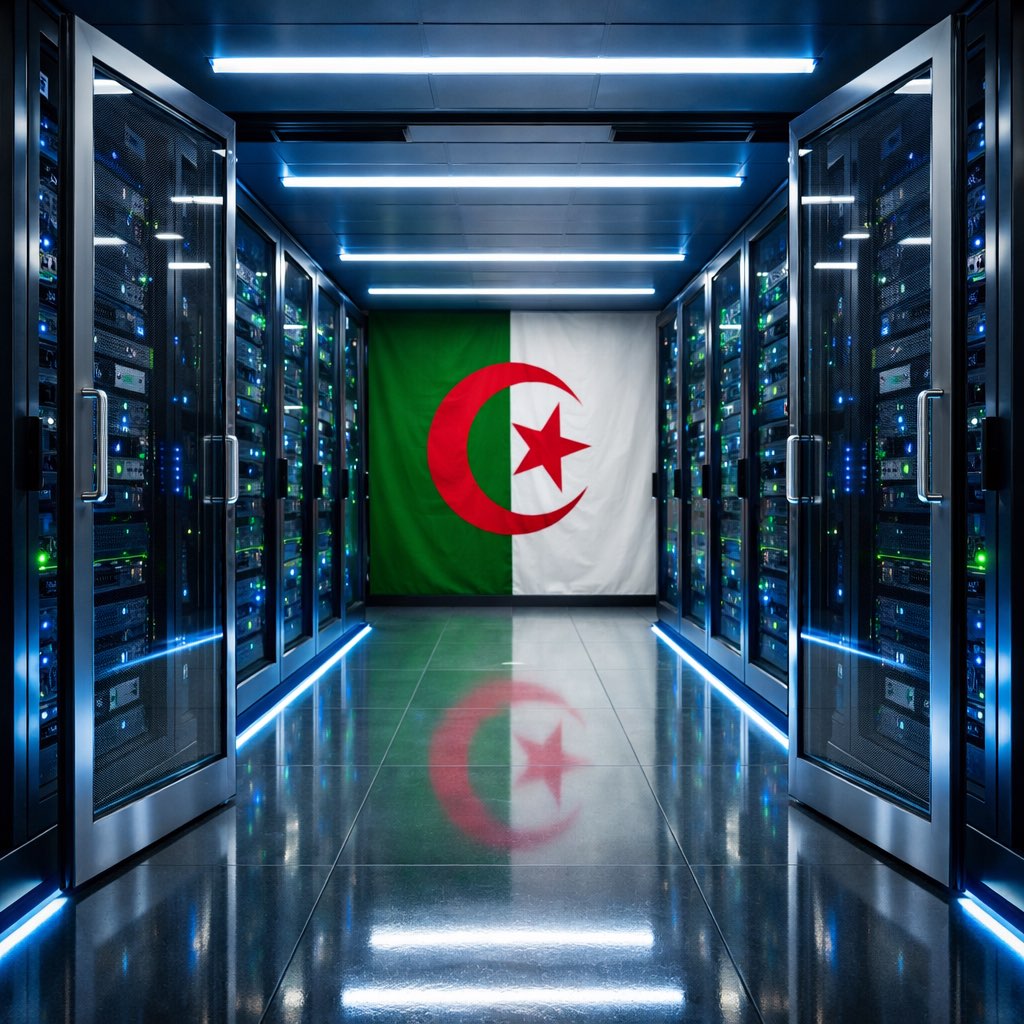
In 2026, hyperscalers are spending over $600 billion on global infrastructure expansion. AWS opened a sovereign cloud in Germany. Azure launched regions in Austria, Belgium, and Malaysia. Google Cloud expanded across Southeast Asia and the Middle East, including a $5.3 billion AWS investment in Saudi Arabia. Yet Algeria — Africa’s largest country by land area, with 47 million internet users and a GDP exceeding $400 billion — has no hyperscaler data center on its soil.
This is not an oversight. It reflects a combination of regulatory constraints, market dynamics, and strategic choices that Algeria must now navigate as digital transformation becomes central to its economic future.
Why Hyperscalers Have Not Built in Algeria
Three structural factors explain the absence. First, Algeria’s data localization requirements — established by the Regulatory Authority of Post and Electronic Communications in 2017 and reinforced by subsequent legislation — require public cloud operators to establish infrastructure on Algerian territory and host data locally. While these rules protect data sovereignty, they also impose operational requirements that hyperscalers typically avoid in smaller markets.
Second, Algeria’s energy infrastructure, while improving with 1,480 MW of new solar capacity, has not yet reached the reliability levels that hyperscale data centers demand. A single hyperscale facility can consume 50-100 MW of continuous power, requiring redundant feeds and sub-millisecond switchover capability.
Third, the domestic enterprise cloud market, while growing at 14.99% CAGR toward $1.96 billion by 2029, remains smaller than neighboring markets like Morocco and Egypt where hyperscalers have already established or announced presence.
Djezzy Cloud: The Sovereign Alternative
Into this gap has stepped Djezzy, Algeria’s second-largest mobile operator, which launched its cloud services platform in early 2025. Djezzy Cloud offers IaaS and SaaS solutions specifically designed for Algerian enterprises, with all infrastructure physically located within the country — a direct response to both regulatory requirements and enterprise demand for local data residency.
The platform targets businesses and public institutions undergoing digital transformation, offering cloud computing, storage, and managed services with guaranteed Algerian data sovereignty. Djezzy’s partnership with Algerie Telecom further strengthens the infrastructure backbone, combining Djezzy’s mobile network reach with Algerie Telecom’s fixed-line and fiber assets.
This is not a temporary workaround. It represents a deliberate market strategy: if hyperscalers will not build in Algeria under local conditions, domestic operators will fill the gap on their own terms.
Advertisement
The Regulatory Framework Driving Localization
Algeria’s approach to cloud regulation has been progressively tightening. The 2017 cloud hosting requirement was joined by the December 2024 Law on Audiovisual Activity, requiring online audiovisual services to be hosted exclusively on servers in Algeria using the “.dz” domain. The June 2024 Law on Written and Electronic Press imposed similar requirements on digital media.
The revised personal data law, adopted in July 2025 and building on Law 18-07, introduced stricter obligations around data protection officer appointments and breach notification timelines, aligning Algeria more closely with GDPR-style frameworks. Presidential Decree 25-320 established a national data governance framework defining data classification and secure interoperability between public administrations.
For enterprises, this regulatory stack creates a clear mandate: sensitive data must stay in Algeria. This simultaneously constrains hyperscaler entry and validates the business case for domestic cloud providers.
What Algeria Gains — And What It Loses
The sovereign cloud approach carries real advantages. Data residency is guaranteed. Regulatory compliance is simplified. Revenue stays within the national economy. And Algeria avoids the dependency trap that has caught other nations off-guard when foreign cloud providers change terms, raise prices, or face geopolitical restrictions.
But there are costs. Algerian enterprises currently lack access to the full suite of hyperscaler services — hundreds of managed services, global CDN networks, AI/ML platforms, and edge computing capabilities that AWS, Azure, and Google Cloud offer. Domestic providers cannot replicate this breadth overnight. The performance gap is real, particularly for enterprises building AI-intensive or globally distributed applications.
The compromise is emerging: use Djezzy Cloud and other domestic providers for sovereign workloads (government, finance, healthcare, personal data), while accessing hyperscaler services through regional points of presence in neighboring countries for non-sensitive workloads.
What Comes Next: A Hybrid Path
Algeria’s cloud future is likely hybrid. The government’s Digital Algeria 2030 strategy, with over 500 digital transformation projects planned for 2025-2026, will generate enormous demand for cloud infrastructure. Some of this demand can be served domestically. Some will require hyperscaler capabilities.
The strategic question is whether Algeria can attract a hyperscaler to build within its borders — perhaps through a joint venture model similar to sovereign cloud arrangements in the Gulf states — or whether it will develop sufficient domestic capacity to reduce the gap. The answer will shape Algeria’s digital economy for the next decade.
For Algerian enterprises, the immediate path is clear: invest in domestic cloud capabilities for regulated workloads while building hybrid architectures that can integrate hyperscaler services when and where regulations permit.
Frequently Asked Questions
Why hasn’t AWS, Azure, or Google Cloud built a data center in Algeria?
Three main factors: Algeria’s data localization laws require cloud operators to establish infrastructure locally, which adds complexity for hyperscalers who prefer standardized global deployments. Algeria’s energy infrastructure does not yet meet hyperscale reliability requirements. And the domestic enterprise cloud market, while growing fast, is smaller than neighboring countries where hyperscalers have already invested.
What is Djezzy Cloud and can it replace hyperscaler services?
Djezzy Cloud is a sovereign cloud platform launched by Algeria’s second-largest mobile operator, offering IaaS and SaaS solutions with all data hosted within Algeria. It can serve many enterprise needs — compute, storage, managed services — but does not yet match the breadth of hyperscaler offerings in AI/ML services, global CDN, or edge computing. It is best suited for sovereign and regulated workloads.
Should Algerian enterprises wait for hyperscalers or invest in local cloud now?
Invest now. The regulatory trajectory strongly favors data localization, and enterprise digital transformation cannot wait years for a hyperscaler to potentially arrive. Build sovereign workloads on domestic infrastructure while designing hybrid architectures that can incorporate hyperscaler services through regional access points when needed.
Sources & Further Reading
- Hyperscalers continue global data center expansion despite geopolitical tensions — S&P Global
- Djezzy launches cloud services to support digital transformation in Algeria — SAMENA Council
- DPA Digital Digest: Algeria 2025 Edition — Digital Policy Alert
- Algeria — Digital Economy — U.S. Department of Commerce
- Djezzy Cloud — Sovereign Cloud Platform