A $1.69 Billion Opportunity Takes Shape
The numbers tell a compelling story. According to Statista’s market forecast, Algeria’s AI market will more than triple in five years, reaching $1.69 billion by 2030. Within that growth, the generative AI segment is expanding even faster — a 41.51% CAGR projecting $1.019 billion by 2030. These are not aspirational government targets. They are market-driven forecasts reflecting real adoption patterns across industries.
For Algeria’s workforce, this growth represents both an unprecedented opportunity and an urgent challenge. Every dollar of AI market expansion requires human talent — data scientists, ML engineers, cloud architects, AI product managers, cybersecurity specialists who understand AI-specific threats. The question is whether Algeria can produce this talent fast enough to capture the value domestically rather than importing it.
The Talent Pipeline: Strengths and Gaps
Algeria enters this race with genuine advantages. The country possesses what the New Lines Institute describes as “Africa’s strongest computer science educational foundation,” with 57,702 students enrolled across 74 AI master’s programs in 52 universities. Algeria produces approximately 30,000 engineering graduates annually — a substantial base of technical talent.
But raw graduate numbers mask critical gaps. The European Training Foundation (ETF) has identified a significant disconnect between what universities teach and what the AI industry needs. Academic curricula often emphasize theoretical foundations while industry demands practical skills in production ML systems, cloud-native architectures, and AI deployment at scale. The skills gap is not in STEM enrollment — it is in industry-readiness.
The brain drain compounds the problem. An estimated 35% of AI-specialized graduates leave Algeria annually for better-paying opportunities abroad. This talent leakage means that even as universities scale their programs, a significant portion of graduates will not contribute to the domestic AI ecosystem unless working conditions and career paths improve.
Government Training Initiatives: 500,000 ICT Specialists by 2030
The Algerian government has set an ambitious target: train 500,000 ICT specialists by 2030, representing a dramatic scaling of current capacity. Several concrete programs are already underway.
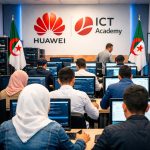
Beginning in September 2026, a vocational training initiative developed in partnership with Huawei will provide instruction in cloud computing, cybersecurity, and AI, culminating in a diploma jointly issued by the Ministry and Huawei. Huawei has already trained 8,000 Algerians and expanded training capacities at three regional universities.
The Algeria Startup Challenge, now in its fifth edition, provides accelerator programs that build practical AI and digital skills alongside business development. ASEP (Algerian Startup Learning Expedition Program), overseen by the Ministry of Knowledge Economy, Startups, and Micro-enterprises, sends promising founders to global tech hubs to accelerate their growth and competitiveness.
These programs represent a strategic approach: build the human capital foundation first, then scale AI implementation as graduates enter the workforce.
Advertisement
Where the Jobs Will Be
The $1.69 billion market will not be evenly distributed. Several sectors will drive the majority of AI talent demand:
Energy and Natural Resources: Sonatrach and other energy companies are adopting AI for predictive maintenance, exploration optimization, and operational efficiency. This sector needs ML engineers with domain expertise in oil and gas operations.
Financial Services: Algeria’s push toward digital payments — through Baridi Pay, CCP Business, and new fintech regulations — is creating demand for AI specialists in fraud detection, credit scoring, and automated compliance.
Agriculture: Startups like FarmAI are demonstrating the potential for AI in agriculture, Algeria’s largest employer. Scaling these solutions requires agronomists who can also work with computer vision and drone data.
E-Government: The Digital Algeria 2030 strategy, with over 500 digital transformation projects, needs thousands of AI-capable civil servants and contractors to digitize and optimize public services.
Cybersecurity: With over 70 million cyberattacks recorded in 2024, Algeria’s demand for cybersecurity professionals who understand AI-powered threats and defenses will grow exponentially.
The Certification Fast Track
While university reform takes years, professional certifications offer a faster path to AI-ready talent. Global certification programs from AWS, Google Cloud, Microsoft, and specialized AI certifications provide structured learning paths that can upskill existing professionals in 3-6 months.
For individual professionals, the message is clear: do not wait for your employer to provide AI training. Self-directed learning through certification programs, open-source contributions, and practical projects builds the portfolio that hiring managers value most. Algeria’s young demographic — median age 28.9 — gives the country a natural advantage in workforce adaptability if training pathways are accessible.
Closing the Gap: What Needs to Happen
Three interventions would accelerate Algeria’s AI talent development. First, university-industry partnerships must deepen, with mandatory internship components and industry advisory boards shaping curricula. Second, retention incentives — competitive salaries, research funding, startup support — must make staying in Algeria economically viable for top AI talent. Third, remote work frameworks should be formalized to allow Algerian talent to serve global AI companies while remaining in-country, capturing both salary premiums and domestic economic contribution.
The $1.69 billion market is coming regardless. Whether Algerian talent captures that value or foreign expertise fills the gap is the defining workforce question of the decade.
Frequently Asked Questions
How fast is Algeria’s AI market really growing?
Algeria’s AI market is projected to grow from $498.9 million in 2025 to $1.69 billion by 2030, a compound annual growth rate of 27.67%. The generative AI sub-segment is growing even faster at 41.51% CAGR. These figures from Statista reflect actual market adoption patterns, not government aspirational targets.
What AI skills are most in demand in Algeria?
The highest-demand skills are machine learning engineering, cloud architecture (particularly with sovereign cloud requirements), cybersecurity with AI specialization, data science and analytics, and AI product management. Domain expertise in energy, finance, and agriculture combined with AI skills creates particularly valuable profiles for the Algerian market.
How can Algerian professionals prepare for AI careers right now?
Start with professional certifications from AWS, Google Cloud, or Microsoft that cover AI and ML fundamentals. Build practical projects using open-source tools and publish them on GitHub. Participate in Algeria’s growing hackathon ecosystem through events like the Algeria Startup Challenge. Consider the upcoming Huawei-Ministry vocational training program launching September 2026 for structured cloud, cybersecurity, and AI education.
Sources & Further Reading
- Artificial Intelligence Market Forecast — Algeria — Statista
- Why Algeria Is Positioned To Become North Africa’s AI Leader — New Lines Institute
- AI and the Future of Skills in Algeria — European Training Foundation
- Creating 20,000 Startups by 2027: The Government Strategy — Algeria Invest
- Algeria Startup Challenge Fifth Edition