

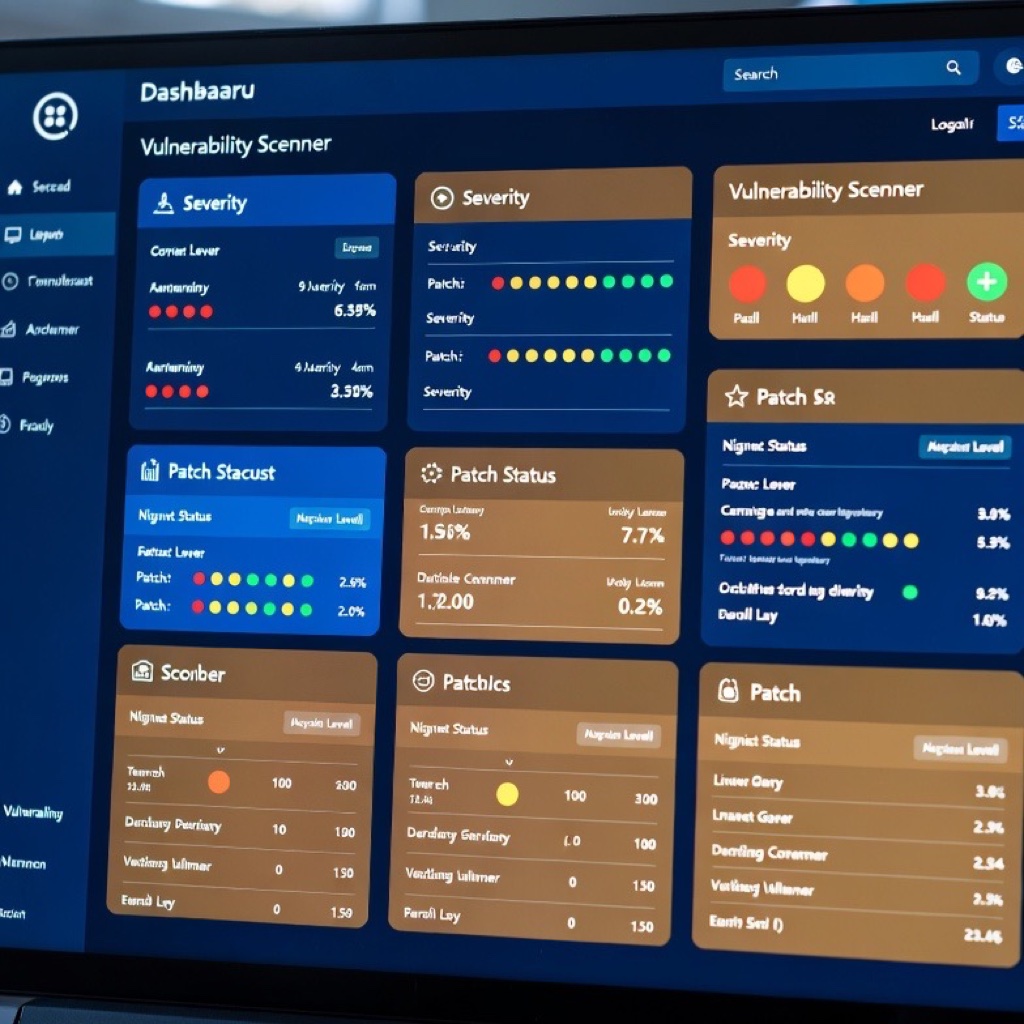
The average organization takes 60 days to patch a critical vulnerability after it is disclosed. Attackers exploit those same vulnerabilities within an average of 4.5 days of a public proof-of-concept appearing. That 55-day exposure window is where breaches live — and it is costing the industry dearly. IBM’s Cost of a Data Breach Report 2024 put the global average breach cost at $4.88 million, with unpatched software vulnerabilities among the top contributing factors. In 2026, artificial intelligence is beginning to close that gap — not just by flagging what needs patching, but by helping generate the fix itself.
The Traditional Vulnerability Management Crisis
The scale of the problem is staggering. The National Vulnerability Database published over 29,000 CVEs (Common Vulnerabilities and Exposures) in 2023 alone — roughly 80 new vulnerabilities every single day. Security teams at mid-sized enterprises are typically managing 50,000 to 150,000 vulnerabilities in their asset inventory at any given time. No human team can remediate at that pace.
The conventional response has been risk-based prioritization using CVSS — the Common Vulnerability Scoring System. CVSS scores vulnerabilities on a 0-to-10 scale based on factors like attack complexity, privileges required, and potential impact. A CVSS 9.8 vulnerability looks alarming on paper. The problem is that CVSS measures theoretical severity, not real-world exploitability. Roughly 2 to 5 percent of all CVEs are ever actually exploited in the wild. Teams spending their remediation budgets racing to patch every high-CVSS vulnerability are often fixing theoretical risks while genuinely dangerous, lower-scored CVEs quietly get used in ransomware campaigns.
EPSS: Predicting Exploitation Before It Happens
Enter the Exploit Prediction Scoring System (EPSS), developed by FIRST (Forum of Incident Response and Security Teams). Where CVSS asks “how bad could this be?”, EPSS asks “how likely is this to be exploited within the next 30 days?” The model draws on threat intelligence feeds, proof-of-concept publications, dark web discussions, and historical exploitation patterns to generate a daily probability score for each CVE.
The results are striking. A CVE with a CVSS score of 6.5 but an EPSS score of 0.94 (94% exploitation probability) is objectively more urgent than a CVSS 9.8 with an EPSS of 0.003. Organizations like Tenable have integrated EPSS into their Tenable One platform, combining it with CVSS and asset context to generate what they call Vulnerability Priority Ratings (VPR) — a composite score that reflects both severity and likelihood of active exploitation.
Qualys, Rapid7, and Bitsight have adopted similar hybrid scoring approaches. The practical effect: teams that migrated from pure CVSS prioritization to EPSS-weighted models report reducing the effective vulnerability remediation workload by 60 to 80 percent, focusing patches where actual attacker interest exists.
AI-Assisted Patch Generation: From Analysis to Fix
Prioritization is only half the battle. Once you know which vulnerabilities to patch first, someone still has to write the fix — and that is where AI is making its most dramatic entrance.
GitHub Copilot’s security-focused capabilities now allow developers to receive AI-generated patch suggestions when a known CVE is detected in their codebase. When a dependency flagged by Dependabot carries a CVE, Copilot can suggest a corrected code block that mitigates the flaw, often within seconds. Microsoft has integrated these capabilities directly into the GitHub Advanced Security platform, enabling automated pull requests for dependency updates with AI-generated explanations of why the change is safe.
CrowdStrike’s Falcon platform takes a similar approach at the endpoint and cloud infrastructure layer. Falcon’s AI analyzes detected vulnerabilities against known exploit techniques and suggests configuration remediations — firewall rules, access control changes, misconfigurations — that reduce exposure even before a formal patch is available. This concept of “compensating controls” generated by AI is proving particularly valuable for legacy systems where patching may take months due to testing requirements.
Tenable One’s Exposure Management platform uses AI to map vulnerability data against the organization’s actual attack surface — cloud accounts, on-premises servers, OT devices, SaaS applications — and generates a prioritized remediation plan with specific instructions for each asset type. Rather than receiving a raw list of 4,000 critical CVEs, a security engineer receives an ordered queue of 12 actions that would reduce the organization’s overall exposure by 73 percent.
Advertisement
Real-World Results: Hours, Not Weeks
The numbers from early adopters are compelling. A 2024 Ponemon Institute study found that organizations using AI-assisted vulnerability management reduced their mean time to remediate (MTTR) from an industry average of 60 days to under 10 days for critical vulnerabilities. Some organizations report pushing this further: a global financial services firm disclosed that it had achieved sub-24-hour remediation cycles for critical cloud vulnerabilities using a combination of Wiz AI-driven exposure management and automated IaC (Infrastructure-as-Code) patching through Terraform pipelines.
In the OT/ICS sector — where patching industrial control systems can require scheduled downtime — AI tools from Claroty and Dragos are generating risk-based compensating control recommendations that allow operators to maintain safety while delaying disruptive patches to scheduled maintenance windows. This AI-mediated approach is particularly significant given that OT systems often run software that is years or decades past its end-of-life.
The Risks: Hallucinated Patches and Over-Automation
The speed gains come with real risks that security teams must confront directly. AI-generated patches can be wrong. Large language models used to generate remediation code have been observed producing patches that appear syntactically correct but introduce new vulnerabilities — classic cases of AI hallucination in a security-critical context. A patch for a SQL injection vulnerability that accidentally opens a path traversal flaw is arguably worse than the original problem.
Veracode’s research has documented cases where AI coding assistants suggested security fixes that passed automated code review tools but were rejected by human security engineers as insufficient or counterproductive. This has led security-conscious organizations to establish explicit human-in-the-loop requirements for any AI-generated patch before it reaches a production environment.
The over-automation risk is equally real. Organizations tempted to enable fully autonomous patch deployment — where AI detects, prioritizes, generates, and deploys fixes with no human review — are gambling with system stability. A misapplied patch in a high-availability environment can cause more downtime than the vulnerability it was meant to fix. The current consensus in the industry is that AI should be used to accelerate human decision-making, not replace it entirely in remediation workflows.
The Road Ahead: Autonomous Remediation by 2027?
Despite the cautions, the trajectory is clear. Gartner predicts that by 2028, more than 30 percent of enterprise vulnerability remediation will be handled autonomously by AI agents operating within pre-approved remediation playbooks. The model being tested today involves AI that can autonomously remediate a defined class of low-risk vulnerabilities — outdated libraries, known-safe dependency updates, misconfiguration fixes — while escalating anything novel or high-impact to human engineers.
Microsoft’s Security Copilot, Google’s Security AI Workbench, and Palo Alto Networks’ Cortex platform are all moving toward this agentic model. The competitive advantage will accrue to organizations that build the governance frameworks — approval workflows, rollback mechanisms, audit trails — that allow AI autonomy to operate safely within defined boundaries.
The race from scan to patch is being fundamentally rewritten. Security teams that adopt AI-assisted VM tooling now, build the governance around it, and treat AI as a force multiplier rather than a silver bullet will find themselves operating in a different security reality than those still manually triaging CVE spreadsheets in 2027.
Advertisement
Decision Radar (Algeria Lens)
| Dimension | Assessment |
|---|---|
| Relevance for Algeria | High — Algerian government agencies, banks, and Sonatrach face the same CVE volume problem as global enterprises, with fewer dedicated security staff per organization to handle it |
| Infrastructure Ready? | Partial — Cloud-native AI VM tools (Tenable One, Wiz, CrowdStrike Falcon) require cloud infrastructure maturity that many Algerian enterprises are still building; on-premises tools like Qualys can bridge the gap |
| Skills Available? | No — Algeria has a documented cybersecurity skills shortage; AI VM tools reduce the skill ceiling for triage but still require trained engineers to validate AI-generated patches before deployment |
| Action Timeline | 6-12 months — Organizations should begin evaluating EPSS-based prioritization tools now; full AI-assisted patch generation deployment requires governance frameworks first |
| Key Stakeholders | CISOs and IT security teams in banks and telecoms, CERIST, Ministry of Digitalization, Sonatrach and Sonelgaz security departments, ANSSI (Agence Nationale de la Sécurité des Systèmes d’Information) |
| Decision Type | Strategic |
Quick Take: Algeria’s enterprises and government bodies are exposed to the same global CVE flood as any other organization, but with security teams that are typically smaller and less specialized. Adopting EPSS-based prioritization — even without the full AI patch generation stack — would immediately improve how Algerian security teams allocate their limited remediation capacity. ANSSI should consider publishing guidance on AI-assisted VM tooling adoption as part of the national cybersecurity strategy 2025-2029.
Sources & Further Reading
- IBM Cost of a Data Breach Report 2024 — IBM Security
- EPSS: Exploit Prediction Scoring System — FIRST.org
- NVD CVE Statistics 2023 — NIST National Vulnerability Database
- Tenable One Exposure Management Platform — Tenable
- CrowdStrike Falcon Exposure Management — CrowdStrike
- Microsoft Security Copilot — Microsoft
- Ponemon Institute: The Economics of Vulnerability Management — Ponemon Institute
- Gartner: Future of Vulnerability Management 2028 — Gartner
🔗 Related Intelligence
Prompt Injection Attacks: The Security Hole That Comes With Every AI Application
From Breach to Breakout in 27 Seconds: How AI-Accelerated Attacks Outpace Human Defenders

AI-Assisted Security Operations: SIEM, SOAR, and the Analyst Burnout Crisis
Shadow AI: The Silent Data Exfiltration Risk Inside Every Company







Advertisement