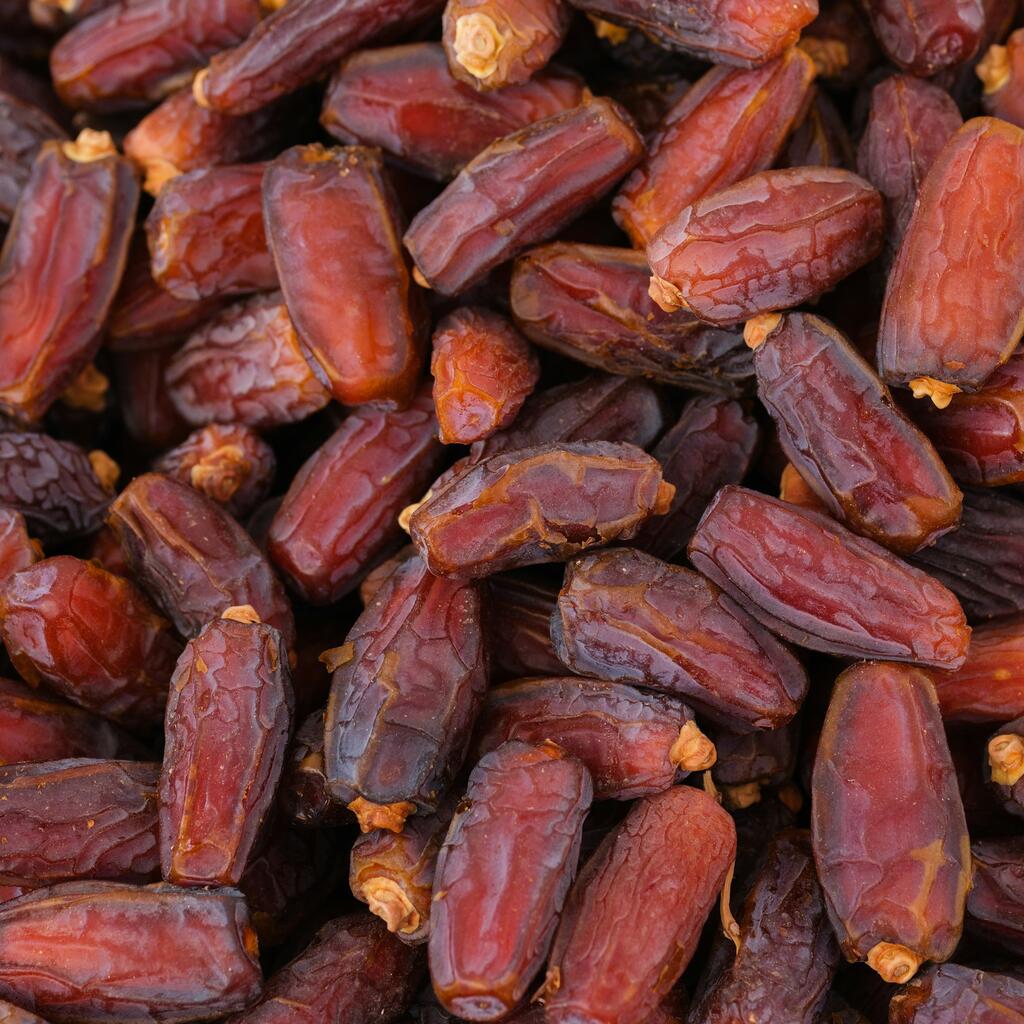
Algeria has over 443,000 hectares of olive plantations and produces more than a million metric tons of dates per year. It is the fourth largest date producer on earth. Yet of its 85,000 tons of olive oil produced in 2024, only 1,000 tons were exported — roughly 1.2% of total production. The flagship export date variety, Deglet Nour, commands premium prices in European markets, but the value captured in Algeria from that premium is a fraction of what the final product yields on a European shelf.
The gap between what Algeria grows and what Algeria earns from it is not primarily a production problem. It is a supply chain problem — and supply chains are, increasingly, a technology problem.
Algeria’s Agri-Export Opportunity
Non-hydrocarbon exports reached $7 billion in 2024 — up 45% year-on-year and more than triple the 2017 baseline — a number the government wants to grow to $29 billion by 2030. The bulk of today’s non-hydrocarbon basket is carbon-intensive industry: fertilizers, steel, cement. Agricultural products — dates, olive oil, figs, spices, fresh vegetables — represent a relatively small portion of that number, despite Algeria’s substantial production capacity.
The World Bank’s November 2024 report on Algeria’s export diversification underlined the opportunity: agricultural exports require no carbon adjustment taxes under Europe’s new Carbon Border Adjustment Mechanism (CBAM), unlike fertilizers and steel. As European trade policy tightens around carbon-intensive goods, the economic logic of pivoting toward food exports becomes more compelling. Algeria’s 2024 economic growth of 3.9% in the first half of the year was partially driven by agricultural sector resilience even as hydrocarbon production declined.
The agriculture minister’s figures paint the picture clearly: the date sector alone has over 360 varieties, with Deglet Nour from the Biskra-Tolga oasis holding a Geographical Indication (GI) designation since 2016 — the equivalent of an Appellation d’Origine Contrôlée in European terms, a tradeable quality signal that premium buyers in France, Germany, and the UK actively seek. The olive oil sector has more than doubled its plantation area since 2000, positioning Algeria as the eighth-largest olive oil producer globally — yet 99% of production stays in the domestic market because the export infrastructure, documentation, and buyer relationships simply do not exist at scale.
Where Technology Is Missing
The barriers to export expansion are technical before they are financial. European buyers — whether supermarket chains, specialty food importers, or organic distributors — require documentation that most Algerian agricultural producers cannot provide.
Traceability is the foundational requirement. The EU General Food Law (Regulation EC 178/2002) mandates that all food products sold in the EU must be traceable “at all stages of production, processing and distribution.” For a date exporter in Biskra, this means being able to tell a German importer which grove the dates came from, what irrigation water was used, what pesticides (if any) were applied and at what dosage, how the dates were processed and packaged, and the full cold chain history from harvest to container loading. Today, almost none of this is documented digitally. It exists — if it exists at all — in paper notebooks at the farm level.
Certification management is the second bottleneck. Organic certification (required for premium European buyers), GlobalGAP certification (required by major supermarket chains), and the EU phytosanitary certificate (required for all plant products entering the EU) each involve separate documentation, inspection visits, and renewal cycles. Managing these manually for a small producer with 10 hectares of olive trees is prohibitively burdensome. Most simply do not bother, leaving the export market to the handful of larger operators with dedicated compliance staff.
Cold chain logistics is the third constraint. Premium Deglet Nour dates need to be kept within defined temperature ranges from harvest through export to maintain their quality classification and price premium. Algeria’s cold chain infrastructure is nascent — refrigerated trucks exist, but booking, monitoring, and documenting temperature compliance across a multi-leg export journey has no digital management tool tailored to the Algerian market.
Buyer access is the final problem. European and Gulf importers who want to source Algerian agri-products cannot easily verify which Algerian producers are genuinely export-ready — certified, documented, capable of consistent volume and quality. There is no digital directory, no verified marketplace, no equivalent of the business ratings infrastructure that governs B2B trade in more developed markets.
The EU Compliance Tech Opportunity
The most immediate opportunity for startups is the compliance layer. The CBI (Centre for the Promotion of Imports from developing countries, based in the Netherlands) launched a five-year Algeria Dates project in 2024, running through 2029, specifically to address this gap. The project is connecting Algerian date SMEs with European buyers, supporting organic certification, training in sustainable practices, and — critically — helping make the value chain “more traceable, sustainable, and inclusive.”
CBI’s project is an institutional acknowledgment that the traceability problem is real and that the industry cannot solve it without external support. For a startup, this represents both a validation of the opportunity and a potential partnership channel: building the software that a CBI-supported producer network needs to manage their certification and traceability workflows is a B2B SaaS play with a well-defined customer.
The technology stack for agri-export compliance is not exotic. QR code-based lot tracking — where each shipment carries a QR code that links to a digital record of its provenance, certifications, and chain of custody — is now standard in global agri-food trade. Blockchain is increasingly used for immutable record-keeping where multiple parties (farm, processor, logistics, customs, buyer) need to trust a shared data set. The Algerian implementation challenge is not the technology; it is the data collection at the farm level — building systems simple enough for a date farmer in Tolga to use on a basic smartphone.
Advertisement
The Halal Certification Layer
For exports targeting the Gulf Cooperation Council markets — Saudi Arabia, UAE, Qatar, Kuwait — the compliance requirements shift. Halal certification is not optional; it is a market access prerequisite. Algeria has built a national halal brand through IANOR (Algerian Institute for Standardization), anchored in OIC and SMIIC standards and designed specifically to facilitate Gulf market access. The government is actively pursuing mutual recognition agreements with Gulf regulatory bodies.
The digitization opportunity here is substantial: halal certification audit trails, documentation management, and the digital linking of Algerian production records to Gulf import verification systems. The Gulf premium food market is large, growing, and actively seeking to diversify sourcing beyond its traditional Middle Eastern suppliers. Algeria’s Muslim-majority population and Islamic production context are genuine advantages that the documentation just needs to make provable.
B2B Marketplace Models
Beyond compliance software, a second category of agri-export startups targets the buyer-seller connection directly. The “Algeria Exporters” digital platform — launched by ALGEX (the former National Agency for Export Promotion, restructured into the new Algerian Export Agency in September 2025) — received 400+ applications from exporters in its first year, indicating demand for a verified exporter directory.
A well-designed B2B marketplace for Algerian agri-products would do several things a generic directory cannot: verify exporter credentials (certifications, inspection records, export history), match buyer requirements to available supply in real time, manage sample requests and small orders digitally, and provide logistics coordination for the export chain. The model exists in other emerging agricultural export markets — platforms like Agrix Marketplace have demonstrated the demand internationally. No Algerian-built equivalent has yet reached scale.
The B2B marketplace business model for agri-export follows a commission-on-transaction or subscription structure. Commission-based is easier to sell to early customers (zero upfront cost) but requires significant volume to become viable. Subscription-based is more predictable for the startup but requires demonstrating value upfront — which is harder when buyers are unfamiliar with Algerian product quality.
Funding and Support Landscape
The institutional support environment for agri-export tech startups is improving. The new Algerian Export Agency — created by three September 2025 decrees replacing ALGEX — inherits its predecessor’s mandate to support exporters with market intelligence, trade fair participation (SIAL Paris, Biofach, Gulfood Dubai are the relevant events), and SME development programs.
AAPI (Agence Algérienne de Promotion de l’Investissement) offers incentives for logistics and agri-processing investments: tax exemptions, customs duty waivers, and streamlined land access through its digital platform. The designated agricultural zone regime provides geographic incentives for businesses investing in production regions like Biskra (dates) and Tizi Ouzou (olive oil).
For startups specifically, the standard toolkit applies: startup label from the Ministry of Knowledge Economy, ASF financing at 2-20 million DZD tiers, and A-Venture acceleration for market-ready companies. Agri-export tech is not yet a specialized track within the startup support system — founders in this space benefit from positioning their work as either “agritech” or “supply chain tech” rather than waiting for a dedicated agri-export program.
The Cold Chain Infrastructure Gap
One structural constraint worth flagging separately: the cold chain infrastructure Algeria needs to export premium fresh products at scale does not yet fully exist. The country’s refrigerated logistics capacity is concentrated around Algiers and the coastal cities, with limited penetration into the southern growing regions. A startup building a cold chain management software platform needs to design for an infrastructure that is still being built — which means the software must be adaptable as new refrigerated transport providers enter the market.
This is not a reason to avoid the space; it is a design constraint. The most successful agri-export tech companies in comparable markets (Morocco, Tunisia, Kenya) built logistics coordination layers that worked with whatever cold chain existed, then became more sophisticated as infrastructure improved around them.
Advertisement
🧭 Radar de Décision
| Dimension | Assessment |
|---|---|
| Relevance for Algeria | High — $7B in non-hydrocarbon exports in 2024 (up 45% YoY); $29B target by 2030 requires agricultural diversification; tech is the enabling layer |
| Action Timeline | 6-12 months to build MVP compliance/traceability tools; 12-24 months for B2B marketplace to reach meaningful liquidity |
| Key Stakeholders | Agri-export SMEs (dates, olive oil); new Algerian Export Agency; CBI project coordinators; CACQE; Ministry of Agriculture; European importers; Gulf buyers |
| Decision Type | Strategic — positions Algeria in global agri-food value chains |
| Priority Level | High for founders with agri or supply chain background; Medium otherwise |
| Quick Take: The agri-export tech opportunity in Algeria is concrete, externally validated (CBI is funding it for five years), and underserved by existing startups. The fastest path to customers is partnering with the CBI Algeria Dates project or the new Algerian Export Agency to pilot traceability and certification management tools with already-engaged producer networks. Olive oil export is the second major opportunity — 99% domestic consumption despite world-class production volumes represents a market access problem that a well-designed B2B platform could begin to solve within 18 months. |
Sources & Further Reading
- Algeria Dates Project — CBI (Centre for the Promotion of Imports from developing countries)
- Algeria: A Stronger Policy Framework Can Support Export Diversification — World Bank
- Algeria Expects Record Olive Oil Output in 2025/2026 Season — Ecofin Agency
- Promoting the Tolga Deglet Nour Date Geographical Indication — WIPO
- Algeria’s 360 Date Varieties: Strengthening Global Market Presence — Algeria Invest
- The End of ALGEX: Towards a New Model of Foreign Trade in Algeria — Maghrebia Research
- Discover Investment Potential in Algeria’s Olive Oil — The African Dreams
- How Algeria is Crafting a Dynamic Economy for Tomorrow — World Bank




Advertisement