Key Takeaway
A new wave of African cloud-native startups is building sovereign data center infrastructure for AI workloads, backed by up to $55 million in funding, challenging the assumption that the continent must depend on foreign hyperscalers for its digital future.
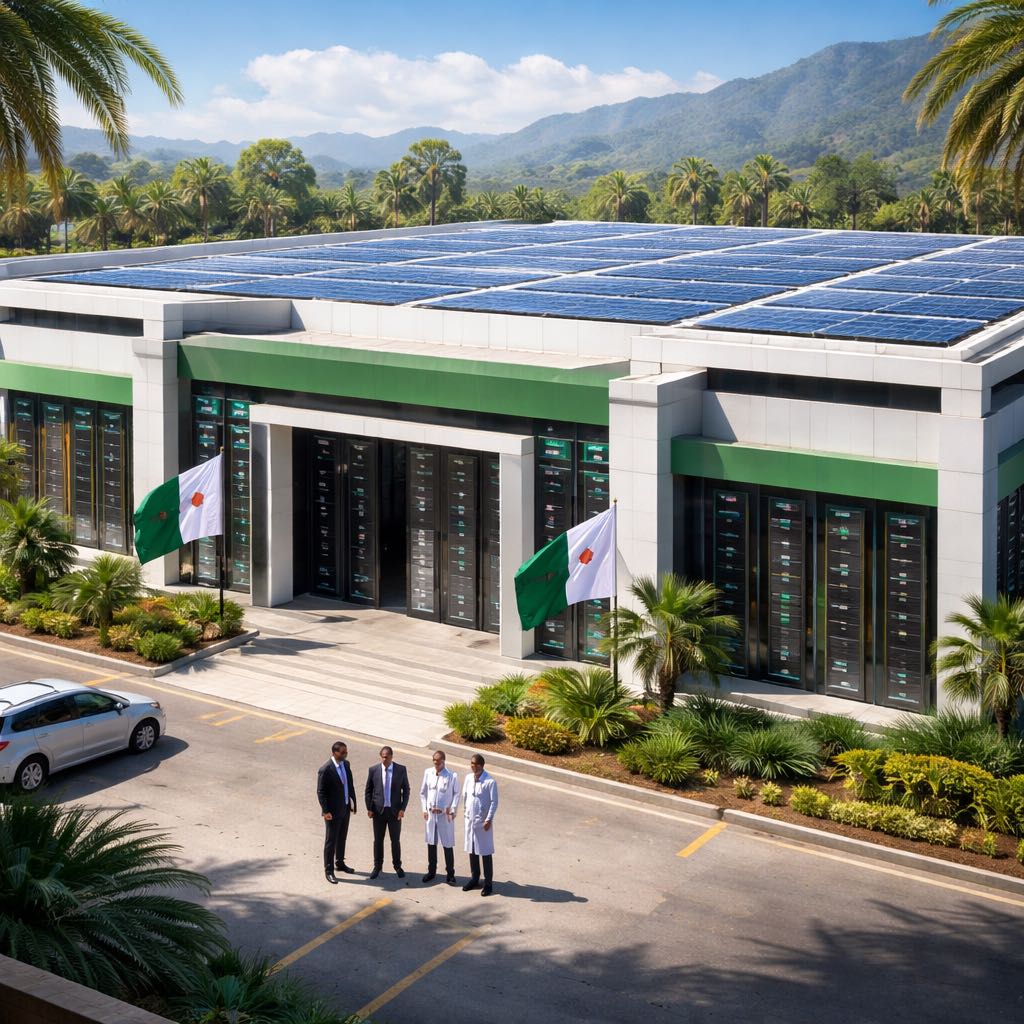
Africa is no longer waiting for the hyperscalers to build its AI infrastructure. A new generation of cloud-native startups is emerging across the continent, constructing sovereign data centers designed to keep African data on African soil while providing the GPU compute power that AI development demands.
The movement is driven by a simple reality: Africa accounts for less than 1% of global data center capacity and an even smaller share of the GPU infrastructure powering AI. Without local alternatives, the continent risks becoming a permanent consumer of imported AI solutions rather than a producer of homegrown innovation.
As the Association of African Telecom Operators and Suppliers declared in a 2026 report, this is “the year of the African sovereign cloud.”
The Startup Vanguard
Several startups are leading the charge to build Africa’s AI infrastructure from the ground up:
Horus Labs stands out as the most ambitious. The company is building modular, renewable-powered edge data centers specifically designed for African climates, addressing the heat management challenge that makes traditional data center designs prohibitively expensive in many African locations. Horus Labs has secured financial support of up to $55 million and will commission its first 1MW facility in Kigali between Q3 and Q4 2026, with plans to expand to nine countries.
Udu Technologies takes a different approach, offering a GPU-as-a-Service (GPUaaS) platform at up to 40% cheaper than global providers. Active in Nigeria, Ghana, Kenya, and South Africa, Udu is targeting the immediate compute needs of African AI developers who cannot afford or access hyperscaler GPU instances.
Cassava Technologies, backed by telecoms infrastructure, announced in March 2026 that it is scaling African AI infrastructure with Nvidia-powered AI factories to accelerate sovereign data capabilities across its network of data centers.
These companies are filling a gap between traditional colocation providers and large hyperscalers, creating infrastructure specifically calibrated for African market needs, power constraints, and regulatory requirements.
The Sovereign Data Imperative
The drive for sovereign cloud infrastructure in Africa is not merely nationalistic sentiment. It reflects practical business and governance concerns.
Data residency laws. An increasing number of African countries are enacting legislation requiring certain categories of data, particularly government, financial, and health data, to be stored within national borders. Without local data center capacity, compliance becomes impossible.
Latency requirements. AI applications, particularly real-time inference for healthcare diagnostics, agricultural monitoring, and financial services, require low-latency access to compute. Routing traffic through European or Middle Eastern data centers introduces delays that degrade application performance.
Cost dynamics. African businesses pay premium prices for cloud services because data must traverse expensive international submarine cables. Local infrastructure can reduce costs for domestic traffic by 30-60%, according to industry estimates.
Strategic autonomy. The experience of US sanctions affecting access to technology services has demonstrated the risk of dependency on foreign infrastructure. Sovereign cloud capability provides a hedge against geopolitical disruption.
Advertisement
The AI Infrastructure Gold Rush
The convergence of AI demand and data sovereignty concerns has triggered what industry observers describe as a “gold rush” in African data center investment. The Middle East and Africa region is seeing a combined $100 billion-plus buildout in AI and data center infrastructure, with a meaningful share directed toward African markets.
The AI Hub for Sustainable Development, co-designed with the G7 and the African Union, is helping to coordinate this investment, launching an AI Infrastructure Builder Program that connects African startups with funding, technical expertise, and global networks.
The UNDP has called this “Africa’s AI moment,” arguing that building local infrastructure now is essential to owning the digital future rather than renting it from foreign providers.
Algeria’s Position in the Sovereign Cloud Landscape
Algeria brings both advantages and gaps to the sovereign cloud conversation.
Advantages. Algeria’s geographic position on the Mediterranean coast provides proximity to European markets and submarine cable connectivity. Its significant renewable energy capacity (the government commissioned 1,480 MW of solar in 2025) could power data centers sustainably. And its large domestic market of 47 million internet users creates genuine demand for local infrastructure.
Gaps. Algeria lacks the venture capital ecosystem needed to fund data center startups at scale. Its regulatory environment for foreign investment remains complex. And the skills needed to build and operate AI-capable data centers, from power engineering to GPU cluster management, are scarce.
Djezzy’s cloud sovereign platform, launched to serve the Algerian enterprise market, represents one domestic effort to build local infrastructure. But the country has yet to produce a homegrown data center startup comparable to Horus Labs or Udu Technologies.
The opportunity for Algerian entrepreneurs is clear: a market of 47 million users, growing AI adoption, increasing data residency requirements, and abundant renewable energy create favorable conditions for sovereign cloud ventures.
Challenges for African Cloud Startups
Building data centers in Africa presents unique challenges that these startups must navigate:
Power reliability. While Africa has enormous renewable energy potential, grid reliability remains a challenge in many markets. Data centers require 99.99% uptime, demanding either grid improvements or significant on-site generation capacity.
Talent scarcity. Data center operations require specialized skills in power management, cooling, network engineering, and increasingly in AI/ML operations. African training programs are expanding but cannot yet match demand.
Capital intensity. Data centers are expensive infrastructure. Even modular approaches like Horus Labs’ require tens of millions in upfront investment, a scale that challenges African venture capital markets.
Hyperscaler competition. AWS, Google Cloud, and Microsoft Azure are expanding into African markets. While they cannot address data sovereignty concerns, their economies of scale create pricing pressure that smaller local providers struggle to match.
Frequently Asked Questions
Why does Africa need its own data centers for AI?
Africa currently accounts for less than 1% of global data center capacity. Without local infrastructure, African AI developers face high latency, expensive international bandwidth costs, and inability to comply with data residency laws. Sovereign data centers keep African data on African soil, reduce costs by 30-60% for domestic traffic, and enable low-latency AI applications in healthcare, agriculture, and finance.
What is Horus Labs and how is it different from hyperscalers?
Horus Labs builds modular, renewable-powered edge data centers specifically designed for African climates. Unlike hyperscalers that deploy standardized global designs, Horus Labs’ infrastructure addresses Africa-specific challenges including heat management, power reliability, and smaller-scale deployment. With $55 million in backing, the company plans to operate in nine African countries starting from Kigali in Q3-Q4 2026.
How can Algeria participate in the African sovereign cloud movement?
Algeria has favorable conditions including Mediterranean coast connectivity, significant renewable energy capacity, and 47 million internet users. Opportunities exist in building sovereign data center infrastructure, offering GPU-as-a-Service to regional AI developers, and leveraging the country’s renewable energy for sustainable computing. Current gaps include limited venture capital, complex foreign investment regulations, and scarce specialized technical talent.
Sources & Further Reading
- Why 2026 Is the Year of the African Cloud — ATPS Net
- Africa Builds Its Own AI Future with New Infrastructure Cohort — The Next Africa
- Cassava Scales African AI Infrastructure with Nvidia-Powered AI Factories — Cassava AI
- Africa’s AI Moment: Build the Infrastructure, Own the Future — UNDP
- Investment in Green Computing Can Unlock $1.5T in Africa — World Economic Forum