
🧭 Decision Radar
Relevance for Algeria
Medium
▾
Infrastructure Ready?
Partial
▾
Skills Available?
Partial
▾
Action Timeline
Technical enquiry first
▾
Recommended readers: Algerian industrial power buyers, data-centre engineering teams, energy-project investors
Decision Type
Strategic
▾
Quick Take: Use the financing as a reason to open a technical enquiry. Any Algerian adoption decision should depend on a documented site, measured performance and enforceable delivery terms, rather than the factory headline alone.
Financing a factory is different from delivering its output
Reverion announced a $175 million Series B in September 2026. The investment makes manufacturing the central question: can a reversible fuel-cell business turn its operating experience into repeatable deliveries? A financing announcement establishes access to capital. It does not, by itself, establish the output, delivery schedule or environmental performance of the next production site. Buyers considering an unfamiliar power system should keep those questions separate when deciding what evidence to request.
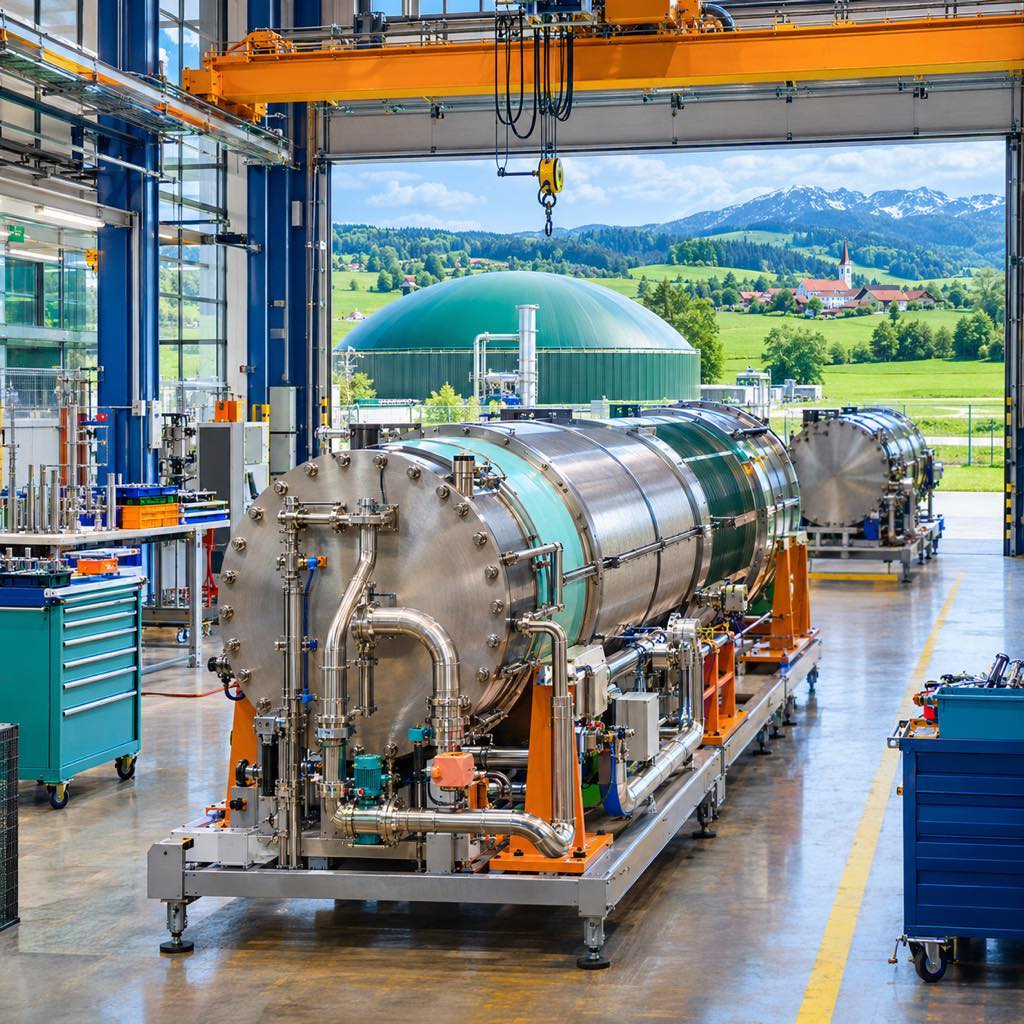
NEON identifies Kembara as the round’s lead investor and describes a planned German production site with annual manufacturing capacity of 250 MW. Annual factory capacity describes the intended ability to manufacture equipment; it is not electricity already supplied to customers. Treating that figure as operating power would skip the manufacturing and commissioning work that the investment is meant to support. For a prospective buyer, the useful follow-up is a delivery commitment tied to a particular installation, rather than an assumption that announced capacity is immediately available.
FYB Financial Yearbook lists Allianz, KfW Capital, Aurum Impact and Carbon Equity among the new investors. Investor participation helps describe the financing, but it should not stand in for a technical assessment of the equipment. An investor list and an engineering acceptance test answer different questions. Procurement teams should resist turning the presence of familiar financial names into a substitute for site-level evidence.
The employment projection belongs in the same category of future intentions: the planned production site could create up to 800 jobs, according to FYB Financial Yearbook. That is a possible outcome of expansion, not a count of positions already created. The distinction matters because factory plans can look more mature when manufacturing capacity, employment and financing are presented as a single completed achievement. A clear reading keeps each milestone attached to its actual status.
What the operating claims establish
Reverion reports electrical efficiency of 74.2% in live customer operation. The attribution is essential: this is the company’s reported performance figure. It is a reason to examine the measurement conditions, rather than permission to apply the same result to every prospective installation. A buyer should ask how the test boundary was drawn, what operating conditions applied, and what supporting records can be reviewed before putting that figure into a financial model.
The company also says seven commercial plants were operating and output per unit had reached 500 kW. Those statements describe reported operating experience and unit capability. They do not show that an entire proposed manufacturing programme has already been delivered. Nor should a reader multiply the unit figure by the plant count and publish the result as a verified fleet total: the supplied claims do not establish that every operating installation has the same configuration.
The technology’s reversible function deserves a separate assessment. Reverion says its system can switch into electrolysis mode and convert surplus electricity into storable gases. For a buyer, that raises an operational question: what circumstances would justify producing gas instead of electricity at the intended site? The answer needs a site-specific operating plan. Reversibility is a capability to investigate, not evidence that every customer will use both modes or obtain the same economic benefit from them.
Advertisement
A disciplined assessment for Algerian power buyers
The Algerian connection is an evaluation question, not an announced domestic project. An organisation considering this type of equipment should start with its own electricity requirement, available fuel and operating constraints. It should also separate an electrical-efficiency claim from a claim about the overall environmental outcome. The reported figure is about conversion performance; it is not a complete carbon assessment. No local fuel supply, storage arrangement, deployment or partnership is established by the facts reported here.
1. Request an operating dossier before adopting the efficiency figure
Ask the supplier for the measurement method, operating records and conditions behind the reported efficiency. Then ask which of those conditions would hold at the proposed Algerian site. Keep any preliminary financial analysis explicitly conditional until that comparison has been completed. This approach gives engineers and procurement staff a shared document to question, instead of allowing a single percentage to become the whole investment case. It also creates a clear decision point: if the supplier cannot explain how the reported performance relates to the intended use, the buyer should defer a performance-based commitment rather than fill the gap with an optimistic assumption.
2. Make fuel provenance and carbon handling separate decisions
Require a documented fuel plan and a documented treatment of any carbon-related claims before adopting environmental language in a tender or investment paper. The financing and operating figures above do not establish the carbon result of an Algerian installation. A reviewer should therefore ask what would be measured, who would check it, and which conditions would invalidate the proposed description. This is a recommended due-diligence process, not a claim that a particular local resource or storage route is already available. Keeping the questions separate would allow an efficiency assessment to proceed without prematurely approving a broader environmental claim.
3. Negotiate delivery and acceptance around the actual site
Request a manufacturing schedule linked to the proposed order, a commissioning plan and acceptance criteria for the intended operating mode. Do not substitute the factory’s planned annual capacity for those commitments. If both power generation and electrolysis are relevant to the proposal, ask for a clear description of how each would be assessed and who would operate the transition. The aim is a contract that says what the buyer can verify at handover. This is especially useful while a supplier is expanding: a credible industrial ambition should be translated into installation-level obligations before it becomes a procurement decision.
The next milestone is evidence of repeatable delivery
The financing, reported operating figures and planned factory describe different parts of Reverion’s expansion. Read together, they support a focused industrial story: a company with reported commercial experience is raising capital for a larger manufacturing programme. They do not eliminate the need to check the fit between a proposed machine and the site that would use it.
For Algerian readers, the practical next step is a structured technical enquiry, followed by a decision only if the evidence supports it. Ask for operating records, fuel assumptions, carbon boundaries and delivery commitments in the same review. That produces a more useful assessment than choosing between enthusiasm for a headline efficiency number and dismissing a technology before examining its conditions of use.
Frequently Asked Questions
What has Reverion financed?
Reverion announced a $175 million Series B. The financing supports a planned German manufacturing site; its capacity and potential jobs remain projections.
Is the efficiency independently established here?
The electrical-efficiency figure is reported by Reverion from live customer operation. This article does not present it as an independently established result for every installation.
Can the system produce something besides electricity?
Reverion says the system can reverse into electrolysis and convert surplus electricity into storable gases. Whether that mode suits an Algerian site would require a separate operating assessment.