🧭 Decision Radar
Relevance for Algeria
Medium
▾
Infrastructure Ready?
Yes
▾
Skills Available?
Partial
▾
Action Timeline
6-12 months
▾
Ministry of Higher Education and Scientific Research, USTHB, ESI, CERIST, Algerian private training providers, Algeria Venture (for talent-pipeline implications)
Decision Type
Educational
▾
Quick Take: The most transferable lesson for Algeria is structural, not just content-based: pairing formal AI/ML instruction with a bundled, project-based coding bootcamp component — as more than 60% of surveyed US AI-degree programs now do — produces graduates closer to what employers are actually hiring for than either a pure theory degree or a standalone coding bootcamp alone.
A Compressed Application Window for a Growing Format
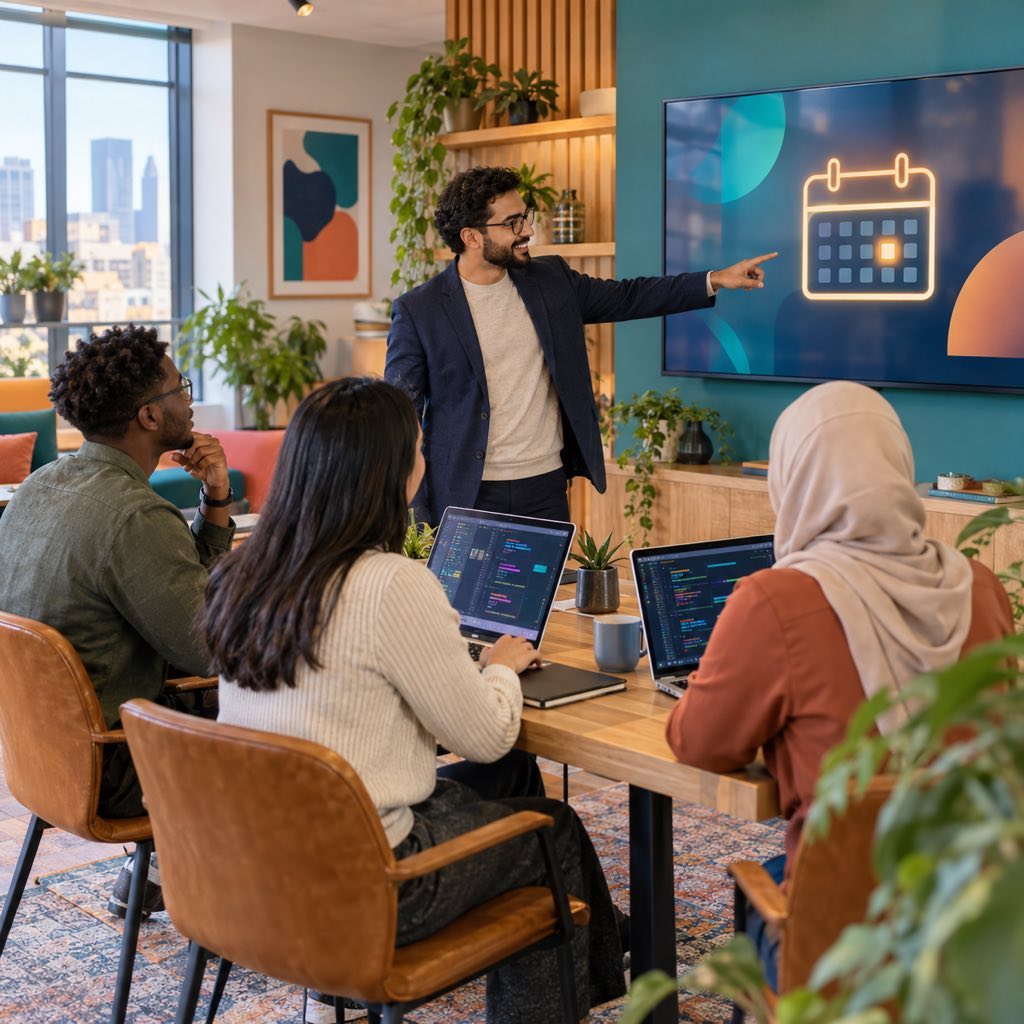
The specific dates matter less than what they represent: a part-time, working-adult-oriented AI bootcamp with a real application deadline and a fixed cohort start, running on a cadence tight enough that missing a two-week window means waiting for the next intake. Fullstack Academy’s part-time AI & Machine Learning Bootcamp is structured as a 26-week program delivered as 100% live online instruction, covering programming fundamentals, applied data science, machine learning, deep learning, MLOps, natural language processing, generative AI, and agentic AI — a curriculum designed explicitly for people who already have some technical background and want a structured, cohort-based path into AI-adjacent roles rather than self-teaching from scattered resources.
That structure — fixed cohorts, real deadlines, part-time format aimed at working professionals — reflects a maturing bootcamp market. AI bootcamps in 2026 increasingly resemble established coding bootcamps in operational rigor: defined curricula, cohort start dates, and enough applicant volume that programs can afford application cutoffs rather than rolling admissions. Market analysis of the coding bootcamp sector finds that structured, cohort-based and hybrid formats consistently achieve higher completion and placement rates than fully self-paced, asynchronous alternatives, which helps explain why programs like this one are willing to enforce a hard cutoff rather than accept applicants on a rolling basis.
The Broader Pattern: AI Degrees Are Absorbing Bootcamp-Style Training
Fullstack Academy’s standalone bootcamp sits inside a larger structural shift in how AI education is delivered. Industry tracking from education-research site Research.com finds that by 2026, more than 60% of US institutions offering AI degree programs now bundle in introductory coding bootcamps as part of the degree pathway itself — a response to employer demand for graduates who combine formal AI theory with practical, job-ready programming skills, rather than one or the other in isolation.
That bundling matters for how prospective students should evaluate their options. A standalone bootcamp like Fullstack Academy’s offers a faster, more focused path for someone who already has foundational technical skills and wants AI-specific training quickly. A university AI degree that has absorbed bootcamp-style coding instruction offers a slower but more credentialed path that increasingly assumes the coding foundation is built in rather than a prerequisite — narrowing the gap between “degree” and “bootcamp” as distinct educational products.
Advertisement
Why Employers Are Driving This Convergence
The underlying driver in both cases is the same: employers hiring for AI-adjacent roles increasingly want candidates who can both understand AI/ML concepts and write production code, rather than treating those as separable skill sets taught by different institutions. That shift shows up directly in entry-level hiring data: more than one-third of entry-level job postings now require AI skills, nearly triple the share reported just six months earlier in fall 2025, according to the National Association of Colleges and Employers’ Job Outlook 2026 Spring Update. A bootcamp graduate without programming fundamentals is a harder hire than one who has both; a computer science graduate without applied AI project experience faces the same gap in reverse. Programs on both sides of the degree/bootcamp divide are converging toward covering both, because that is what hiring managers are actually screening for.
What This Means for Algerian Learners and Institutions
Algeria’s own tech education landscape — dominated by university computer science programs with limited private bootcamp infrastructure — can learn directly from how this market has matured elsewhere.
1. A structured, cohort-based AI bootcamp is a realistic option for Algerian professionals today, even without a local provider
Programs like Fullstack Academy’s cover applied AI skill areas including LLMs, MLOps, and agentic AI frameworks and are fully online and accept international applicants, meaning an Algerian professional with existing technical background does not need to wait for a local bootcamp ecosystem to access this style of structured AI training. The practical barriers are tuition cost and time commitment, not geography.
2. Algerian universities should study the “AI degree plus bundled bootcamp” model directly
As more than 60% of surveyed US AI-degree programs now bundle introductory coding bootcamps into the degree itself, Algerian universities designing or updating AI and data science curricula (at USTHB, ESI and similar institutions) have a proven template to adapt: pairing theoretical AI coursework with structured, project-based coding bootcamp components rather than assuming students arrive already fluent in production-level programming.
3. Fixed cohorts and real deadlines are a feature, not a barrier, worth replicating locally
A hard application deadline and a fixed start date force a program to deliver a genuinely structured curriculum with cohort accountability, rather than open-ended, self-paced content that has weaker completion rates. Any Algerian bootcamp or upskilling initiative — public or private — should adopt this cohort discipline rather than defaulting to rolling, self-paced formats that are easier to launch but historically show lower completion.
Frequently Asked Questions
What does Fullstack Academy’s part-time AI & Machine Learning Bootcamp actually cover?
It is a 26-week, fully online, part-time program covering Python, machine learning, deep learning, natural language processing and generative AI, designed for working professionals with some existing technical background rather than complete beginners.
Is this kind of bootcamp accessible to learners outside the US, including in Algeria?
Yes — these programs are delivered fully online and generally accept international applicants, meaning geography is not the main barrier for an Algerian professional considering this training path. Cost and the part-time time commitment are the more significant practical constraints.
Why are AI degree programs increasingly bundling coding bootcamps?
Because employers hiring for AI-adjacent roles want candidates who combine AI/ML theory with practical, production-ready coding skills. Industry tracking cited by Research.com finds more than 60% of US institutions offering AI degrees now bundle introductory coding bootcamps into the degree pathway to close that gap, rather than assuming students arrive with programming fluency already in place.
Sources & Further Reading
- Part-Time AI & Machine Learning Bootcamp — Fullstack Academy
- 2026 AI Bachelor’s Degree Programs With Introductory Coding Bootcamps — Research.com
- Demand for AI Skills in Entry-Level Jobs Nearly Triples Since Fall 2025 — NACE Job Outlook 2026 Spring Update
- Coding Bootcamp Market Size, Trends & Forecast — Mordor Intelligence