🧭 Decision Radar
Relevance for Algeria
High
▾
Infrastructure Ready?
Partial
▾
Skills Available?
Partial
▾
Action Timeline
6-12 months
▾
Bank of Algeria, Algerian commercial banks, Algérie Télécom, ARPT, corporate IT security teams
Decision Type
Operational
▾
Quick Take: Algerian banks and large employers should treat the 54% AI phishing click-through rate and near-instant voice cloning as reasons to update security-awareness training now — the old advice to “look for red flags” no longer holds when AI-generated lures match expert human attackers in quality and voice clones need only seconds of sample audio.
The Numbers Behind AI’s Phishing Advantage
Security researchers studying AI-generated phishing in 2026 have quantified what many defenders already suspected: generative AI has closed the effectiveness gap between amateur and expert-level social engineering, while collapsing the time and skill required to run a convincing campaign. AI-generated phishing lures now achieve a 54% click-through rate, statistically comparable to phishing written by experienced human attackers — and roughly 4.5 times higher than the approximately 12% baseline click-through rate for generic, mass-produced human-written phishing.
The preparation-time collapse is just as significant. Where researchers previously needed around 16 hours of manual work to craft a convincing, well-researched phishing email, IBM’s X-Force Red team demonstrated that AI tooling can now produce an equivalently effective email in about five minutes with five simple prompts — roughly a 200-fold reduction in attacker effort. That shift means the economics of phishing have flipped: instead of hand-crafting a small number of high-quality lures aimed at high-value targets, attackers can now mass-produce personalized, high-effectiveness lures at a volume previously reserved for low-quality spam.
Voice Cloning Extends the Threat Beyond Email
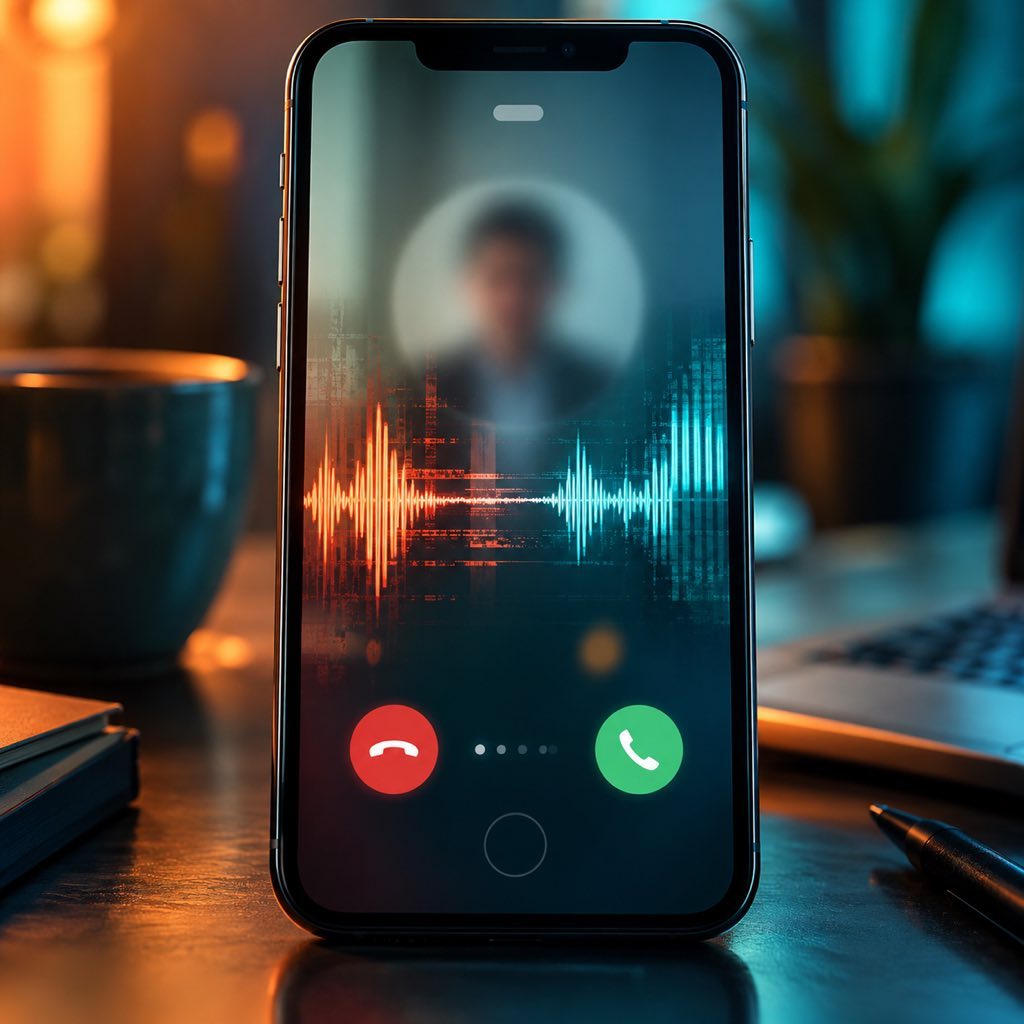
While phishing statistics focus on email and messaging, deepfake voice cloning is pushing the same AI-driven effectiveness gains into phone-based scams — a channel with essentially no equivalent to email gateway filtering or link-scanning defenses. Modern voice cloning models require only a few seconds of a target’s voice sample to generate a realistic impersonation, and attacks exploit emotional familiarity and bypass simple verification habits like caller-ID checks. Financial institutions surveyed on voice-based fraud report average losses of roughly $600,000 per incident, with more than 10% of surveyed institutions reporting individual cases exceeding $1 million, and fewer than 5% of stolen funds typically recovered once a sophisticated voice-phishing (vishing) attack succeeds.
The combination is what makes 2026’s threat landscape distinct from prior years: attackers are no longer limited to a single channel. A campaign can pair an AI-generated phishing email to establish initial contact with a cloned voice call to create urgency and bypass a target’s normal skepticism — stacking two AI-accelerated techniques that were previously separate skill sets requiring different specialists.
1. Update security-awareness training to reflect AI-level phishing quality, not old “spot the typo” heuristics
Because AI-generated lures now match expert human attackers in effectiveness, training programs built around spotting grammar mistakes or obviously generic language are no longer sufficient — employees need to be trained to verify requests through a separate channel regardless of how polished or personalized a message appears.
2. Treat voice-based verification requests as inherently unverifiable without a pre-agreed protocol
Given that voice cloning needs only seconds of sample audio and exploits emotional familiarity, organizations should establish pre-agreed verification protocols (callback numbers, code words, secondary confirmation channels) for any high-value request that arrives by phone, rather than trusting a recognized voice alone.
3. Budget security training as a continuously updated program, not a one-time onboarding module
With attacker preparation time now measured in minutes rather than hours, the threat landscape changes faster than an annual training cycle can track — security-awareness programs need to be refreshed on a much shorter cycle to remain relevant against current AI-generated attack quality.
Advertisement
What This Means for Organizational Defense
The 54% click-through figure is a useful benchmark precisely because it shows AI has erased the effectiveness gap that used to separate amateur phishing attempts from expert-crafted ones — meaning any organization’s threat model now needs to assume every attacker has access to expert-level social engineering tools by default. Combined with the collapse in preparation time, defenders can no longer rely on attacker effort as a natural rate-limiter on the volume or quality of attacks they will face. The practical response is less about better spam filters — though those remain necessary — and more about building verification habits and organizational culture that do not depend on being able to detect a well-crafted lure by its quality alone.
Frequently Asked Questions
How much more effective is AI-generated phishing than human-written phishing?
AI-generated phishing lures achieve a 54% click-through rate, compared with roughly 12% for generic human-written phishing messages — making AI-generated lures statistically comparable in effectiveness to phishing crafted by experienced human attackers.
How much has AI reduced the time needed to create a phishing attack?
IBM’s X-Force Red team demonstrated that AI tooling can produce a convincing phishing email in about five minutes, down from roughly 16 hours of manual research and writing — a roughly 200-fold reduction in attacker preparation time.
Why is deepfake voice cloning considered a distinct threat from email phishing?
Voice cloning requires only a few seconds of a target’s sample audio to generate a realistic impersonation and extends scams into phone-based channels that have no equivalent to email gateway filtering or link-scanning defenses, with financial institutions reporting average per-incident losses of roughly $600,000 from voice-based fraud.
Sources & Further Reading
🔗 Related Intelligence

The Phishing-as-a-Service Economy: How $50 Buys a Cyberattack in 2026
Industrial-Scale AI Phishing: The Enterprise Defense Playbook for 2026
Vulnerability Exploits Overtake Phishing as Primary Attack Vector

AI Voice Cloning Hits the Indistinguishable Threshold: The $680K Fraud Wave