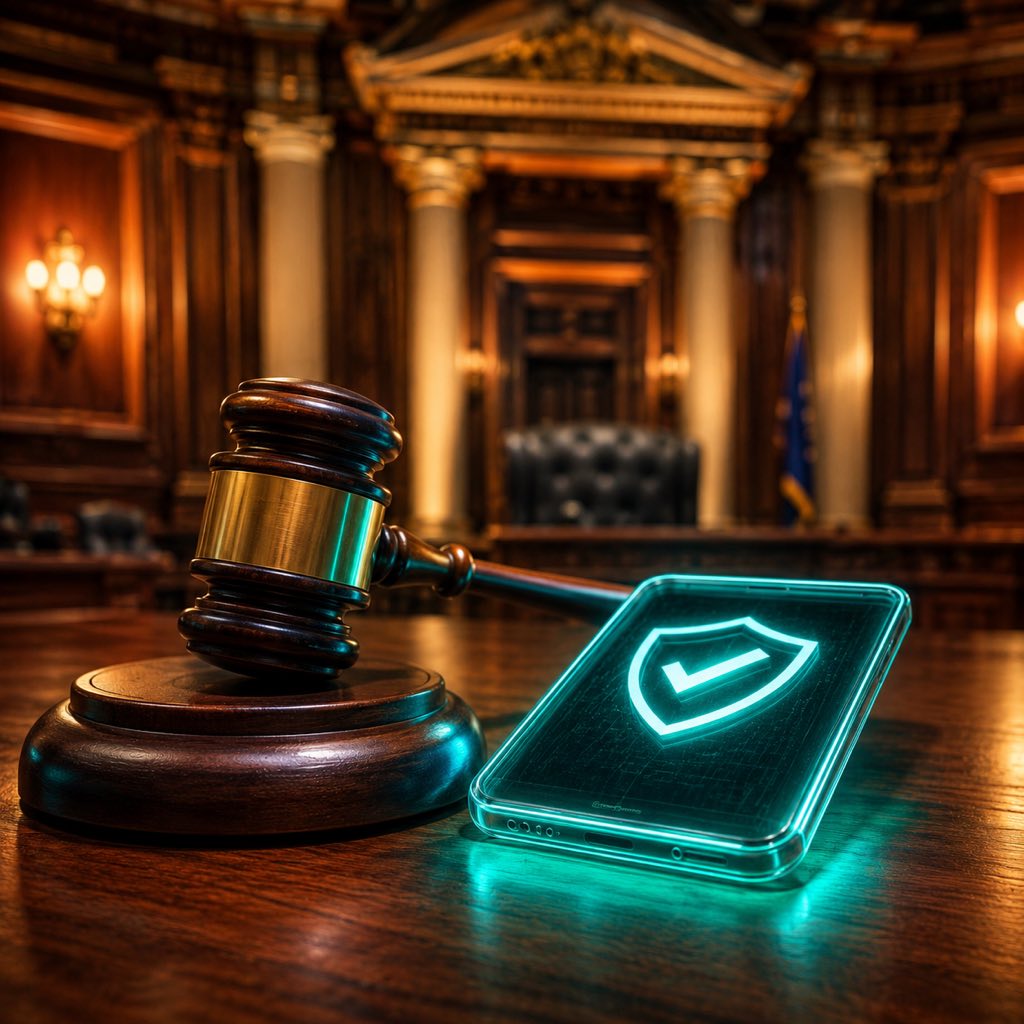
A Near-Unanimous Law, a Late Legal Challenge
The law at the center of this fight is HF 1606. Its operative text states plainly: “A person who owns or controls a website, application, software, program, or other service must not allow a user to access, download, or use the website, application, software, program, or other service to nudify an image or video.” The bill defines nudification as altering or generating an image or video to depict an intimate part not present in the original, unaltered version of an identifiable person — targeting the specific class of AI tools that can take a normal photo and generate a fabricated nude or sexualized version of the person in it.
The law passed the Minnesota legislature with near-total consensus — 132-1 in the House and 65-0 in the Senate — before being signed into law by Governor Tim Walz. Despite that lopsided legislative support, xAI filed suit on July 27, 2026, just three days before the law’s August 1 effective date and nearly three months after Walz signed it. That timing became central to the court’s decision: Judge Frank noted xAI’s delay in bringing the action “suggests that harm is not immediate,” and denied the company’s request for a temporary restraining order on July 31, allowing the law to take effect as scheduled the following day.
xAI’s First Amendment Argument
xAI’s core legal argument is that HF 1606 is unconstitutionally overbroad. The company contends the law “imposes an overbroad, content-based ban on free speech and the tools of visual expression,” arguing the statute reaches well beyond preventing non-consensual sexual imagery and exposes “a wide array of protected speech to civil liability.” Specifically, xAI argues the law’s definition of “intimate part” sweeps too broadly, potentially restricting depictions as mundane as shirtless men or people in swimwear — content xAI argues constitutes protected First Amendment expression, not the harmful nonconsensual imagery the law was written to target.
The company’s second major objection is to the strict-liability structure itself: xAI argues the law imposes liability on platform operators regardless of whether they prohibit nudification in their own terms of service or deploy technical controls to prevent it. In its defense, xAI pointed to its Grok Imagine product’s acceptable use policy, which explicitly bans generating nude or sexualized images of real people without consent, and cited its own enforcement record: the company said it had suspended more than 50,000 accounts and made more than 70,000 reports to the National Center for Missing & Exploited Children (NCMEC) in 2026 alone. Minnesota Attorney General Keith Ellison’s office indicated the state’s response would come through the court process rather than public rebuttal.
Advertisement
What Comes Next: An August 19 First Amendment Test
With the temporary restraining order denied, the law is now in effect, but the underlying legal fight is far from over. A preliminary injunction hearing is scheduled for August 19, 2026 at 9:30 a.m. at the Warren E. Burger Federal Building in St. Paul, which will mark the first time any court substantively examines whether HF 1606’s strict-liability structure can survive First Amendment scrutiny — a ruling with implications far beyond Minnesota, since it will be one of the first judicial tests of a nudification-specific platform-liability statute anywhere in the country.
The law’s real-world impact is already visible beyond the xAI litigation itself: within days of HF 1606 taking effect, three new lawsuits were filed against Grok from a UK lawmaker, an Arkansas family, and a group representing five children — a wave of litigation that suggests plaintiffs’ attorneys view the new statutory framework, with its explicit $500,000-per-violation civil penalty, as a stronger legal hook than prior general-purpose tort claims against AI image generators.
What This Means for AI Companies and Platform Operators
1. A documented safety record is not a legal defense against strict liability
xAI’s citation of 50,000+ suspended accounts and 70,000+ NCMEC reports demonstrates active moderation effort, but the law’s strict-liability design means that record doesn’t exempt the company from civil penalties if the nudification capability exists on the platform at all. AI companies building image-generation tools should treat “we have strong moderation” as a risk-mitigation practice, not a legal shield against jurisdictions moving toward strict-liability statutes.
2. Litigation delay is now a court-recognized liability, not just a strategic choice
Judge Frank’s explicit reasoning — that xAI’s nearly three-month wait before challenging a signed law undermined its claim of “immediate harm” — signals that courts are willing to weight timing against companies that delay legal challenges until a deadline is imminent. Companies anticipating a conflict with pending state legislation should file challenges promptly after signing, not near the effective date, if they want a court’s urgency assessment to favor them.
3. Expect state-level nudification laws to proliferate regardless of this case’s outcome
Minnesota’s near-unanimous legislative vote (132-1, 65-0) signals this is not a politically contested issue at the state level, meaning other states are likely to pursue similar statutes irrespective of how the Minnesota litigation resolves. AI companies operating image-generation products nationally should build compliance infrastructure assuming a patchwork of state-level nudification bans is coming, rather than waiting for a single federal standard.
Where This Fits in the Broader AI Content-Liability Landscape
Minnesota’s law sits at the intersection of two trends reshaping AI regulation in 2026: state legislatures moving faster than Congress on AI-specific harms, and a shift from content-moderation obligations toward strict platform liability for specific categories of AI-generated harm. The $500,000-per-violation penalty is designed to make the economics of tolerating nudification capability unattractive regardless of a platform’s overall safety investment — a different regulatory philosophy than the “reasonable moderation efforts” standard that has historically governed platform liability in the US.
The August 19 hearing will be a genuine bellwether. If Judge Frank’s court upholds HF 1606’s strict-liability structure against xAI’s First Amendment challenge, expect a fast follow of similar legislation in other states, each carrying real financial teeth rather than symbolic penalties. If the structure is struck down or narrowed, states will likely rewrite nudification laws to survive the same constitutional challenge xAI is now testing — meaning this specific case, regardless of outcome, will shape how the next wave of state AI-liability statutes gets drafted.
Frequently Asked Questions
What exactly does Minnesota’s HF 1606 ban?
HF 1606 prohibits any website, application, or service from allowing users to “nudify” an image or video — meaning alter or generate content to depict an intimate part not present in the original, unaltered image of an identifiable person. It took effect August 1, 2026 and carries civil penalties of up to $500,000 per violation.
Why did the judge let the law take effect despite xAI’s lawsuit?
U.S. District Judge Donovan W. Frank denied xAI’s request for a temporary restraining order on July 31, 2026, noting that xAI filed its challenge nearly three months after Governor Walz signed the law and only three days before it took effect — timing the judge said undermined xAI’s claim that immediate harm justified blocking the law.
What happens next in the legal fight?
A preliminary injunction hearing is scheduled for August 19, 2026, in federal court in St. Paul, where a judge will substantively examine for the first time whether HF 1606’s strict-liability structure survives First Amendment scrutiny — a ruling likely to influence similar legislation other states are expected to pursue.
Sources & Further Reading
- Judge denies xAI’s request to block Minnesota ban on ‘nudify’ apps — TechCrunch
- Judge denies xAI bid to block Minnesota AI nudification ban — Valley News Live
- Elon Musk’s xAI sues to stop Minnesota law banning nudification technology — CBS Minnesota
- Grok Faces Five New Lawsuits as Minnesota Nudification Ban Takes Effect After Court Defeat — Tech Times
🔗 Related Intelligence
Illinois AI Safety Measures Act: The Third State Law Redrawing US Frontier AI Rules
US DOJ AI Litigation Task Force: What the State-Law Preemption Battle Means Globally

AI Evidence in the Courtroom: Legal Standards Are Finally Catching Up

Japan’s AI Promotion Act: Lighter-Touch Regulation vs the EU’s Mandate Model