Algeria’s Tourism Ambition and the Payment Infrastructure Reality
Algeria is making a deliberate bet on tourism diversification. The government has launched an e-visa program, expanded bilateral visa-free access, increased international flight routes, and invested in Saharan tourism infrastructure in wilayas including Tamanrasset, Illizi, Tindouf, Adrar, Béchar, and Djanet. VisasNews reports that the Ministry of Tourism is specifically pursuing electronic visa expansion as a tool for boosting Saharan visitor numbers, with 2024 results showing over 16,000 foreign tourists visiting Algeria’s deep south — a figure described as a significant increase due to government simplification initiatives.
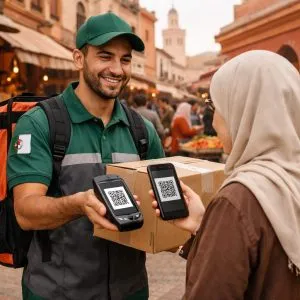
The e-visa mechanism itself is digitally sophisticated. A dedicated platform managed by the Ministry of Tourism allows approved travel agencies to submit applications digitally, after which travelers receive boarding authorizations containing QR codes. This is a credible digital-first entry infrastructure.
The problem is what happens after the tourist arrives. Algeria’s digital payment infrastructure is built for domestic transactors with bank accounts and CIB or Edahabia cards. International tourists arrive with Visa, Mastercard, or mobile wallets like Apple Pay and Google Pay — instruments that have limited acceptance outside Algiers and a handful of major hotel chains. According to Trade.gov’s Algeria digital economy guide, credit card ownership among Algerians stands at just 2.8%, reflecting an infrastructure calibrated for a largely unbanked domestic market, not for international payment acceptance.
The Revenue Architecture of Inbound Tourism
Understanding why digital payment acceptance matters requires mapping how inbound tourist spending actually flows. Algeria’s tourism revenue reached $179.34 million in 2023 — a 60.13% increase from the prior year, according to Trading Economics’ Algeria tourism receipts data — but this figure understates the potential. The revenue-per-tourist figure of $72 is strikingly low compared to regional peers: Morocco consistently captures $600-800 per visitor, and Tunisia generates approximately $500 per visitor even with a smaller hotel stock.
The gap reflects a structural constraint: when foreign tourists cannot use their international payment instruments, they either carry cash in euros or dollars, spend only on pre-paid packages, or truncate their spending to cash-accessible services. Informal currency exchange fills part of the gap, but informal exchange revenue does not flow through the official digital economy. The structural consequence is that Algeria’s tourism GDP contribution is systematically understated relative to actual visitor presence, because a significant portion of tourist spending never enters the formal payment system.
The Sahara corridor illustrates this most sharply. A European or Chinese tourist who has navigated the e-visa portal, booked a guide service in Tamanrasset, and arrived with a digital boarding authorization QR code — now arrives at a desert camp or a small hotel that accepts only cash in Algerian dinars. The dinar is non-convertible outside Algeria, meaning the tourist must have obtained cash through a bank or authorized exchange — a friction that meaningfully constrains spontaneous spending at artisan markets, cultural sites, and local restaurants.
Advertisement
What the Digital Tourism Payment Stack Needs
Building the payment infrastructure to capture inbound tourist spending is not a single initiative — it is a layered architecture that must address four distinct problems simultaneously.
1. Deploy International Card Acceptance at Tourism Contact Points
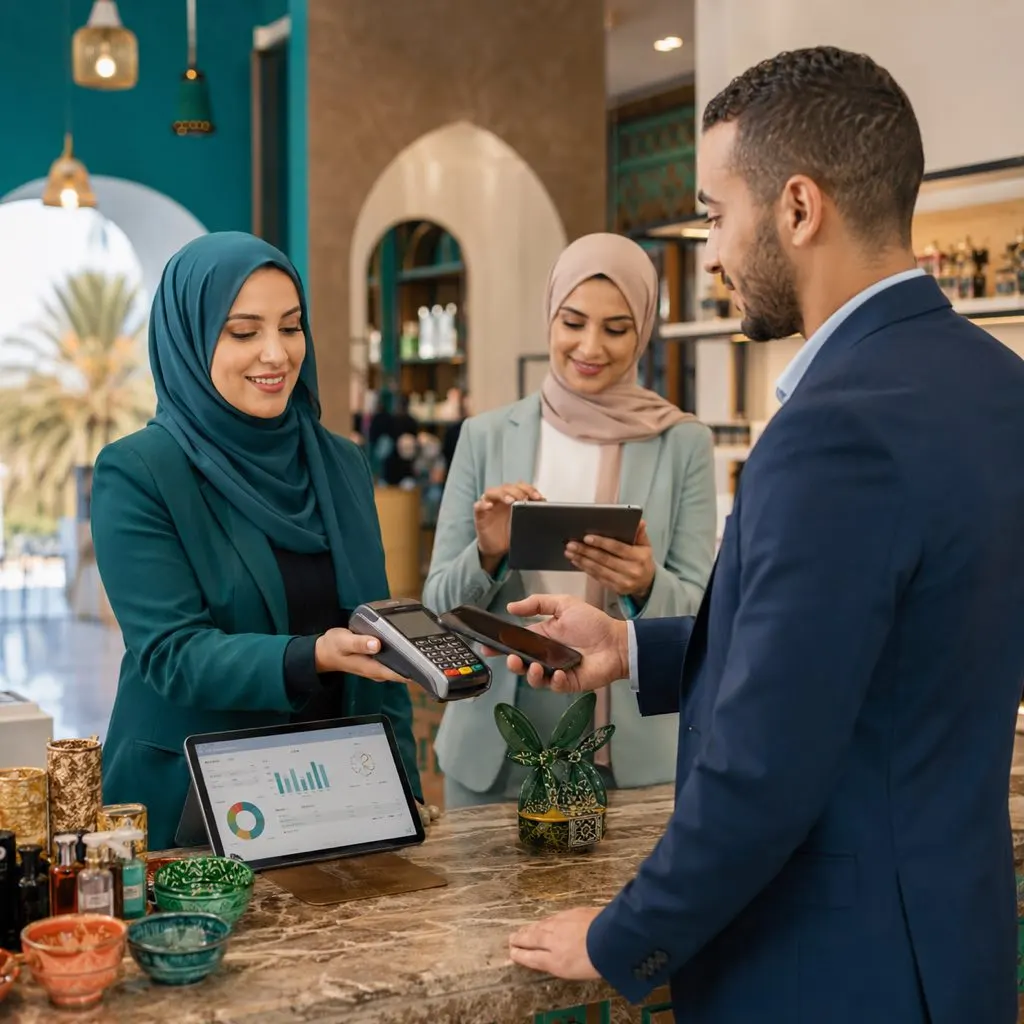
The immediate gap is merchant acquiring for international cards. SATIM (Algeria’s national card scheme operator) and GIE Monétique (the interbank electronic money network) are the institutional players. The priority is extending international card acceptance — Visa and Mastercard acquiring — to the specific venues that tourists contact first: licensed hotel properties, certified guide services, airport duty-free operators, and cultural site ticket offices. This does not require national saturation — it requires a targeted 200-300 merchant acquisition program focused on the Sahara tourism corridor and Algiers heritage circuit. The Fintech Times’ Algeria ecosystem analysis notes that Visa and Mastercard adoption is increasing for official and business transactions — the infrastructure exists, but its expansion into tourism SME merchants is incomplete.
2. Build a QR-Based Tourist Wallet Interoperability Layer
The e-visa QR code that foreign tourists already receive is an underutilized trust anchor. A logical extension is a tourist digital wallet — linked to the e-visa identity verification — that allows international card pre-loading at arrival, generating a dinar-denominated wallet that can be used at any QR-enabled merchant. Morocco’s CIH Bank and Maroc Telecom’s “M-Wallet for tourists” pilot (2023) is instructive: it reduced cash dependency among international visitors to Marrakech riads by 38% within 18 months, and increased average per-visit spend by 22% because visitors could make spontaneous purchases at QR-enabled souks. Algeria’s agri-digital startup ecosystem, expanding under Bank of Algeria Instruction 06-2025, is positioned to build exactly this kind of embedded wallet layer. Transfi’s analysis of Algerian digital finance confirms that mobile payment adoption remains in early stages but is expanding through government initiatives and increasing mobile penetration.
3. Create Tourism-Specific Merchant Onboarding at Below-Market Cost
Small tourism service providers — desert camp operators, artisan cooperatives, heritage site vendors — face two barriers to digital payment adoption: the upfront cost of a payment terminal and the merchant service fee on each transaction. Both must be subsidized or eliminated for the tourism corridor phase. Morocco’s tourism ministry negotiated a 0% merchant service fee for the first two years of tourism-facing merchants in Marrakech and Fès — a model that drove rapid adoption and generated the transaction data to justify permanent infrastructure investment. Algeria’s equivalent would be a partnership between the Ministry of Tourism, SATIM, and the Bank of Algeria to offer zero-cost terminal provisioning and below-1% service fees for certified tourism merchants during a 24-month pilot phase.
The Structural Lesson: Digital Entry Without Digital Spending Is Half a Tourism Economy
Algeria’s tourism digital economy in 2026 is architecturally imbalanced: the entry side (e-visa, QR boarding authorization, digital agency platforms) is more sophisticated than the spending side (cash-dominated, internationally card-limited). This imbalance creates a conversion gap — tourists who arrive digitally but spend informally — that systematically undervalues Algeria’s tourism GDP and suppresses the private investment case for tourism infrastructure.
The correction requires treating digital payment acceptance as tourism infrastructure, equivalent in priority to road access or hotel standards. A Saharan tourist camp with unreliable internet but a pre-loaded offline payment terminal captures more economic value than a camp with strong connectivity but no payment system. The Bank of Algeria’s 50% cashless target for 2030 creates a regulatory alignment opportunity: tourism-corridor merchant digitization can be the flagship use case for the Bank of Algeria’s regulatory sandbox (targeting at least 20 fintech innovators annually under Instruction 06-2025), generating measurable data on digital payment adoption in a controlled, high-visibility context.
The 2025 Sahara digitization push — 16,000 foreign visitors, e-visa QR infrastructure, government-backed tour operator platform — has proved the demand signal. The infrastructure side must now match the ambition of the entry architecture. Every foreign tourist who arrives via e-visa QR and cannot pay with a card is a revenue signal that Algeria’s digital economy is not yet capturing.
Frequently Asked Questions
What is the current state of Algeria’s tourism e-visa and digital entry system?
Algeria operates a visa-on-arrival (e-visa) system for most nationalities, managed through a digital platform where approved travel agencies submit applications and travelers receive boarding authorizations with QR codes. The system currently covers visits to 11 southern wilayas for Saharan tourism, including Tamanrasset, Illizi, Djanet, and Tindouf. In 2024, over 16,000 foreign tourists visited the Algerian Sahara — a significant increase attributed to government simplification of the entry process.
Why is Algeria’s per-tourist revenue so low compared to regional peers?
Algeria generated approximately $179 million in tourism revenue from 2023 visitor arrivals, translating to about $72 per tourist — compared to $600-800 in Morocco and roughly $500 in Tunisia. The primary structural explanation is limited international payment acceptance: foreign visitors with Visa, Mastercard, or mobile wallet instruments encounter cash-only environments at many tourism contact points, constraining their ability to spend spontaneously on accommodation upgrades, artisan purchases, and local services. Informal cash spending exists but does not register in the formal digital economy.
How could a tourist digital wallet integrated with the e-visa QR system work?
A tourist wallet system would link the identity verification already performed during e-visa issuance to a dinar-denominated digital wallet. Upon arrival, the tourist loads the wallet using an international card (converted at official rates), and can then spend at any QR-enabled merchant within the tourism corridor. Morocco’s 2023 pilot with CIH Bank demonstrated a 38% reduction in cash dependency and 22% increase in per-visit spend within 18 months of pilot launch. Algeria’s Bank of Algeria regulatory sandbox, targeting at least 20 fintech innovators annually from 2026, is the appropriate institutional vehicle for developing and testing this model.
—
Sources & Further Reading
- Algeria Developing Saharan Tourism via Electronic Visa — VisasNews
- Algeria Digital Economy Commercial Guide — Trade.gov
- Algeria’s Fintech Ecosystem in 2026: Building Momentum — The Fintech Times
- International Tourism Receipts Algeria — Trading Economics
- Digital 2026: Algeria — DataReportal
- Exploring Local Payment Methods and Digital Finance in Algeria — Transfi
🔗 Related Intelligence
Algeria’s E-Commerce Pivot: From COD Dominance to Digital Payment Adoption

Algeria Payments: The 179% Surge and What Merchants Must Do in 2026
Algeria’s Payment Shift: How Merchants Are Moving from COD to Digital Checkout
Algeria’s Digital Payment Infrastructure: 78K Terminals, 644 Online Merchants, and a 46% Surge