The Demand Spike That the Education System Is Not Ready For
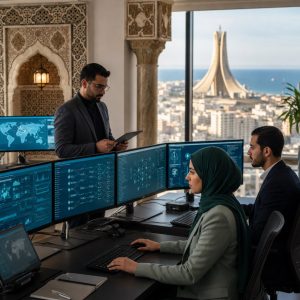
Decree 26-07, published in January 2026, requires every Algerian public institution to establish a dedicated cybersecurity unit reporting directly to the head of the institution. The government’s vocational training expansion added 285,000 new places in 2026, with dedicated cybersecurity certification tracks aligned to international standards including ISO 27001 implementer, CISSP, and CEH. Both of these initiatives are genuine steps forward. Neither solves the immediate staffing problem.
Certification programmes take 12–18 months to produce a job-ready graduate. The vocational expansion addresses the 2027–2028 talent supply. The cybersecurity unit mandates take effect now, in 2026, requiring institutions to hire or retrain staff against an already-thin market. That gap — between the institutional mandate and the available workforce — is where the community organisations step in.
OWASP Algiers is the local chapter of the Open Web Application Security Project, with a mission to strengthen Algeria’s application security community and run at least four local chapter meetings per year. Its companion organisation BSides Algiers grew directly out of the OWASP Student Chapter Algeria, which was founded as Shellmates Club on December 19, 2011 — making it one of the oldest organised cybersecurity communities in North Africa.
What CTF Competitions Actually Produce
Capture the Flag competitions are the closest thing the cybersecurity industry has to a working skills assessment. Unlike certification exams, which test knowledge recall under controlled conditions, CTF challenges test hands-on execution under time pressure: reverse-engineering a binary, exploiting a web vulnerability, recovering a forensic artefact, bypassing an authentication control. A candidate who ranks in the top 20% of the CyberTalents Algeria National Cyber Security CTF has demonstrated applied skills that most traditional HR processes cannot screen for.
For employers, the CTF ranking list is a pre-filtered talent pool. Winners are typically eligible to represent Algeria in regional and international competitions, which means the top performers have already been validated against a comparative international standard. Algerian CTF teams have ranked among Africa’s best in regional competitions — a concrete data point that the talent pool is real and competitive, not theoretical.
The diversity of CTF challenge categories also maps onto actual job roles: web challenges → application security analyst; binary exploitation → penetration tester; forensics → digital forensics investigator; crypto challenges → security researcher. An employer hiring for a specific role can look at a candidate’s CTF history and see exactly which challenge categories they excelled in — a precision that a CV alone never provides.
Advertisement
Three Engagement Models for Algerian Employers
1. Sponsor a Challenge at BSides Algiers or the National CTF
The lowest-cost, highest-visibility engagement model is challenge sponsorship. BSides Algiers and the CyberTalents National CTF accept corporate-sponsored challenges — the sponsor designs a challenge relevant to their technology stack (an internal web app CTF, a cloud configuration puzzle, a social-engineering scenario) and the competition runs it. Winners are solving your actual security problems in a competitive format, making them pre-qualified candidates. Sponsorship fees are a fraction of a recruitment agency placement fee, and the brand visibility among the most technically active 18–30 segment of Algerian cyber talent is unmatched.
Challenge design does not require significant internal expertise: the sponsor provides a problem statement and a flag, and the organisers handle infrastructure, promotion, and scoring. For a bank or telecom operator running a bug-bounty-style internal exercise, converting one of those exercises into a public CTF challenge costs hours of engineering time, not months.
2. Partner with OWASP Algiers for a Structured Internship Pipeline
OWASP Algiers runs chapter meetings that attract practising security professionals, university students, and self-taught enthusiasts. The chapter has produced a community of people who are technically engaged but often lack the institutional credibility that formal employers require. A structured internship partnership — where the company offers 3–6 month placements to OWASP Algiers members who meet a defined technical baseline — provides a low-risk, high-upside pipeline. The baseline can be set using CTF ranking or a short technical screening, not a CV review.
The Algerian Ministry of Formation and Vocational Education’s partnership model — combining vocational certification with competency-based assessment — maps well onto this approach. Employers who formalise partnerships now are positioned to receive the 2026-cycle graduates from the new cybersecurity certification tracks before open-market hiring.
3. Build an Internal Junior Analyst Track Sourced Entirely from CTF Participants
The highest-leverage model for a large employer (bank, telecom, major public enterprise) is a dedicated internal junior analyst track that bypasses traditional HR filters entirely. The track works as follows: post a junior security analyst position exclusively through CTF community channels (BSides Algiers, OWASP Algiers Meetup, CyberTalents Algeria page); require applicants to provide their CTF competition history and top three challenge writeups; interview only candidates who clear a minimum CTF participation threshold.
This approach has been used successfully by financial institutions in Singapore and Morocco to build entry-level SOC analyst teams 30–40% faster than traditional recruiting, at lower average salary than agency placements, with higher 12-month retention because candidates are intrinsically motivated. The writeup requirement also provides a strong signal of communication ability — critical for analysts who will need to produce incident reports.
What the Government Expansion Means for the Pipeline
The vocational training expansion documented by TechAfrica News — new certificate programmes, smart classrooms, remote configuration systems — is the medium-term supply solution. The Ministry’s National Conference on Cybersecurity Capabilities at Beni Mesous produced a specific commitment to align curricula to the skills that employers actually need, using a Competencies Approach rather than a subject-content approach.
For employers, the smart move is to engage the curriculum design process now, not after the graduates appear. The Ministry’s three-workshop format — identifying national skill needs, updating technical capabilities, promoting application partnerships — explicitly invites employer input. Companies that contribute a skills brief now shape what the 2027–2028 graduate cohort looks like. Companies that wait to hire from that cohort will be hiring to someone else’s specification.
The Bigger Picture for Algeria’s Cyber Talent Market
The OWASP Algiers and CTF ecosystem solves a specific problem: identifying technically talented people who self-selected into cybersecurity before the formal education system was ready to produce them at scale. Algeria has a generation of self-taught practitioners in their mid-20s to early 30s who have been solving real security problems through community competition for over a decade. That cohort is the fastest available answer to the Decree 26-07 staffing mandate.
The risk is a bidding war that inflates salaries without growing the pool. If every employer approaches the CTF community simultaneously as a hiring market rather than as a talent development ecosystem to invest in, the existing community members will move upmarket rapidly and the junior pipeline will remain empty. The employers who sponsor challenges, mentor BSides Algiers participants, and partner on internship pipelines — before they need to hire from them — will have preferential access and lower cost-per-hire than those who arrive later with competitive salary offers alone.
Frequently Asked Questions
How technically rigorous are Algerian CTF competitions, and are the winners actually job-ready?
The CyberTalents Algeria National Cyber Security CTF is validated at a level where winners qualify for regional and international competitions representing Algeria. The challenge categories — web exploitation, binary reverse-engineering, forensics, cryptography — test hands-on skills that map directly to practitioner roles. Organisations like Shellmates Club (founded 2011) have produced alumni who now work in security roles across Algeria, France, and Gulf-based companies. Top performers are job-ready at junior-to-mid level for SOC analyst, penetration testing, and application security roles. They typically lack formal project management and stakeholder communication experience, which structured internship programmes can address.
What is OWASP Algiers and how is it different from a university cybersecurity club?
OWASP Algiers is the Algerian chapter of the international Open Web Application Security Project — the same organisation that produces the OWASP Top 10, the industry-standard web application vulnerability framework used by every major security compliance programme. Membership is open to anyone, not just students, and chapter meetings mix practitioners, researchers, and students. This makes it qualitatively different from a university club, which operates within a single institution. OWASP Algiers draws from across Algiers’s security community and has connections to the international OWASP network, which means members have access to research, tools, and professional contacts that extend well beyond Algeria.
Can a private company participate in Algeria’s National Cyber Security CTF without a large cybersecurity budget?
Yes. Challenge sponsorship is the entry point for companies without large security budgets. The sponsor contributes a challenge (a technical problem relevant to the company’s systems) and the CyberTalents platform provides the infrastructure, promotion, and judging. Sponsorship costs are typically a few hundred dollars in platform fees — less than the cost of posting a single job on LinkedIn. For a small fintech or telecoms startup, the visibility among Algeria’s most technically active security community, combined with access to participant profiles and writeups, represents a significantly better return than a traditional recruitment spend.
—
Sources & Further Reading
- OWASP Algiers Chapter — OWASP Foundation
- Algeria National Cyber Security CTF — CyberTalents
- BSides Algiers / Shellmates Club
- Algeria Expands Vocational Training for Cybersecurity Demand — TechAfrica News
- OWASP Algiers Chapter Meetup
- Algeria Steps Up Cybersecurity Training Amid Rising Attacks — Ecofinagency
🔗 Related Intelligence

Algeria Cybersecurity Talent Pipeline: Building the Defense Bench Through CTF, CISSP, and CEH

CTF Competitions in Algeria: How University Hacking Contests Build Cyber Talent

From DZ-CERT to the Private Sector: Building Algeria’s SOC Analyst Talent Pipeline

Cybersecurity Careers Algeria: How the 2025-2029 Strategy Reshaped Demand