The Global Shift That Frames the MENA Opportunity
1. Understand the Three-Tier Monetization Stack That Top Creators Are Building
The global creator economy’s $205.25 billion 2024 valuation, growing toward $252.33 billion in 2025 at 23.3% CAGR, is driven by a fundamental restructuring of how creators convert audience into revenue. The old model — post content, accrue views, receive ad revenue share — is being replaced by a three-tier stack that the data consistently shows outperforms ad-only revenue by a factor of 3-5x at equivalent audience sizes.
Tier 1 — Free distribution layer: Social platforms (YouTube, Instagram, TikTok) used purely for audience discovery and top-of-funnel reach, with ad revenue treated as a secondary signal rather than a primary income source. The top 10% of creators globally earn an average of $48,500 per month — an income level that requires diversified revenue, not platform ad-share alone.
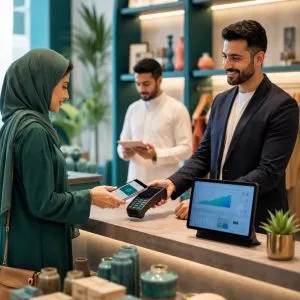
Tier 2 — Subscription and community layer: Paid membership platforms (Patreon, Substack, Ko-fi, regional equivalents) where engaged fans pay monthly or annually for exclusive content, direct access, and community membership. This tier has historically been underdeveloped in the MENA market because regional payment infrastructure — local card acceptance, low-friction mobile wallet integration — was insufficient. That infrastructure gap is closing: digital wallets accounted for one-fifth of online spending in MENA in 2023, and mobile commerce is projected to represent 70% of online transaction value across the region by 2025.
Tier 3 — AI-assisted product layer: Digital products (courses, templates, AI agents, custom GPTs, branded tools) created once and sold indefinitely, with 76% of creators globally already using AI to accelerate content production. This tier requires the least ongoing time investment per dollar of revenue generated — which is why it is growing fastest among established creators transitioning from volume-based to margin-based business models.
2. Recognize Why Arabic Content Monetization Has Lagged — and What Is Changing
Arabic-language content represents one of the highest-reach, lowest-monetized audiences in global digital media. Arabic is the fifth most spoken language in the world by number of native speakers, but Arabic content creators face three structural barriers that Western and East Asian creators do not:
Payment infrastructure friction: Until 2022-2024, the absence of widely accepted local payment methods for digital subscriptions meant that Arabic creators trying to monetize through Patreon or Substack were effectively asking their audience to use international credit cards — a friction that eliminated the majority of potential subscribers in markets where cash or local debit cards remain the primary transaction medium. The MENA mobile wallet expansion (one-fifth of online spending in 2023) is reducing this friction, but the full infrastructure effect is a 2025-2027 phenomenon, not a completed transition.
Platform revenue share limitations: YouTube’s Partner Program applies a lower effective CPM rate to Arabic-language content than to English, because advertising demand for Arabic-language inventory has historically been lower than for English equivalents. This CPM gap means that Arabic creators with equivalent or larger audiences earn less from platform ad-share than English-language peers, creating a stronger incentive to migrate toward subscription revenue — which pays based on subscriber count, not advertiser demand.
Content-type concentration in high-monetization niches: The Arabic creator ecosystem has seen disproportionate growth in educational content, religious content, and edutainment — categories where subscription monetization is structurally superior to ad revenue because audiences engage in intensive, repeat sessions rather than passive scroll. 207 million creators worldwide are competing for monetization; in the Arabic market, the niches with the highest subscription potential are not yet fully saturated.
3. Build the Platform or Partnership Strategy That Captures Arabic Subscription Revenue
The structural opportunity for platforms, publishers, and media businesses operating in MENA is not in building another social network — it is in building the subscription infrastructure layer that Arabic creators are actively seeking. Three categories of opportunity are in play:
Regional subscription platform development: Shahid, the MBC-backed streaming platform, and Anghami, the Arab music streaming service, represent the category-specific subscription model. The gap is in horizontal creator subscription platforms — the Arabic-language equivalent of Patreon or Substack — where independent creators across verticals (cooking, finance, religious education, gaming, tech commentary) can operate subscription communities without building their own payment and community infrastructure. The first platform to solve Arabic-language payment integration at low friction will capture the majority of MENA creator subscription revenue in its early growth phase.
AI content production tooling with Arabic-first design: The 76% global creator AI adoption rate is occurring primarily through tools optimized for English. Arabic-first AI content tools — script generation, subtitle automation, thumbnail localization — face a far less saturated competitive environment than their English-language equivalents. Creators who adopt AI production assistance can achieve 3-5x output multipliers, which compounds with subscription tier economics.
Advertising-to-subscription conversion programs: Brands and advertisers operating in MENA currently reach Arabic creators primarily through sponsored content deals calibrated to follower count. The shift to subscription-first monetization creates a new value metric — subscriber lifetime value rather than follower count — that changes how brands should structure creator partnerships. The brands that adapt their creator partnership frameworks to subscription-era metrics will capture higher-quality audience engagement than those still optimizing for reach.
Advertisement
The Platform Infrastructure Context
Arabic content’s monetization trajectory is tied directly to payment infrastructure expansion. The MENA digital commerce and payments market — where digital wallets accounted for one-fifth of online spending in 2023 and mobile commerce is on track to represent 70% of online transaction value by 2025 — provides the transaction substrate that subscription commerce requires.
Unlike ad revenue, which flows from platform to creator with no consumer action required beyond watching, subscription revenue requires a consumer to initiate a payment transaction. This means that every improvement in local payment infrastructure — reduced friction for mobile wallet payment, expanded acceptance of regional debit cards, simplified cross-border subscription billing — directly enables Arabic creator subscription revenue. The infrastructure buildout is happening in parallel with the creator monetization shift, creating a compounding effect.
The specific platforms with significant Arabic creator communities — YouTube (largest Arabic content distribution), TikTok (fastest-growing Arabic short-form), Instagram (dominant Arabic fashion, cooking, lifestyle) — have all introduced or expanded native creator subscription features between 2024 and 2026. YouTube’s channel memberships, TikTok’s LIVE subscription, and Instagram’s subscriptions tool all accept regional payment methods in at least 12 MENA markets as of 2025. The infrastructure is arriving; the creator monetization behavior shift is following.
Frequently Asked Questions
What is the realistic monthly earnings ceiling for a MENA-based Arabic creator with 100,000 subscribers?
At 100,000 subscribers with a 2-3% subscription conversion rate typical of engaged niche communities, a creator can generate 2,000-3,000 paid subscribers. At $5-10/month average subscription price (aligned with MENA purchasing power), that implies $10,000-$30,000 in monthly subscription revenue — compared to $500-$1,500 in YouTube ad revenue at equivalent Arabic-content CPM rates. The subscription model produces 10-20x higher revenue per subscriber than ad revenue at this audience size, which is why the structural shift is accelerating among creators who have built engaged rather than passive audiences.
How do payment infrastructure gaps affect Arabic creator subscription revenue?
Arabic creators targeting local MENA audiences face a payment conversion gap: platforms like Patreon or Substack require international credit cards, which have low penetration in markets like Algeria, Egypt, and Iraq where mobile wallets and local debit cards dominate. The practical effect is that a creator with 100,000 Arabic followers may only convert 0.5-1% to paid subscribers (due to payment friction), compared to 2-5% conversion rates for English-language creators with equivalent audience quality. Every MENA payment infrastructure improvement — expanded mobile wallet acceptance, regional debit card integration — directly translates to higher subscription conversion rates.
What role does AI play in enabling the subscription-first model for Arabic creators?
AI tools are critical for the subscription model’s economics because subscription tiers require consistent, exclusive content delivery — which means production volume must scale faster than creator time allows. The 76% global creator AI adoption rate reflects this need: AI assists with script drafts, subtitle generation, thumbnail variation, and short-form clip editing from long-form content. For Arabic creators, the specific bottleneck is Arabic-first AI tooling — most AI content tools are English-optimized, and Arabic script generation, grammar-checking, and subtitle accuracy tools remain underinvested relative to the audience potential.
—