What was actually signed and why it is different
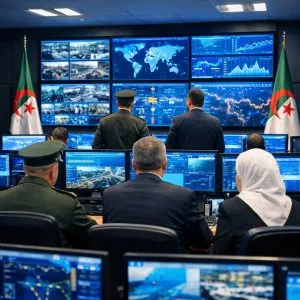
The cooperation agreement was signed on March 12, 2026 in Algiers between the Ministry of Foreign Affairs and the Directorate General of National Security (DGSN), which sits under the Ministry of Interior, Local Assemblies and Transport. Lounès Magramane, Secretary General of the Ministry of Foreign Affairs, and Ali Badaoui, Director General of National Security, signed the document.
The agreement is not a generic digitization MoU. It is specifically scoped to consular services, which sit close to the most sensitive workflows the Algerian state runs: identity verification for citizens abroad, civil-status documents, biometric passport renewal, certificates of nationality, and cross-border administrative interactions. Magramane framed it as part of a broader reform agenda to improve administrative efficiency and services for Algerian citizens abroad, of whom several million are spread across Europe, the Gulf, and North America.
The reason it deserves attention from security teams as well as modernization advocates is that consular processes were already partially digitized through the biometric passport and biometric national ID card programs run by the DGSN. The new agreement is therefore not a greenfield project. It is the bridge between two ministries that previously operated separate identity systems, which is exactly where audit and access-control problems tend to appear.
Why digitization changes the attack surface
When consular services depended on paper, in-person verification, and embassy queues, fraud was constrained by physical presence. A forged document had to pass under a human eye, often more than once. Digitization removes that friction, which is the point, but it also concentrates risk in a smaller number of system surfaces.
In a digitized consular pipeline, operational trust depends on five layers that did not previously exist together: the strength of remote identity proofing, the integrity of access controls and role separation between ministries, the tamper-resistance of audit logs, the design of exception-handling workflows, and the resilience of the system against social engineering and insider misuse. Each of those layers is a recognised attack surface in public-sector identity programs across the world. The Algerian Ministry of Justice already moved on March 16, 2025 to let citizens obtain certificates of nationality at any court using only a biometric ID or passport, on condition that identity is verified against the national database. That is a useful illustration of the tradeoff: faster service, but the database integrity becomes the single point of failure.
The wider context strengthens the security case. In November 2025, Algeria approved draft legislation establishing a legal framework for sectorial digital IDs and trust services, designed to govern secure and trusted digital transactions among individuals and businesses. Also in November 2025, the DGSN signed a Memorandum of Understanding with the United Kingdom’s Home Office on digital forensics and biometrics for criminal investigations. The consular digitization agreement therefore sits inside a coherent policy push, not a one-off initiative.
What a trust architecture should actually contain
Algeria can use this moment to define reusable security patterns for other public platforms rather than letting each ministry improvise. In practice, that means specifying assurance levels for different consular operations, mandating tamper-resistant logging across both ministries’ systems, separating duties between consular operators and DGSN identity validators, defining clear procedures for handling exceptional cases without creating backdoor access, and publishing minimum incident-response timelines.
Three concrete design choices would do most of the work. First, log every cross-ministry identity verification with non-repudiable signatures, so investigators can reconstruct any case end-to-end. Second, treat exception handling as a first-class workflow with a dedicated review path, not as informal escalations between officials, because that is where most insider misuse occurs in similar systems globally. Third, run periodic red-team exercises against the consular interface, not just penetration tests of the underlying infrastructure, to catch social-engineering paths against frontline staff.
Doing that once and reusing it across services would be far more valuable than letting each ministry build its own controls. The 2025 trust services draft law is the natural place to anchor those reusable patterns at a legal level.
Advertisement
Why the political stakes are higher than usual
Identity security is not a feature added later. It is what keeps digitization from degrading citizen trust. If Algerians believe documents can be manipulated, civil-status records can disappear, or case status can be altered without accountability, digital convenience quickly becomes a political liability. Consular services are particularly exposed because they touch the diaspora, which is highly vocal and well-connected to media. A single high-profile case of tampered records or unauthorised access to consular files would set the broader public-sector digitization agenda back by years.
That is why the March 12, 2026 agreement is more than an administrative milestone. If Algeria treats consular digitization as a trust-architecture project rather than a portal launch, it can raise the security baseline for the rest of the public sector. That would make digitization more than faster paperwork. It would make it safer state capacity, and it would give the November 2025 trust services framework a real operational test bed.
A Four-Pillar Security Readiness Framework for Public-Sector Teams
Consular digitization is not one security challenge — it is four parallel ones. Each pillar must be addressed before systems go live; retrofitting controls after launch is far more costly and politically damaging than building them in from the start. World Bank research on digital government implementations consistently shows that platforms that define assurance levels at design-time experience significantly fewer fraud incidents in the first 24 months of operation than those that treat security as a post-launch layer.
Pillar 1: Identity Proofing — Define Assurance Levels Before the Portal Launches
Not every consular transaction carries the same risk. Downloading a consular-office address requires minimal assurance; renewing a biometric passport or certifying a nationality document requires Level 3 or Level 4 identity verification under the eIDAS classification Algeria is aligning toward. Public-sector teams must map each transaction type to an assurance level and ensure the authentication mechanism — SMS OTP, mobile biometric scan, or in-person DGSN cross-check — matches that level. Applying the same weak mechanism across all services trades administrative simplicity for systemic vulnerability. The November 2025 digital identity draft law is the right instrument to anchor these definitions in binding standards rather than internal guidelines subject to revision by individual directorates.
Pillar 2: Tamper-Resistant Audit Logging — Build the Accountability Layer First
Cross-ministry systems are especially vulnerable to insider manipulation because the accountability chain spans two sets of administrators with different access privileges and different institutional cultures. Every identity verification event, document status change, and exception override must be logged with a non-repudiable signature so investigators can reconstruct any case end-to-end. The technical requirement is not exotic: append-only logs with cryptographic chaining, stored outside the write permissions of the operational database administrator. What is harder is the governance requirement: defining who reviews those logs, on what schedule, and what threshold triggers escalation. Algerian institutions that implement logging without a review protocol produce logs that accumulate but never function as an accountability mechanism.
Pillar 3: Role Separation — Prevent Cross-Ministry Privilege Accumulation
The bridge between the Foreign Affairs Ministry and the DGSN identity database is precisely the integration point where dual-authority abuse becomes possible. An operator who can both initiate a document request and approve the identity verification for that same request holds privileges that, combined, exceed what any individual role should carry. Role separation enforces the principle that no single actor should complete a sensitive transaction without a second-actor check. In practice this means: consular operators query identity data but cannot modify it; DGSN identity validators confirm but cannot see the downstream document issued. Building this separation into the access-control design before launch is a design problem; adding it after launch is a political negotiation between ministries with competing interests in their own operational autonomy.
Pillar 4: Social-Engineering Resilience — Red-Team the Human Layer, Not Just the Infrastructure
Penetration tests of network perimeters and application code are necessary but insufficient for consular-grade security. The highest-value attack surface for adversaries is the human layer: a staff member tricked into resetting credentials, approving a fraudulent exception, or revealing a system access path. Quarterly scenario-based tabletop exercises that simulate a social-engineering attempt against a consular-desk clerk, rather than a technical exploit against the server, catch the vulnerabilities that automated scans miss. CyberStrike Africa and similar pan-continental defensive exercises offer ready-made scenario templates. The standard for public-sector identity systems in comparable markets — Morocco’s CNIE program, Tunisia’s e-Government trust services — includes at least two human-layer exercises per year as part of continuous security assurance.
The Structural Lesson
The consular digitization agreement between the Ministry of Foreign Affairs and the DGSN is not primarily a technology story. It is a governance story about what happens when two ministries that previously ran separate identity systems are told to share a pipeline. Every country that has attempted cross-ministry identity integration has learned the same lesson at some cost: security controls that are designed at the seam between two institutional cultures are almost always weaker than the controls inside either institution alone, because no single authority owns the whole chain and both sides have legitimate reasons to claim operational autonomy.
Algeria has an unusual opportunity here because the November 2025 digital identity and trust services draft law provides a ready-made legal anchor for reusable patterns — assurance levels, tamper-resistant logging, role separation, incident timelines — that would otherwise be negotiated informally between DGSN and Foreign Affairs. If those patterns are codified at the law level now, every subsequent cross-ministry integration (justice and civil status, health and social insurance, tax and customs) inherits them rather than reinventing them. Morocco’s CNIE program and Tunisia’s e-Government trust services took years to establish that reusable baseline; Algeria is being handed it with the framework law already in draft. The question is whether the consular project is treated as the test bed for that framework or as a one-off portal that moves faster by ignoring it. The first path produces a scalable security architecture. The second produces a successful launch announcement and a compliance debt that accumulates quietly.
Frequently Asked Questions
Why does consular digitization create identity-security risk?
Consular services handle sensitive identity verification, citizen records, and document workflows. When those processes move online, trust depends on authentication, permissions, logging, and workflow integrity instead of paper-based friction. The March 12, 2026 agreement bridges two ministries’ identity systems, which is exactly where audit and access-control problems usually appear.
What controls should Algeria prioritize first?
The first controls should be strong identity proofing, role separation between consular and DGSN operators, tamper-resistant audit trails, and clear exception handling. These measures reduce fraud and insider misuse while giving investigators reliable records if something goes wrong. The November 2025 draft law on digital identity and trust services is the natural legal anchor for these reusable patterns.
Can consular digitization become a model for other public services?
Yes, if Algeria standardizes the security patterns instead of letting each ministry improvise. A reusable model for access control, logging, incident response, and data exchange can raise the baseline for wider public-sector digitization, including civil status, justice, and tax services already touched by ongoing reform.
Sources & Further Reading
- Algeria advances consular service digitization through cooperation agreement – APS
- Algeria’s Foreign Affairs, Algerian Police Sign Agreement to Advance Digitalization of Consular Services – DzairTube
- Algeria approves draft legislation on digital ID, trust services – Biometric Update
- Algeria to get UK support on digital forensics, biometrics for policing – Biometric Update
- Sayoud champions digitalization as cornerstone of modern administration – APS