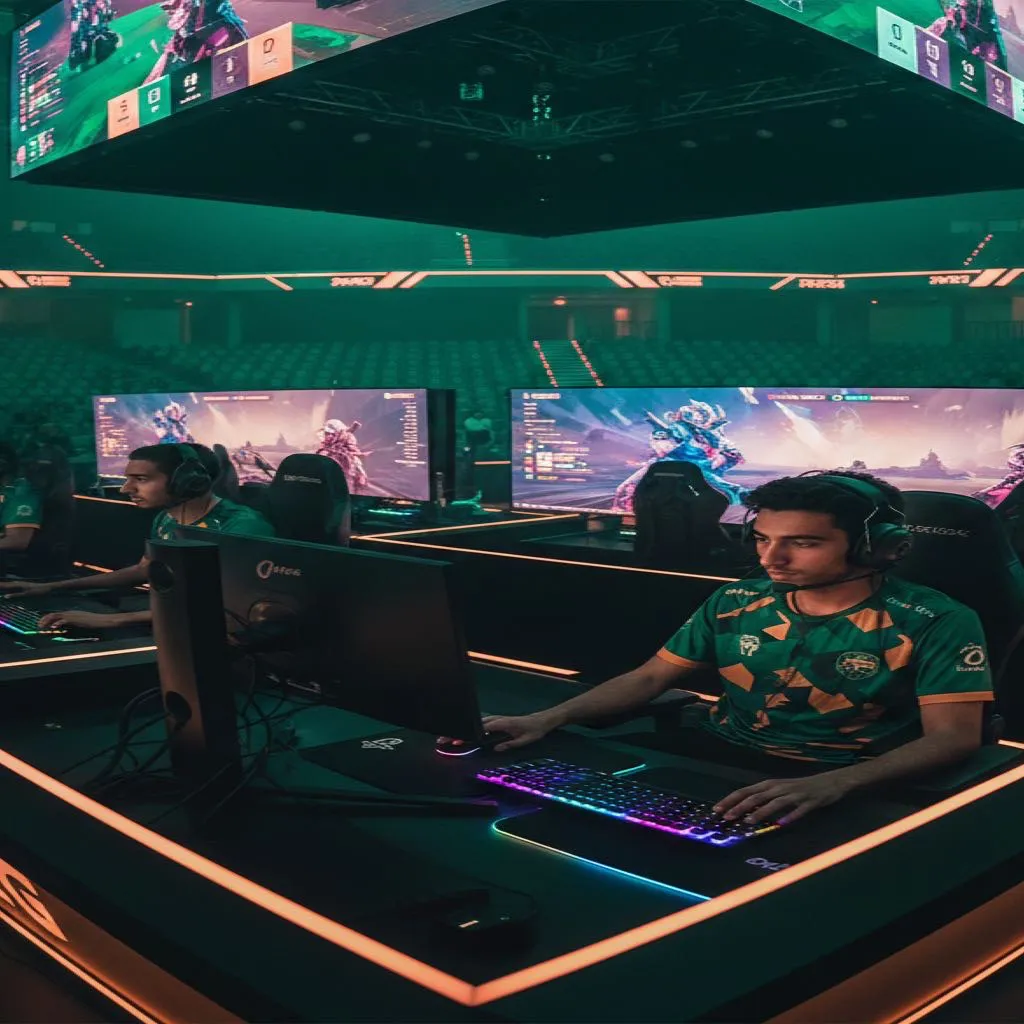
Quick Take: Algeria’s gaming community is one of its most vibrant but underserved digital ecosystems. The immediate opportunity lies in formalizing esports (federation, standardized tournaments, telecom sponsorships) while the longer-term play is building game development capacity through studios like Jana Games Studios and university incubators. AI tools are compressing the timeline for game creation, making this a uniquely favorable moment for Algeria to enter the production side of the global gaming industry.
The Invisible Gaming Nation
Algeria ranks among Africa’s top five gaming markets, yet it barely registers on global industry radar. Mobile games alone are projected to reach over 11 million users by 2027, and video game market revenue is growing at approximately 5.7% annually. FIFA, Free Fire, PUBG Mobile, Counter-Strike 2, and Valorant dominate Algerian gaming hours. Algerian-language gaming content on YouTube and TikTok collectively generates hundreds of millions of views monthly. Yet there is no formal gaming industry association, no government recognition of esports as a competitive discipline, and virtually no local game development. Algeria’s gaming economy is almost entirely consumption-based — billions of dinars flow outward for hardware, game purchases, and in-app spending, with almost nothing flowing back in.
The paradox is striking: Algeria has the demand, the demographic profile (median age around 29), and the passion — and the next step is building the ecosystem infrastructure that converts consumption into production.
Cyber Cafes: Algeria’s Accidental Tech Hubs
To understand Algerian gaming, you must understand the cyber cafe. While internet cafes have declined globally, they remain a cornerstone of social and digital life in Algeria, particularly outside major cities. Thousands of cyber cafes operate across the country, ranging from cramped basement setups with aging PCs to modern gaming lounges equipped with high-end rigs, RGB lighting, and competitive-grade peripherals.
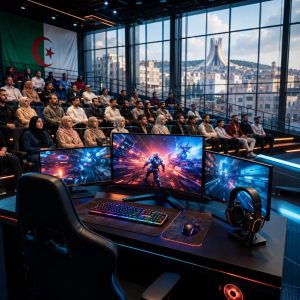
A new generation of dedicated gaming venues is emerging alongside the traditional cyber cafe model. Stream Gaming Zone, located in Sidi Yahia (Algiers), represents the modern end of the spectrum — a purpose-built gaming center with high-end hardware, structured tournament events, and a community-oriented approach that goes beyond hourly PC rental. These venues function as Algeria’s closest equivalent to the gaming cafes and esports arenas that have become cultural fixtures in South Korea, Japan, and increasingly across the Gulf states.
Traditional cyber cafes serve a function far beyond gaming. In cities like Setif, Batna, Tlemcen, and Bejaia, cyber cafes are de facto community technology centers where young people access high-speed internet they cannot afford at home, learn software skills informally, stream content, and build social networks. Many of Algeria’s self-taught programmers, graphic designers, and digital marketers trace their origin story to hours spent in cyber cafes. The cafe owner — often a tech-savvy young entrepreneur — functions as an informal tech mentor.
The economics are thin but resilient. A typical cyber cafe charges 100–200 DZD per hour, operates 12–16 hours daily, and supports 15–30 stations. Margins are squeezed by electricity costs, hardware depreciation, and internet subscription fees. Yet the model persists because demand is relentless, and the low barrier to entry makes it one of the most accessible entrepreneurship paths for young Algerians. Some cafes have evolved into gaming centers hosting weekly tournaments with modest prize pools, creating a grassroots competitive scene that feeds into Algeria’s broader esports ambitions.
Advertisement
The Emerging Esports Scene: Teams, Tournaments, and Regional Ambitions
Algeria’s competitive gaming scene has grown remarkably despite operating without institutional support. The country has produced 135 tracked competitive players who have collectively earned nearly $850,000 in esports prize money. Multiple Algerian esports organizations field rosters in Counter-Strike 2, Valorant, League of Legends, and FIFA, competing across regional MENA circuits.
The tournament ecosystem is a mix of grassroots and semi-professional. The MENA Regional Championship 2025 Algeria qualifier attracted 25 League of Legends teams, reflecting genuine competitive depth. The Algeria Game Awards has emerged as a community-driven platform recognizing the best games and esports teams in the country. Online tournaments organized through Discord communities run almost weekly, with prize pools funded by local sponsors — primarily telecom operators like Djezzy and Mobilis, energy drink brands, and gaming peripheral importers.
PUBG Mobile has become a particularly significant title for Algerian competitive gaming, with national championship events offering prize pools up to $5,000 — modest by international standards but meaningful in the local context. The competitive PUBG scene has also created crossover interest between mobile gaming and organized esports, bringing players who started casually into structured competitive environments.
Football gaming has its own competitive ecosystem. The Algeria Gaming Championship (AGC) and Micro Club have organized FIFA and eFootball competitions that mirror Algeria’s deep cultural passion for football, creating a bridge between traditional sports fandom and esports participation.
Regional context matters. Saudi Arabia’s Savvy Gaming Group, backed by nearly $38 billion from the Public Investment Fund, is reshaping the MENA gaming landscape. The UAE’s esports visa program and Morocco’s hosting of international gaming events have raised the bar across the region. These developments create both opportunity and urgency for Algeria. Opportunity, because Algerian players can now access better-funded regional competitions and potential sponsorship pipelines. Urgency, because without domestic ecosystem development, Algeria’s best gaming talent will migrate to better-supported scenes in the Gulf — mirroring the broader brain drain pattern that affects Algeria’s tech sector.
Can Algeria Build a Game Development Industry?
The most glaring gap in Algeria’s gaming ecosystem is the near-total absence of local game development. While Morocco and Tunisia have growing indie game development scenes with studios competing internationally, Algeria’s game development output is minimal. A small number of studios and developers are beginning to change this picture — Jana Games Studios, founded in Setif in 2014, is among the earliest dedicated game development operations in Algeria — but the sector remains in its infancy.
A handful of solo developers have released mobile games, and university game jams at ESI and USTHB occasionally produce prototypes. The gap between these efforts and a commercially viable game development industry remains wide.
The barriers are structural. Algeria lacks specialized game development education — no university offers a dedicated game design program. Access to game development tools is technically free (Unity and Unreal Engine have free tiers), but the payment infrastructure challenges (limited international payment options, restricted access to app store developer accounts) make commercial publishing difficult. The absence of a formal creative industry framework means game studios cannot easily access startup funding, tax incentives, or IP protection.
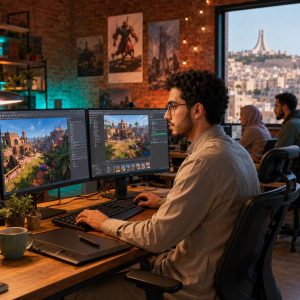
Yet the ingredients for change exist. Algeria produces thousands of computer science graduates annually, many with skills in 3D modeling, animation, and programming that are directly transferable to game development. The global shift toward remote game development work means Algerian developers can contribute to international studios without relocating. AI-powered game development tools (procedural generation, AI art pipelines, automated QA) are dramatically lowering the barrier to entry, meaning a small Algerian team of 3–5 developers could now produce games that previously required teams of 20–30. The question is not whether Algeria has the talent, but whether the ecosystem will evolve to channel that talent productively.
Frequently Asked Questions
What is algeria’s gaming and esports industry?
Algeria’s Gaming and Esports Industry: From Cyber Cafés to Competitive Teams covers the essential aspects of this topic, examining current trends, key players, and practical implications for professionals and organizations in 2026.
Why is algeria’s gaming and esports industry important for Algeria?
This topic is significant for Algeria because it intersects with the country’s digital transformation goals, economic diversification strategy, and growing technology ecosystem. The article provides specific context for Algerian stakeholders.
How does cyber cafes: algeria’s accidental tech hubs work?
The article examines this through the lens of cyber cafes: algeria’s accidental tech hubs, providing detailed analysis of the mechanisms, trade-offs, and practical implications for stakeholders.
Sources & Further Reading
- Algeria Video Games Market Forecast — Statista
- Algeria Esports Player Earnings — Esports Earnings
- MENA Regional Championship 2025 Algeria — Liquipedia
- Algeria Game Awards — Official Site
- Savvy Games Group: Saudi Arabia’s $38B Gaming Investment — Wikipedia
- 2025 Africa Games Industry Report — Maliyo Games & KPMG
- Algeria Online Gaming Market — 6W Research
- Jana Games Studios — LinkedIn