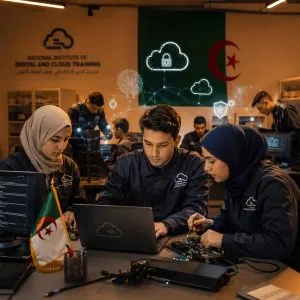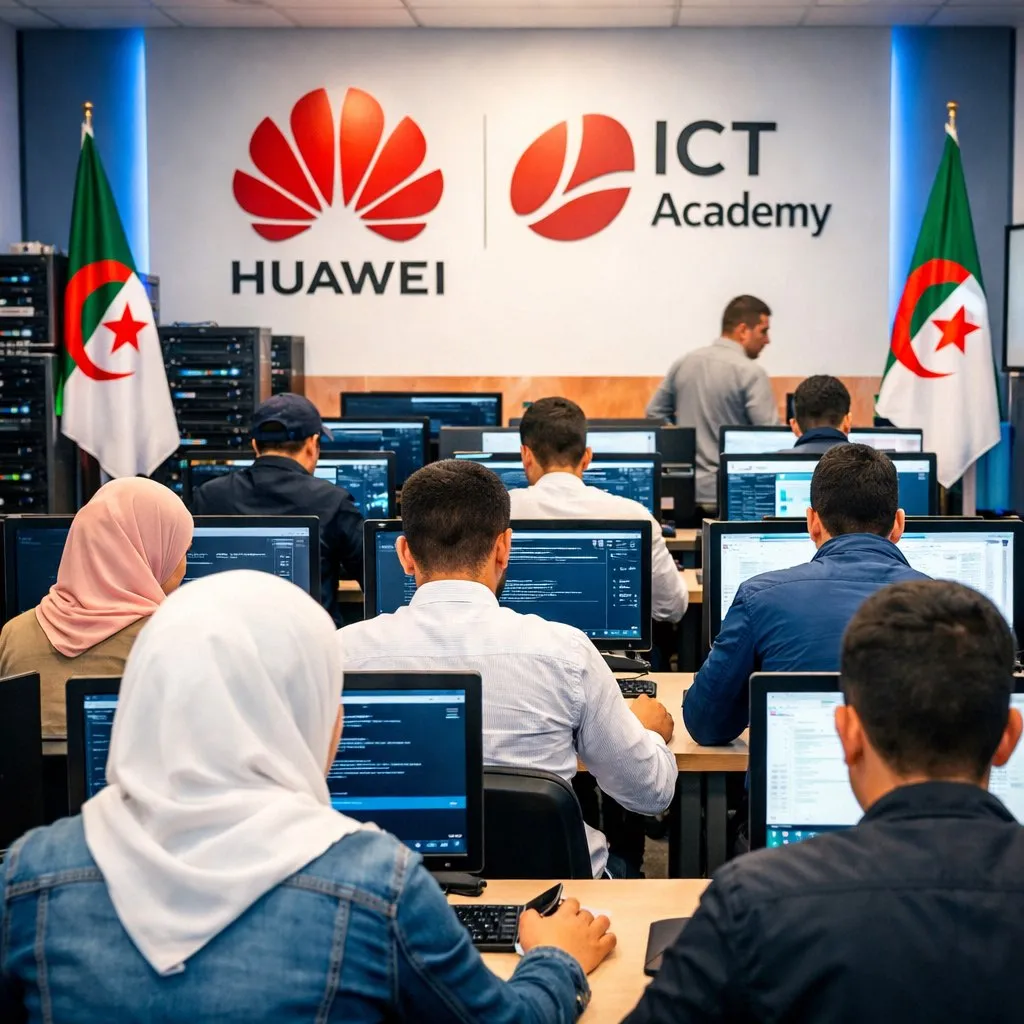
Starting September 2026, Algerian vocational trainees at three specialized institutes will earn joint diplomas in cloud computing, cybersecurity, and artificial intelligence — issued jointly by the Ministry of Vocational Training and Huawei. The partnership, formalized through a memorandum between the ministry and Huawei Algeria, expands an existing cooperation that has already trained 8,000 Algerian students and positions vocational training as a fast track to globally recognized ICT credentials.
The Partnership Structure
The collaboration targets three institutions:
National Specialized Institute for ICT in Rahmania. Located in the Algiers province, this institute serves as the flagship partner, offering the broadest curriculum across cloud, cybersecurity, and AI tracks.
National Institute for Vocational Training (INSFP) in Bousmail. Located in the Tipaza province, INSFP Bousmail adds capacity for cloud computing and networking certifications, leveraging its existing IT infrastructure training programs.
African Institute for Vocational Training in Boumerdes. This institute brings a continental dimension, with programs designed to serve both Algerian and pan-African trainees, aligning with Algeria’s positioning as a regional digital skills hub.
The memorandum commits both parties to expanding training capacity, enhancing knowledge exchange, and fostering future projects in AI, 5G technologies, and advanced networking.
What the Diplomas Cover
The joint diploma programs align with Huawei’s ICT Academy certification ecosystem, which maps to three competency levels:
HCIA (Huawei Certified ICT Associate). Entry-level certification covering fundamentals of cloud computing, networking, security, and AI. This is the expected starting point for most vocational trainees entering the program.
HCIP (Huawei Certified ICT Professional). Mid-level certification with specialization tracks in cloud architecture, security operations, and data communication. HCIP holders qualify for implementation and administration roles.
HCIE (Huawei Certified ICT Expert). Advanced certification for architecture and design roles. While the vocational programs may not reach HCIE level initially, the pathway enables motivated graduates to pursue expert certification independently.
The practical curriculum covers:
- Cloud computing: Huawei Cloud stack deployment, virtual machine management, container orchestration, cloud storage and networking
- Cybersecurity: Network security fundamentals, firewall configuration, intrusion detection, security policy management, incident response basics
- Artificial intelligence: Machine learning fundamentals, data preprocessing, model training and evaluation, AI deployment on Huawei platforms
Advertisement
Why Vocational Training Matters for Algeria’s Tech Pipeline
Algeria’s university system produces skilled graduates, but traditional degree programs take four to five years. The SNTN-2030 strategy’s target of 500,000 ICT specialists by 2030 cannot be met through university pathways alone. Vocational training programs — typically 18 to 24 months — offer a faster route to job-ready skills.
The Huawei partnership adds three specific advantages to the vocational pathway:
Global certification recognition. Huawei certifications are recognized by employers across Africa, the Middle East, and Asia. For Algerian graduates competing in regional job markets, a Huawei HCIA or HCIP credential signals practical competence that transcends local diploma limitations.
Industry-aligned curriculum. Unlike some academic programs that lag behind industry practices, Huawei’s certification curriculum is updated regularly to reflect current enterprise technology stacks. Graduates learn tools and platforms they will actually encounter in the workplace.
Equipment and lab access. The memorandum includes provisions for Huawei to support lab infrastructure at partner institutes. Access to enterprise-grade networking equipment, cloud platforms, and security tools gives trainees hands-on experience that purely theoretical programs cannot provide.
The ICT Competition Pipeline
The vocational partnership operates alongside Huawei’s ICT Competition 2025-2026, which Huawei Algeria launched in collaboration with the Ministry of Higher Education and the Ministry of Post and Telecommunications. The competition focuses on Cloud, Network, and Computing tracks, creating a merit-based pipeline that identifies high-potential students for advanced training, internships, and employment opportunities.
Previous competition cycles have produced Algerian teams that competed at the global finals, demonstrating that the country’s technical talent can match international benchmarks when given proper training and exposure.
What This Means for Career Planning
For Algerian professionals and students evaluating their options, the Huawei vocational partnership creates several actionable pathways:
For current vocational students. Apply to the three partner institutes for the September 2026 intake. The joint diploma provides both a national credential and international certification simultaneously.
For working professionals seeking reskilling. Monitor whether the institutes offer evening or weekend certification programs alongside the full-time diploma tracks. Huawei ICT Academy often supports flexible certification paths for working professionals.
For employers. The September 2026 graduation pipeline (roughly 18-24 months later, in 2028) will produce the first cohort of joint-diploma graduates. Employers should establish recruitment relationships with these institutes now to secure early access to qualified candidates.
For cybersecurity teams. With Presidential Decree 26-07 mandating cybersecurity units in every public institution, the Huawei cybersecurity certification track directly addresses the most acute talent shortage. Organizations should consider sponsoring employees through the program.
Sources & Further Reading
- Algeria and Huawei Forge Strategic Partnership to Modernize Vocational Training — SAMENA Council
- Algeria Partners with Huawei to Launch Digital Training Academies — Startup 3lmashi
- Algeria Expands Vocational Training to Meet Growing Cybersecurity Demand — TechAfrica News
- Huawei ICT Academy Cooperation — ENSIA
- Huawei Launches ICT Competition 2025-2026 in Algeria — MEA Tech Watch
Frequently Asked Questions
Are Huawei certifications recognized internationally?
Yes. Huawei certifications (HCIA, HCIP, HCIE) are recognized by employers across Africa, the Middle East, Asia, and increasingly in Europe. They are particularly valued in telecommunications, cloud infrastructure, and networking roles where Huawei equipment is deployed.
How long are the vocational programs?
Typical vocational diploma programs in Algeria run 18 to 24 months. The joint Huawei programs at the three partner institutes are expected to follow similar timelines, with certification exams integrated into the curriculum rather than requiring separate exam preparation.
Can working professionals access these programs?
The initial launch targets full-time vocational trainees. However, Huawei ICT Academy programs globally often include flexible certification paths for working professionals. Check with the partner institutes for evening, weekend, or accelerated formats that may become available after the initial program launch.