The Treatment Gap That AI Promises to Fill
The global mental health crisis is defined by a single, overwhelming statistic: the treatment gap. In September 2025, the World Health Organization confirmed that over 1 billion people worldwide — roughly 1 in 7 — live with a mental health condition. In low- and middle-income countries, more than 75% of those affected receive no treatment whatsoever. Globally, only 9% of people with depression receive minimally adequate treatment. Even in the United States, nearly 60% of adults with mental illness do not receive mental health services in any given year. The reasons are structural: 137 million Americans — 40% of the population — live in federally designated mental health professional shortage areas, therapy costs $100-$300 per session without insurance, and social stigma keeps millions more from seeking help.
AI therapy chatbots have presented a compelling value proposition against this backdrop. Available 24/7, costing a fraction of human therapy (most are free or under $15/month), requiring no appointment scheduling, and carrying no stigma — users interact privately on their phones — these tools promised to scale mental health support to the hundreds of millions currently receiving nothing.
The most prominent example was Woebot, developed by Stanford psychologists and backed by over $114 million in venture funding. Over its eight-year lifespan, roughly 1.5 million people used the app, which delivered cognitive behavioral therapy (CBT) techniques through a conversational interface. Wysa, an India-based platform that received FDA Breakthrough Device designation in 2022, continues to operate with millions of users worldwide and has expanded through a merger with April Health in 2025, combining AI-driven support with in-person mental healthcare.
The pitch was never that chatbots replace therapists but that they fill the gap for people who currently receive nothing. A person experiencing mild to moderate depression or anxiety — the majority of the mental health burden — could benefit from structured CBT exercises, mood tracking, and psychoeducation delivered through a conversational interface. The chatbot becomes a first line of support, escalating users to human professionals when symptoms exceed its capabilities.
The Clinical Evidence: Promising but Incomplete
The evidence base for AI therapy chatbots is growing but far from definitive. Randomized controlled trials of Woebot showed significant reductions in depression symptoms (PHQ-9 scores) and anxiety symptoms (GAD-7 scores) compared to control groups over 2-4 week periods. A 2025 meta-analysis published in the Journal of Medical Internet Research (JMIR), reviewing 14 RCTs of generative AI mental health chatbots involving 6,314 participants, found a statistically significant pooled effect size of 0.30 for reducing mental health symptoms including depression and anxiety. A separate JMIR meta-analysis focused on adolescents and young adults found stronger effects: standardized mean differences of -0.43 for depression, -0.37 for anxiety, and -0.41 for stress — small-to-moderate effects, but meaningful at population scale.
However, the limitations are significant. Most studies are short-term (2-8 weeks), use self-selected participants who may not represent the broader population, and compare chatbots to waitlist controls or informational websites — not to human therapy. Head-to-head comparisons with human therapists are rare and, where they exist, show that human therapy generally produces larger and more durable effects. Dropout rates for chatbot therapy are high: some studies report that fewer than 30% of users complete the full program, compared to 50-60% completion rates for structured human-delivered therapy. And critically, only 16% of studies on LLM-based chatbots have undergone rigorous clinical efficacy testing — most remain in early validation phases.
The deeper clinical question is whether chatbot-delivered CBT constitutes therapy in any meaningful sense. CBT with a human therapist involves a therapeutic alliance — a trusting relationship that research consistently identifies as the strongest predictor of treatment outcomes. Chatbots can simulate conversational warmth, but they cannot form genuine relationships, read body language, adjust their approach based on subtle emotional cues, or provide the felt sense of being understood by another human. For some users — particularly those who are socially anxious or stigma-sensitive — the absence of a human may actually be preferable. For others, especially those with severe conditions, complex trauma, or suicidal ideation, the absence of a human may be dangerous.
The Risks: When Chatbots Cause Harm
The risks of AI therapy chatbots are not theoretical. In February 2024, 14-year-old Sewell Setzer III died by suicide after developing a prolonged emotional relationship with a Character.AI chatbot. While Character.AI is an entertainment platform rather than a therapy app, the case exposed the danger of vulnerable users — particularly minors — seeking emotional support from AI systems not designed or regulated for mental health care. His mother filed a landmark lawsuit in October 2024, and in January 2026, Google and Character.AI agreed to settle the case along with several other lawsuits filed by families alleging harm. In response, Character.AI removed open-ended chat for users under 18 in November 2025 and established an independent AI Safety Lab.
Clinical safety mechanisms in purpose-built therapy chatbots like Wysa are more robust than entertainment platforms: they include crisis detection algorithms that identify language suggesting suicidal ideation and direct users to crisis hotlines (the 988 Suicide and Crisis Lifeline in the US, equivalent services elsewhere). But these systems are imperfect. False negatives — missing genuine crisis signals — can leave a user in danger without intervention. False positives — flagging benign expressions as crisis indicators — can erode user trust and discourage honest communication.
Liability remains a legal gray area. If a user of a therapy chatbot experiences harm — deterioration of symptoms, a suicide attempt, a missed diagnosis of a serious condition like psychosis — who is responsible? The chatbot developer? The app store that distributed it? The user who chose self-directed care over professional treatment? Existing medical malpractice frameworks assume a human clinician exercising professional judgment. AI chatbots do not fit neatly into this framework, and while the Character.AI settlement may set some precedent, courts have not yet established clear rules.
Data privacy adds another layer of concern. Mental health disclosures are among the most sensitive personal data imaginable. Users sharing their deepest anxieties, traumas, and suicidal thoughts with a chatbot are trusting that this data will be protected. HIPAA in the US, GDPR in Europe, and equivalent regulations provide some protection, but not all chatbot companies are structured as healthcare entities subject to health data regulations. The business model of some mental health apps — including selling anonymized data to researchers or pharmaceutical companies — has drawn criticism from privacy advocates.
Advertisement
The Woebot Paradox and the Rise of LLM Therapy
The most telling development of 2025 was Woebot’s shutdown. On June 30, 2025, the most clinically validated AI therapy chatbot in existence closed its doors. CEO Alison Darcy pointed to a fundamental regulatory catch-22: the FDA had pathways for evaluating rule-based chatbots (which Woebot was), but no clear guidance for large language model (LLM)-based systems. With generative AI rapidly overtaking the older technology, Woebot found itself stranded — too constrained to compete with ChatGPT-style tools, but unable to adopt LLMs without a regulatory path to market.
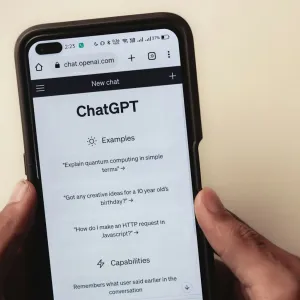
The irony is sharp. While the most responsible, clinically tested AI therapy tool shut down over regulatory uncertainty, millions of Americans began using unregulated general-purpose LLMs for mental health support. A February 2025 survey by Sentio University found that 48.7% of LLM users with self-reported mental health challenges were using ChatGPT, Claude, or Gemini for therapeutic support — with 96% specifically using ChatGPT. By sheer volume, general-purpose AI chatbots may now constitute the largest de facto mental health support system in the United States, surpassing even the Veterans Health Administration, which treats 1.7 million patients annually for mental health conditions.
This presents an uncomfortable reality: the AI mental health tools that people actually use at scale (ChatGPT, Claude, Gemini) are not designed, validated, or regulated for therapeutic use. Meanwhile, the tools that were designed and validated for therapy (Woebot) could not survive the regulatory and competitive landscape. Wysa remains a notable exception — still operational, expanding through its merger with April Health, and deploying its Gateway product for patient intake across healthcare systems including the UK’s National Health Service.
Regulation: States Act While the FDA Deliberates
The regulatory landscape for AI mental health tools is evolving on multiple fronts. At the federal level, the FDA’s Digital Health Advisory Committee held its second meeting in November 2025, specifically addressing generative AI-enabled mental health devices. A key finding: of the more than 1,200 AI-based digital devices the FDA has authorized for marketing, none has been indicated for mental health treatment. The committee discussed requirements for predetermined change control plans, real-world performance monitoring, and the critical importance of physician oversight for higher-risk AI mental health tools. But concrete guidance on LLM-based therapeutic tools remains forthcoming.
States have moved faster. In August 2025, Illinois became the first state to explicitly regulate AI in psychotherapy, signing the Wellness and Oversight for Psychological Resources Act. The law prohibits AI systems from making independent therapeutic decisions, interacting directly with clients in therapeutic communication, or generating treatment plans without licensed professional review — with penalties up to $10,000 per violation. At least six states have now passed laws targeting AI chatbot risks, and Texas imposed similar restrictions effective January 2026 with fines up to $200,000 per violation.
The earlier digital therapeutics pathway has proven fragile. Pear Therapeutics, which obtained the first-ever FDA clearance for a digital therapeutic (reSET, for substance use disorder, in 2017) and later gained clearance for Somryst (insomnia), filed for bankruptcy in April 2023 and had its assets sold at auction for just $6 million. PursueCare acquired and relaunched Pear’s substance use disorder apps, but the company’s collapse underscored the commercial challenges even for FDA-cleared digital mental health products.
Professional organizations continue to engage cautiously. The American Psychological Association has published guidelines acknowledging the potential of digital mental health tools while emphasizing that they should complement, not replace, human clinical care. The British Psychological Society has taken a similar position. These professional endorsements, while hedged, are important because they legitimate AI tools as part of the mental health ecosystem rather than dismissing them as inferior substitutes.
The Path Forward
The ethical imperative is clear: the treatment gap is real, and people are suffering for lack of care. The chatbot-based mental health apps market is projected to grow from $1.88 billion in 2024 to $7.57 billion by 2033. New entrants are already moving in — Talkspace announced an LLM-powered mental health chatbot in beta testing, with a wider launch planned for mid-2026. Established platforms like Headspace and Lyra Health are also integrating AI chatbot capabilities into their services.
But the lesson of Woebot’s closure and Character.AI’s lawsuits is that technological capability alone is insufficient. AI mental health tools that are clinically validated, safety-tested, properly regulated, and transparent about their limitations have a legitimate role in addressing the treatment gap. The danger is not the technology itself but its deployment without adequate safeguards — unregulated LLMs filling therapeutic roles by default, vulnerable users substituting chatbots for professional care they need, states creating a patchwork of conflicting regulations, and the FDA struggling to keep pace with a technology that is already being used at massive scale.
The question is no longer whether AI will play a role in mental health care. It already does. The question is whether regulation, clinical validation, and safety guardrails can catch up before the gap between what people use and what has been proven safe grows any wider.
Frequently Asked Questions
What is ai and mental health?
AI and Mental Health: Therapy Chatbots, Crisis Intervention covers the essential aspects of this topic, examining current trends, key players, and practical implications for professionals and organizations in 2026.
Why does ai and mental health matter?
This topic matters because it directly impacts how organizations plan their technology strategy, allocate resources, and position themselves in a rapidly evolving landscape. The article provides actionable analysis to help decision-makers navigate these changes.
How does the clinical evidence: promising but incomplete work?
The article examines this through the lens of the clinical evidence: promising but incomplete, providing detailed analysis of the mechanisms, trade-offs, and practical implications for stakeholders.
Sources & Further Reading
- Over a Billion People Living with Mental Health Conditions — WHO (September 2025)
- Woebot Health Shuts Down Pioneering Therapy Chatbot — STAT News (July 2025)
- Generative AI Mental Health Chatbots: Systematic Review and Meta-Analysis — JMIR (2025)
- Character.AI and Google Settle Lawsuits Over Teen Harms — CNN (January 2026)
- Wysa Receives FDA Breakthrough Device Designation — Wysa (May 2022)
- Gov. Pritzker Signs Legislation Prohibiting AI Therapy in Illinois — IDFPR (August 2025)
- FDA Digital Health Advisory Committee on GenAI Mental Health Devices — Orrick (November 2025)
- ChatGPT May Be the Largest Mental Health Provider in the US — Sentio University (2025)
- HRSA Mental Health Professional Shortage Areas Dashboard — HRSA (2025)
- Pear Therapeutics Assets Sold at Auction After Bankruptcy — Fierce Biotech (2023)
- 988 Suicide and Crisis Lifeline — SAMHSA