Digital sovereignty — the principle that a nation should control its own digital infrastructure, data, and technology destiny — has become one of the defining policy preoccupations of our era. The European Union is building GAIA-X to reduce dependence on American cloud providers. China runs a parallel internet. Russia is stress-testing its “Runet” firewall. And Algeria, in its 2025-2029 National Cybersecurity Strategy (Presidential Decree 25-321), has placed sovereign digital capability at the center of its national security doctrine.
For Algeria, digital sovereignty is not merely a philosophical preference. It is an economic and geopolitical imperative rooted in the country’s history and strategic situation — and the government is now backing that ambition with concrete institutions, legislation, and investment.
Why Sovereignty Matters to Algeria
Algeria’s approach to digital sovereignty is shaped by three historical and strategic realities:
The Colonial Memory and Data Control
Algeria’s experience of French colonialism — and the independence achieved in 1962 — has created a deep institutional instinct toward self-reliance. Government officials speak explicitly about avoiding new dependencies on foreign technology powers that could be weaponized in a future geopolitical conflict. The Snowden revelations about the NSA’s PRISM program collecting data on allied governments reinforced this instinct dramatically.
The Energy Wealth Security Calculation
As a country whose economic survival depends on hydrocarbon revenue — Sonatrach funds approximately 60% of the state budget — Algeria is acutely aware that its critical energy infrastructure could be a target for foreign state actors. A cyberattack that disrupted Sonatrach’s production or export pipeline would have existential economic consequences. Sovereign cyber defense capability is therefore as important as conventional military capability in protecting the country’s core economic asset.
The Strategic Non-Alignment Tradition
Algeria has historically pursued a non-aligned foreign policy — building equidistant relationships with major powers rather than joining any bloc. Digital sovereignty allows Algeria to extend this principle into the technology domain: not becoming wholly dependent on US-hosted cloud services, not accepting Chinese telecommunications equipment without scrutiny, and building domestic capabilities that reduce strategic vulnerability to any single foreign power.
The Institutional Architecture of Algerian Cyber Sovereignty
ASSI: The Tip of the Spear
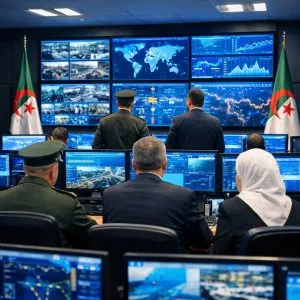
The Agence de Securite des Systemes d’Information (ASSI), operating under the Ministry of National Defense, is Algeria’s primary institution for protecting critical information infrastructures. ASSI has played a key role in establishing the National Cybersecurity Framework, contributing to legal frameworks for electronic signatures, technical frameworks for encryption tools, and institutionalizing the role of Chief Information Security Officer (CISO) across state institutions.
The critical information infrastructures (CIIs) under ASSI’s protection include:
- Sonatrach’s operational technology networks
- National banking and payment infrastructure (SATIM, Algerie Poste)
- Power grid management systems (Sonelgaz)
- Telecommunications backbone networks
- Government communications systems
ASSI’s mandate covers defensive cyber operations (monitoring, incident response, vulnerability assessment) and the development of national cybersecurity standards that CII operators must meet.
CERT Algeria: The Operational Response Layer
CERT Algeria, operated by CERIST (Centre de Recherche sur l’Information Scientifique et Technique), handles operational incident response for the national internet infrastructure. CERT Algeria issues critical vulnerability advisories, responds to significant incident reports, and coordinates with international CERT networks on cross-border threat intelligence.
CERT Algeria’s effectiveness depends critically on information sharing — organizations reporting incidents rather than concealing them — which remains culturally challenging in a business environment where admitting a breach carries significant reputational risk.
CNSSI: Strategic Direction
The Conseil National de Securite des Systemes d’Information reports directly to the President and provides political and strategic direction for national cybersecurity. CNSSI develops national cybersecurity strategies, approves major security policies, and sits above both ASSI and CERT Algeria in the governance hierarchy. CNSSI decisions translate political intent — like the commitment to digital sovereignty — into institutional mandates and resource allocations.
The 2025-2029 National Cybersecurity Strategy: The Sovereignty Pillars
Presidential Decree No. 25-321 (December 30, 2025) adopted the National Cybersecurity Strategy, aimed at strengthening the protection of public administrations and state digital infrastructures. The strategy contains five strategic axes:
Axis 1: Protection of Critical Information Infrastructures
The foundational axis: ensuring that essential national systems — energy, banking, government, telecoms — meet defined security standards. This includes mandatory security assessments, real-time monitoring requirements, and incident response obligations for all CII operators. The complementary data governance decree (No. 25-320) establishes data classification, cataloguing, and secure interoperability requirements between public administrations.
Axis 2: Strengthening National Cyber Capabilities
Building domestic technical expertise and tools, rather than relying exclusively on foreign products and expertise:
- Investment in national cybersecurity R&D at universities
- Development of Algerian cybersecurity product companies
- Reducing dependence on foreign security tools in government networks (substituting certified national or EU alternatives where possible)
Axis 3: Building Human Capital
The talent shortage is the binding constraint on every other sovereign capability ambition. This axis funds Scale Centers cybersecurity tracks, university cybersecurity programs, ASSI professional certification programs, and international scholarship programs for Algerian students to study cybersecurity abroad, with service obligations to return and work in the public sector.
Axis 4: Creating a National Cybersecurity Culture
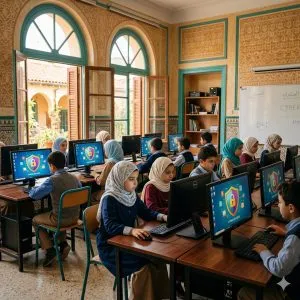
Public awareness campaigns, mandatory cybersecurity training for public sector employees (Decree 26-07 mandates dedicated cybersecurity units in every public institution), cybersecurity curricula in secondary schools, and public awareness programs aimed at raising baseline security hygiene across the population.
Axis 5: International Cooperation
Algeria is actively building bilateral cybersecurity agreements and participating in African Union cybersecurity frameworks. The African Union Convention on Cybersecurity and Personal Data Protection (Malabo Convention) — which Algeria has signed but not yet ratified (only 16 of 55 AU member states have ratified as of 2025) — would create a continental legal framework for cybercrime prosecution and cross-border incident cooperation.
Algeria maintains cybersecurity cooperation agreements with France, Russia, and China — managing potentially conflicting intelligence relationships while building autonomous national capability is a genuine strategic challenge.
Advertisement
The “National Products” Drive: Can Algeria Build Its Own Security Tools?
One of the most ambitious sovereignty goals is the development of Algerian-origin cybersecurity products — intrusion detection systems, secure communication tools, encryption software — rather than purchasing foreign equivalents.
This is achievable but difficult. The global cybersecurity product market is dominated by mature American companies (Palo Alto Networks, CrowdStrike, Fortinet) and several international firms. Building competitive alternatives requires years of R&D investment, access to threat intelligence at scale, a commercial market willing to trust domestic products, and engineering talent that could alternatively earn multiples the salary abroad.
The more realistic near-term sovereignty goal is certification and vetting of foreign products — ensuring that security tools used in government networks have been independently verified to not contain backdoors or exfiltrate data to foreign intelligence services. France’s ANSSI certification model, which publishes a “CSPN” (Certification de Securite de Premier Niveau) scheme for products used in sensitive government contexts, provides a template Algeria is studying.
The April 2025 Wake-Up Call: When Theory Meets Reality
The Algeria-Morocco cyber escalation of April 2025 provided a real-world stress test for Algeria’s sovereignty ambitions. Moroccan hacker groups Phantom Atlas and Moroccan Cyber Forces breached Algeria’s Social Security Fund for Postal and Telecommunications Workers, leaking 13-20 GB of sensitive data. By June 2025, Phantom Atlas claimed to have accessed Algerie Telecom’s internal network infrastructure maps.
These incidents demonstrated that:
- Data sovereignty is not just about cloud hosting — it is about the security of every database containing citizen data
- Institutional response speed matters — the ability to detect, contain, and remediate breaches quickly is as important as prevention
- Human capital is the bottleneck — sophisticated defense requires trained cybersecurity professionals that Algeria is still developing at scale
The incidents accelerated the implementation timeline for several elements of the National Cybersecurity Strategy, particularly the mandatory cybersecurity units under Decree 26-07.
The Road Ahead
Algeria’s digital sovereignty ambition is strategically coherent and backed by genuine institutional commitment. The framework is in place: ASSI provides operational defense, CERT Algeria handles incident response, CNSSI sets strategic direction, and the 2025-2029 strategy provides resources. The government has prioritized over 500 digital projects for 2025-2026 within this framework.
The challenge is execution speed: building human capital and sovereign technical capability takes a generation, not a legislative cycle. Algeria is competing for cybersecurity talent against a global market that offers dramatically higher salaries — the strategy’s scholarship-with-service-obligation model addresses this, but the pipeline takes years to produce results.
For businesses operating in Algeria: digital sovereignty policy creates both obligations (compliance with data residency requirements, certified product mandates, cybersecurity units for public sector contractors) and opportunities (demand for locally certified security services, government procurement preferences for in-country providers, partnerships with ASSI on critical infrastructure protection programs).
Frequently Asked Questions
What is digital sovereignty and cybersecurity?
Digital Sovereignty and Cybersecurity: How Algeria Is Building an Independent Cyber covers the essential aspects of this topic, examining current trends, key players, and practical implications for professionals and organizations in 2026.
Why does digital sovereignty and cybersecurity matter?
This topic matters because it directly impacts how organizations plan their technology strategy, allocate resources, and position themselves in a rapidly evolving landscape. The article provides actionable analysis to help decision-makers navigate these changes.
How does the institutional architecture of algerian cyber sovereignty work?
The article examines this through the lens of the institutional architecture of algerian cyber sovereignty, providing detailed analysis of the mechanisms, trade-offs, and practical implications for stakeholders.
Sources & Further Reading
- ASSI and Algeria’s Digital Sovereignty Strategy — DzairTube
- Algeria National Cybersecurity Strategy 2025-2029 — We Are Tech Africa
- Algeria Strengthens Cybersecurity Framework — TechAfrica News
- Algeria Cybersecurity for Sovereign Digital Transformation — MEA Tech Watch
- Algeria Sovereign Cybersecurity Strategy — MEA Tech Watch
- Algeria Decree 26-07 Cybersecurity Units — Ecofin Agency
- DPA Digital Digest — Algeria 2025
- CMS Law — Algeria Data Protection and Cybersecurity
- African Union Malabo Convention
- GAIA-X European Digital Sovereignty